



By Marc Kavinsky, Lead Editor at IoT Business News.
Geoforce has launched the GT1rugged cellular asset tracker engineered for non-powered industrial equipment, running on AT&T’s network. This launch is noteworthy because it broadens Geoforce’s industrial tracking range beyond satellite-focused setups to include more affordable cellular solutions.
For teams handling industrial IoT, the toughest assets to digitize aren’t always the most complex machines. Instead, they’re the unpowered, widely scattered equipment pieces moving between yards, job sites, depots, and field operations without any onboard telematics. Traditionally, tracking these assets has meant compromising between ruggedness and coverage on one hand, and device and connectivity costs on the other.
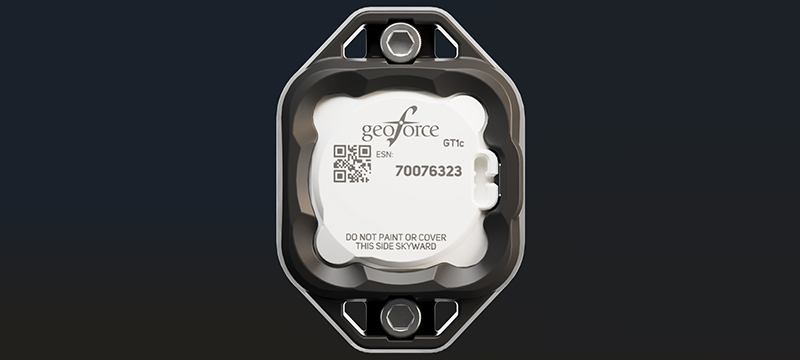
Geoforce is tackling this issue with the GT1c, a cellular asset tracker created in partnership with AT&T Business for non-powered industrial assets. The device feeds location updates into Geoforce’s asset intelligence platform, helping operations teams monitor asset locations, movements, and usage without depending on vehicle power or existing equipment electronics.
What’s notable isn’t just Geoforce’s addition of a cellular tracker; they already offer rugged, battery-powered devices, including satellite models for remote and harsh environments. The GT1c stands out as a rugged, cost-effective cellular option for asset classes previously too expensive to track broadly. This includes not only high-value equipment but also smaller, mid-tier assets often left out of formal tracking systems.
A cellular addition to satellite tracking
The GT1c is designed to complement Geoforce’s satellite tracking devices, not replace them. This distinction is important. Satellite connectivity remains crucial for field assets operating beyond reliable terrestrial network coverage. Cellular, however, offers better cost efficiency where networks are accessible—especially for fleets frequently located in industrial yards, rental sites, construction areas, or service regions covered by mobile networks.
That’s where the AT&T Business partnership comes in. Geoforce states the GT1c will connect via AT&T’s network and is the first outcome from their recent collaboration. For enterprises, this means a carrier-supported cellular IoT solution rather than just a hardware release. For connectivity providers, it shows the trend toward integrated device-platform-network packages in industrial asset tracking.
The GT1c features a fully enclosed design, a reinforced rugged bezel, intrinsic safety certification, and Zone 0 certification for explosive environments. It’s also built to withstand heavy vibrations and extreme temperatures. Asset operators will likely be interested in its battery life: up to 10 years according to Geoforce, impacting maintenance and total ownership costs for distributed equipment.
Implications for industrial IoT deployments
The practical takeaway is simple: if hardware and connectivity are affordable enough, asset tracking business cases can shift from selective monitoring to comprehensive inventory visibility. This is a significant change for sectors like oil and gas, construction, equipment rental, waste management, manufacturing, defense, and other field-intensive industries mentioned by Geoforce.
A trial with Black Diamond Equipment Rental offers insight into potential deployment results. Geoforce reports expanding tracked inventory by 26% among smaller and mid-tier construction and oil and gas rental assets, with anticipated annual time savings over 500 hours. While not a guarantee of universal ROI, this example highlights the operational issue addressed by the GT1c: time spent locating, validating, and managing assets previously too numerous or too low in individual value to justify tracking.
For IoT buyers, products like this signal new integration priorities. Rather than focusing on deep equipment interfaces, the challenge is attaching reliable, long-life endpoints to assets lacking power, operator displays, or digital identities. System integrators will find value in linking Geoforce’s location and utilization data with rental, maintenance, ERP, or field service workflows.
For OEMs and industrial equipment suppliers, the GT1c offers a method to add visibility to deployed assets without redesigning them for embedded telematics. Enterprises might use it to broaden tracking for more types of non-powered equipment. Mobile operators and IoT connectivity teams will see reinforced roles for cellular networks where satellite isn’t necessary.
Currently, Geoforce tracks over 300,000 assets in 110 countries for more than 1,700 customers. The GT1c adds a cellular option tailored for rugged, nonpowered industrial settings. Whether this device succeeds will depend on how well its durability, battery life, integration, and cellular economics enable routine tracking of assets previously handled manually and through periodic checks.
