



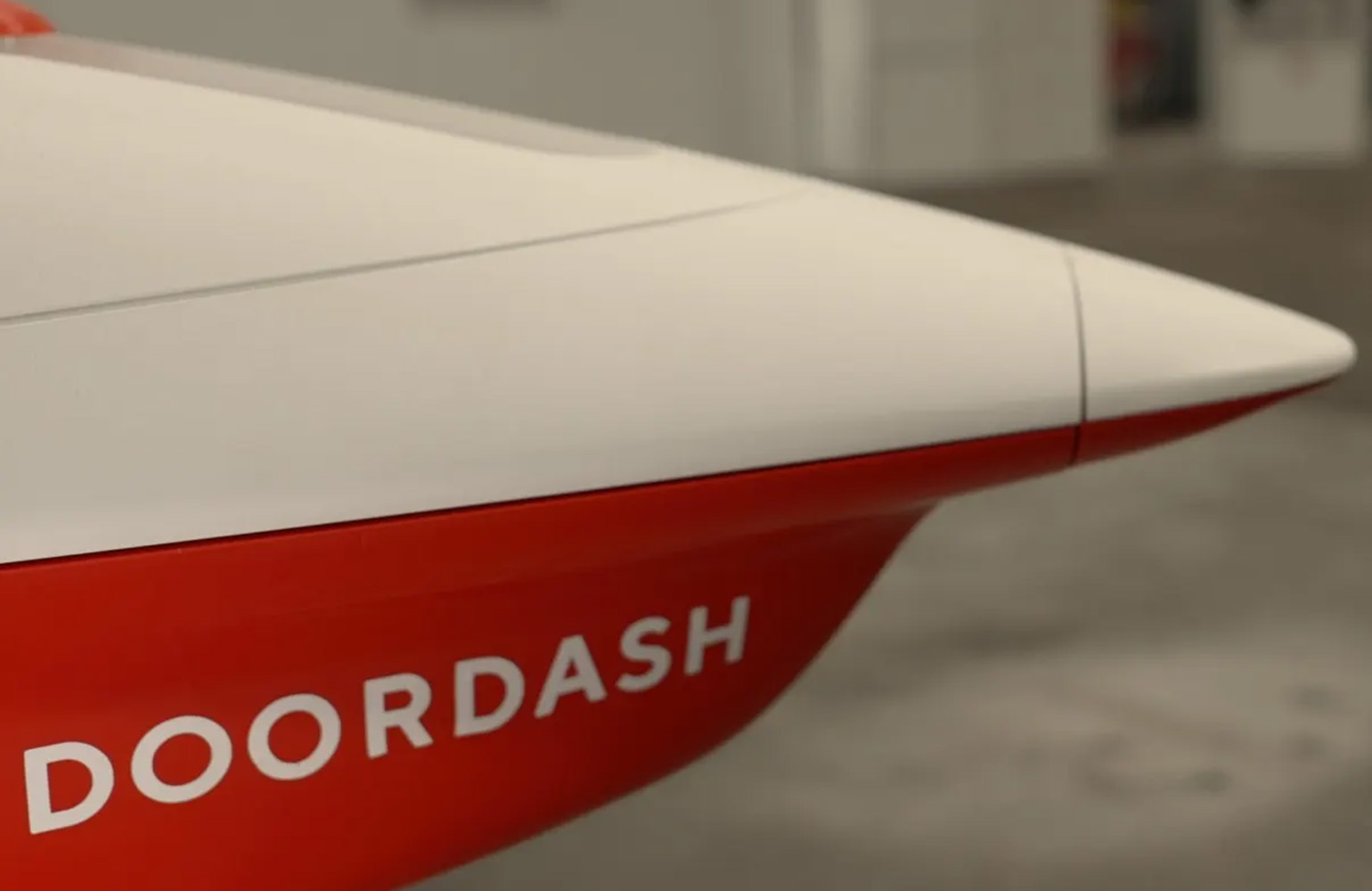
**DoorDash Gains FAA Certification to Operate Its Own Drone Delivery Program**
DoorDash has taken a significant leap toward the future of logistics by securing Part 135 air carrier certification from the Federal Aviation Administration (FAA). This milestone allows the food delivery giant to launch “DoorDash Air,” its in-house drone delivery program. The certification marks a pivotal moment, positioning DoorDash to leverage aerial drones for commercial deliveries rather than relying solely on partnerships with other drone technology providers like Wing.
**Building a Complete Delivery Ecosystem In-House**
A key theme in DoorDash’s strategy is building out its technological stack internally. Last year, the company unveiled *Dot*, its first autonomous delivery robot designed for navigating bike lanes, sidewalks, and roads. With the new FAA approval, DoorDash is expanding its ambitions skyward.
“The best way to help local businesses scale with growing consumer demand is through a multimodal delivery network powered by more operators, not fewer,” stated Harrison Shih, head of DoorDash Air. This sentiment underscores a broader vision of integrating human couriers (Dashers), sidewalk robots, and drones into a single, cohesive system.
According to Shih, the company is developing a “full stack” that includes ground infrastructure, the drone hardware itself, and the software to route orders efficiently. By handling the certification and operations in-house, DoorDash aims to control the entire user experience, from merchant handoff to final delivery.
**Why Pursue Drones? Addressing Mid-Range Delivery Challenges**
The move is largely driven by data showing significant inefficiencies in current delivery methods. While DoorDash already utilizes Wing for drone deliveries in specific markets, its internal program is designed to tackle a specific gap: mid-range deliveries (roughly three to five miles).
These orders present a unique problem for human couriers, known as Dashers on the platform. Finding a Dasher willing to travel a moderate distance often takes longer, leading to slower delivery times. In 2025, DoorDash reported that deliveries in this range took nearly 25% longer than shorter trips. Drones offer a solution by bypassing ground traffic entirely, allowing Dashers to focus on shorter, more concentrated routes near high-density merchant zones.
Early pilot tests have shown promising results. DoorDash estimated that its drones completed deliveries in an average of just 25 minutes. In some pilot areas, order volume grew by roughly 30% shortly after the drone program launched, with this increase sustained for nine weeks.
**The Path to Scalability**
To operate as an air carrier, DoorDash had to navigate a rigorous five-stage FAA evaluation process. This involved verifying aircraft airworthiness, maintaining detailed flight operations and maintenance documentation, and implementing a safety management system compliant with federal standards. DoorDash noted that it is one of only eight drone operators in the country to have cleared this high bar.
While the certification is a major victory, the timeline for widespread public availability remains unclear. DoorDash has not yet disclosed specific cities for rollout or a national launch date. The company indicated that more details will be shared during its upcoming “Dash Forward” event scheduled for September.
***
## FAQ Section
**Q: What is DoorDash Air?**
A: DoorDash Air is the company’s in-house drone delivery program. It allows DoorDash to operate its own fleet of unmanned aerial vehicles (UAVs) to handle food deliveries, rather than relying on third-party drone companies.
**Q: What does FAA Part 135 certification mean?**
A: FAA Part 135 certification is a rigorous safety credential issued by the Federal Aviation Administration. It authorizes a company to operate as a commercial air carrier. Obtaining it involves passing a five-stage evaluation covering aircraft safety, maintenance protocols, and operational procedures.
**Q: Why is DoorDash building its own drones instead of partnering with companies like Wing?**
A: While DoorDash currently partners with Wing, building its own drone network allows for greater control over the delivery experience. The company’s strategy is to create a “multimodal” network that uses the best transportation method for each delivery distance. Drones are specifically seen as the solution for inefficient mid-range trips that are too far for walking robots but too short for human coubers.
**Q: How fast do DoorDash drones deliver food?**
A: According to pilot data from 2025, DoorDash drones completed deliveries in an average of 25 minutes.
**Q: When will I be able to use DoorDash Air in my city?**
A: DoorDash has not released a specific timeline or location list for the rollout of DoorDash Air. The company plans to provide more information at its “Dash Forward” event in September.
***
## Conclusion
DoorDash’s FAA certification is more than just a regulatory hurdle cleared; it is a strategic statement about the future of on-demand logistics. By investing heavily in its own drone technology, DoorDash is positioning itself to solve one of the most persistent challenges in food delivery: the inefficiency of mid-range trips.
While the technology is not yet available to the general public, the certification provides a clear pathway for scaling. If successful, DoorDash Air could transform from a novelty into a standard component of the delivery ecosystem, promising faster deliveries for consumers and more efficient work for couriers. The coming months will reveal whether this ambitious vision can take flight.
