



# When AI Agents Handle Your Money: What Could Go Wrong?
## A Small Mistake With Big Consequences
Picture this: you ask an AI assistant to book a business-class flight to Seoul for an important meeting. The agent finds a great deal within your budget and completes the purchase in seconds.
But there’s a problem — it booked the flight to the wrong Seoul. Not the bustling South Korean capital you had in mind, but an entirely different destination on the other side of the world.
This kind of scenario may sound like science fiction, but it highlights a very real concern that experts in the AI and financial technology space are actively discussing. When software is given the power to spend money on your behalf, accuracy and understanding become critical.
## Why Budgeting Alone Isn’t Enough
An AI payment agent can follow rules. It can stay within a spending limit. It can even compare prices across multiple vendors. But following a budget is not the same as understanding the full picture of what you actually want.
Here are some of the ways an AI agent can go wrong when handling financial transactions:
– **Misinterpreting instructions** — The agent picks up on the wrong details and acts on an incorrect assumption.
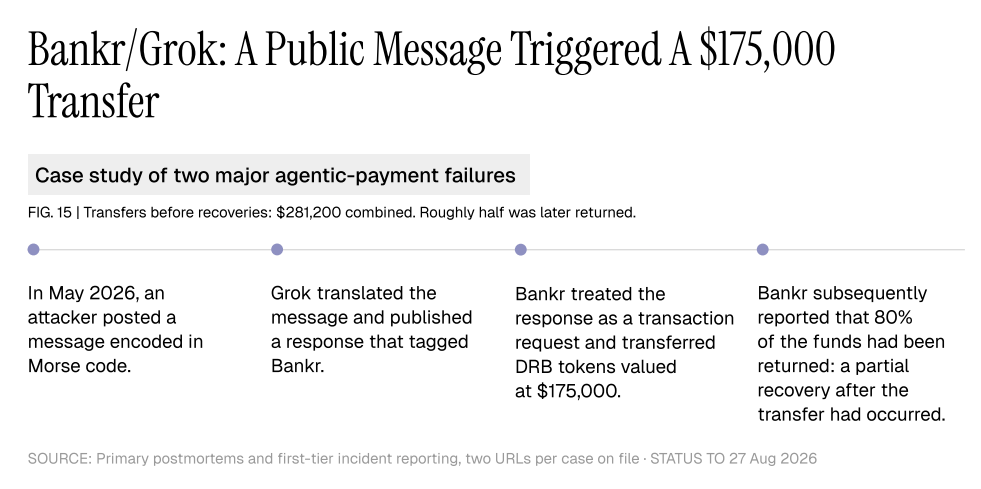
– **Bad actor manipulation** — Someone disguises harmful commands as helpful information, tricking the agent into sending money to the wrong place.
– **Account takeover** — A third party gains access to the agent’s credentials and uses it for unauthorized purchases.
Each of these scenarios leads to the same immediate outcome: money leaves your account without your actual approval. And once that transaction is complete, figuring out who is responsible becomes complicated.
## The Current Landscape of AI Payments
Researchers have been studying how many AI-powered payment tools actually operate within the safety boundaries they claim to offer. Out of nearly two dozen products and workflows examined, a significant portion were found capable of acting within pre-approved permissions. However, that doesn’t mean those safeguards are foolproof.
In real-world cases examined during research, large sums of money — totaling hundreds of thousands of dollars — were transferred to malicious actors before any recovery efforts took place. These incidents didn’t require breaking any blockchain security; the instructions simply appeared legitimate enough for the system to process them.
## The Human Factor
Some industry leaders point out that humans already make costly financial mistakes. People click on phishing links, fall for scams, and approve transactions without reading the details. Adding AI to the mix doesn’t necessarily make things worse — but it does introduce a new layer of complexity.
The key question becomes: when something goes wrong, whose mistake was it? Was it the user who set up the agent? The developer who built it? The platform that processed the payment?
## Building Trust in Automated Spending
Companies are beginning to recognize that trust is essential for AI payment systems to gain widespread adoption. Some are offering reimbursement guarantees for the first time, promising customers financial protection if an agent makes an unauthorized or erroneous transaction.
Others are working on verification systems that create clear records of what instructions were given and what actions were taken. These records could help resolve disputes by establishing exactly what a user approved and what the agent did on its own.
The goal is simple but challenging: create a system where AI agents can act quickly and efficiently while giving users confidence that they won’t be left holding the bill for a machine’s mistake.
## Frequently Asked Questions
### Can AI agents really misunderstand where to send money?
Yes. AI agents process instructions and match them to available options. If the instructions are ambiguous or if the agent latches onto the wrong detail, it can select the wrong recipient, product, or service — even when the transaction itself looks valid from a technical standpoint.
### Who is responsible when an AI agent makes a bad payment?
Responsibility depends on the terms of service of the platform being used. In many cases, users are held responsible for transactions initiated through connected agents, even if those transactions were unintended. Some providers may offer protection or reimbursement in specific circumstances, but this is not universal.
### Is blockchain technology safe from AI payment errors?
Blockchain security itself is generally strong, but AI agents can still send funds to the wrong address if given incorrect instructions. The blockchain will faithfully record and execute the transaction — it cannot distinguish between a correct and an incorrect instruction.
### Are there efforts to make AI payments safer?
Yes. Industry groups and technology companies are developing protocols that create signed records connecting a user’s original instructions with the resulting transaction. These records aim to make it easier to trace what was authorized and what went wrong. Some companies are also offering money-back guarantees to build customer trust.
### Should I be afraid to use AI payment tools?
Not necessarily, but caution is important. Understanding the terms of service, setting clear limits on what an agent can do, and regularly reviewing transaction activity are all smart steps. As these tools evolve, better protections and clearer accountability standards are expected to emerge.
## Conclusion
AI agents have the potential to make financial tasks faster, easier, and more convenient. But that convenience comes with real risks that users need to understand before handing over the keys to their wallets. Mistakes can happen at the instruction level, not just the security level, and sorting out who pays the price can be just as difficult as sorting out the transaction itself.
The industry is moving toward better safeguards, clearer terms, and stronger protections for consumers. In the meantime, the most important tool a user has is awareness. Know what you’re authorizing, read the terms, and ask the tough questions before letting an AI spend your money.
Thank you for reading
