



**Big Short Investor Steve Eisman Sold Google Because the Entire Market Is Now ‘One Trade’**
Steve Eisman, the investor famous for shorting the subprime mortgage market before the 2008 financial crisis, has sold his long-held position in Google. His reason? A deliberate move to cut his exposure to artificial intelligence (AI), which he believes has turned the entire market into a single, high-stakes bet. Eisman now holds cash, citing a lack of attractive alternatives in a landscape where investors seemingly want AI or nothing at all.
—
### **Eisman Sold Google Near Its Record High**
Speaking on CNBC’s *Squawk Box*, Eisman framed the sale as a calculated decision. He built his reputation by betting against subprime mortgages, and his latest move targets the AI-driven rally.
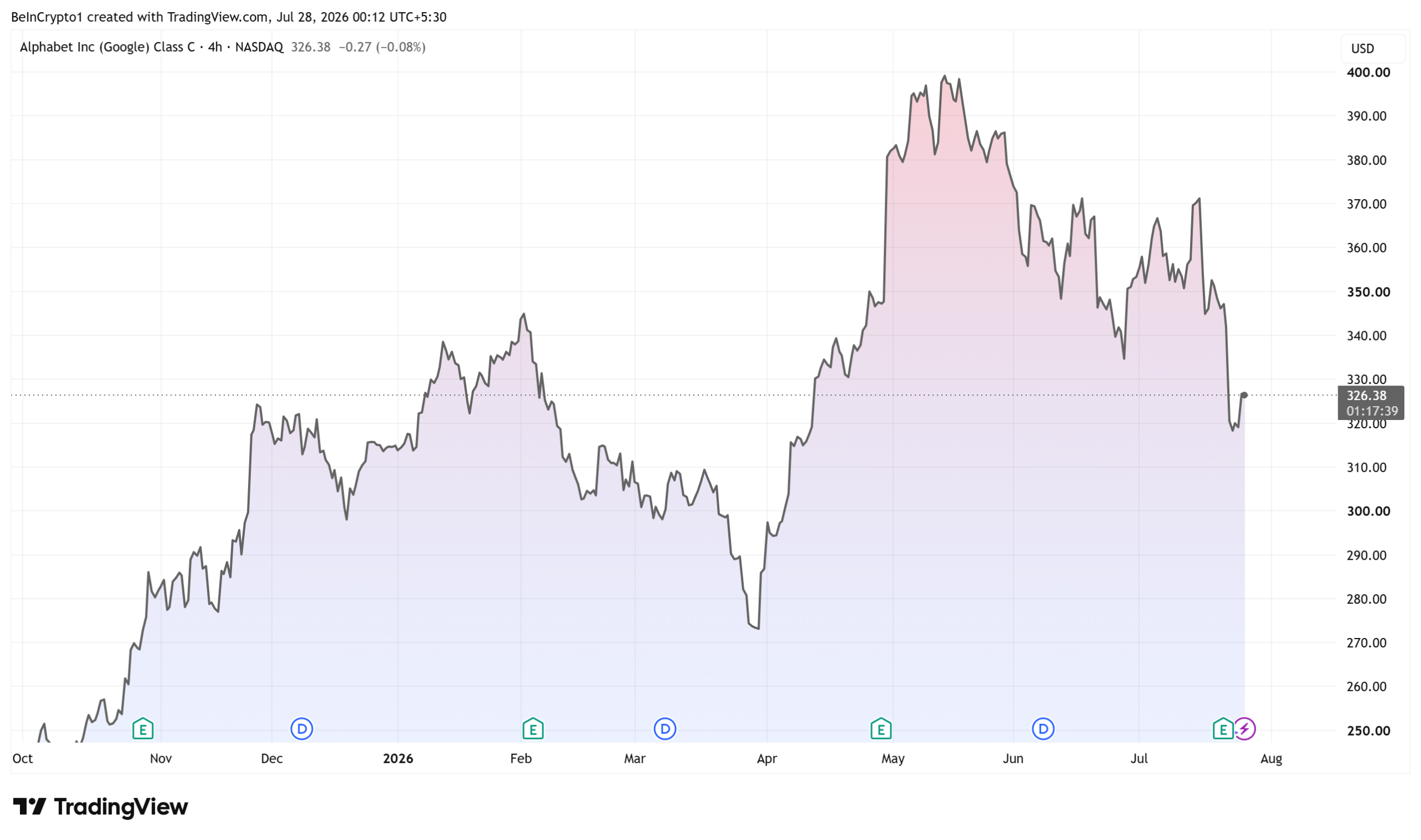
Timing-wise, the move appears shrewd. Alphabet’s stock peaked at $408.61 on May 18 but had fallen to $319.74 by July 24—a drop of roughly 20%. A significant portion of the decline occurred after the company’s Q2 earnings on July 23, when Alphabet raised its 2026 capital spending guidance to $195–205 billion.
> “I sold my Google a couple of months ago. I’ve owned Google. I can’t even tell you how long I’ve owned Google, but I felt I wanted to reduce my exposure to AI,” Eisman stated.
Yet he refuses to rotate into so-called defensive stocks. “People either want to buy AI or they don’t want to buy AI,” he explained, “but they don’t want to shift out of it to buy Clorox.”
Eisman’s cash position remains uncommitted, and he does not expect the AI debate to resolve anytime soon. “I’m just sitting… I’ve got cash,” he said, adding that the controversy “will not settle within the next two weeks.”
—
### **Why Eisman Says the Market Is ‘One Trade’**
At the heart of Eisman’s concern is market concentration, not merely valuation.
> “It’s all one trade. It’s literally one.”
To illustrate, he pointed to standard portfolio allocations. While a 60/40 stock-to-bond portfolio may appear diversified, Eisman argues it is not:
> “More than 50%… is tech and AI related. And of the 40% of bonds, most of the new issuance of bonds is AI related.”
Official data supports his thesis to some extent. Information Technology comprised 37.19% of the S&P 500 as of July 24, with Communication Services adding 9.34%. Combined with Amazon and Tesla, the technology-heavy slice reaches 51.5%. The 10 largest S&P 500 constituents alone account for 36.85% of the index, underscoring concentration risks.
The bond market reveals a different picture. High Technology represents only 14.2% of U.S. corporate bond issuance, with Financials leading at 46.4%. However, Eisman notes a shift in *new* issuance. Citing Bank of England data, he highlights that five AI hyperscalers accounted for over 15% of investment-grade bond issuance by early May 2025, despite representing just 3% of outstanding debt. In high-yield issuance, those same issuers claimed 41% this year.
—
### **Do Eisman’s Numbers Hold Up?**
On the equity side, Eisman’s figures largely hold up. The dominance of tech giants is evident. However, the bond data is more complex: while AI-related firms are a major force in new issuance, they do not constitute “most” of the market overall. Still, the rapid pace of borrowing by hyperscalers—Amazon’s $37 billion note offering in March being a prime example—shows how AI is reshaping capital markets.
Eisman’s central warning remains valid: concentration is real and potentially fragile.
—
### **Is a Correction Coming if AI Fails?**
When asked about a potential AI failure, Eisman was unequivocal.
> “I think we have a big correction.”
He declined to specify the magnitude but stressed the danger of a monolithic market.
> “What scares me is that it’s all one trade. So it better succeed.”
Central banks echo this concern. The Bank for International Settlements has flagged fixed income as “one obvious vulnerability” if AI spending slows.
—
### **What It Means for Crypto**
Crypto is not immune to these dynamics. Bitcoin (BTC), trading near $64,980, is down approximately 45% over the past year. The connection between Big Tech and digital assets became evident during June’s Big Tech selloff, which dragged Bitcoin lower. This year, institutional flows have favored semiconductor ETFs over crypto funds.
Chinese hedge funds have begun trimming AI winners, and notable 2008-era bubble forecasters warn of a potential 70% drawdown in overheated sectors.
—
### **Where the Thesis Breaks Down**
Eisman is not calling for a crash. In fact, he believes the technology itself will deliver tremendous value.
> “It’s going to be… something really good. That doesn’t mean that everybody succeeds.”
The gap between technological success and investment performance is the core risk. AI could advance rapidly while the current market paradigm undergoes a painful adjustment.
Near-term events will test his view quickly. Microsoft and Meta report earnings on July 29, with Amazon following on July 30. Three major capital expenditure updates will land within 72 hours.
—
### **FAQ**
**Why did Steve Eisman sell his Google position?**
Eisman sold his Google holdings to reduce his exposure to artificial intelligence (AI), which he believes has turned the entire market into a concentrated “one trade.”
**Does Eisman think the market will correct?**
Yes. He warned that if AI fails commercially, the market could experience a significant correction, largely due to its concentrated nature.
**What does Eisman think about defensive stocks or cash?**
He believes defensive stocks won’t work because investors are either all-in on AI or want nothing at all. He currently holds cash and is waiting for clarity.
**How does AI concentration affect bonds?**
While AI accounts for a smaller portion of total bond issuance, a small group of hyperscaler companies is responsible for a disproportionate share of new high-yield and investment-grade bond issuance linked to AI.
**What is the risk for crypto according to the article?**
Crypto is in the same risk bucket as tech stocks. A Big Tech selloff can drag crypto lower, and investors are increasingly favoring AI-related equities over digital assets.
—
### **Conclusion**
Steve Eisman’s decision to exit Google reflects a broader concern about market concentration driven by AI enthusiasm. While he is not forecasting an immediate collapse, he warns that the market’s reliance on a single theme leaves it vulnerable to sharp corrections. As tech giants report earnings and capital expenditure plans unfold, the world will gain a clearer picture of whether the AI boom can sustain itself—or if the “one trade” risks unraveling.
