



## Navigating the Digital Shift: Top Partners for Legacy System Modernization and Cloud Migration
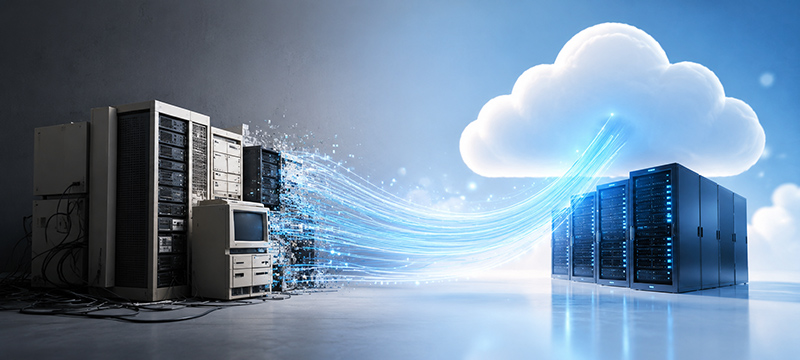
In the ever-evolving digital landscape, many businesses find themselves tethered to legacy applications—software systems that, while fundamentally sound, struggle to keep pace with modern demands. The challenge isn’t necessarily a catastrophic failure but a growing difficulty in adaptation. Integrating cloud services, connecting vast arrays of IoT devices, supporting real-time analytics, and introducing AI capabilities into these decades-old systems can become prohibitively complex.
Consequently, the driver for modernization is often strategic rather than merely technical. It’s a calculated business decision aimed at boosting agility, slashing maintenance costs, enhancing security, and fostering an IT environment resilient enough to support future growth. For many, the journey isn’t a revolutionary leap but an evolutionary one—a phased strategy of cloud migration and application modernization that allows critical systems to remain operational while new capabilities are incrementally added. Success in this endeavor, however, hinges significantly on selecting the right technology partner, one with deep expertise in enterprise environments, cloud infrastructure, and business-critical applications.
Here, we look at some of the leading companies empowering organizations to bridge the gap between their foundational legacy systems and the cloud-based future.
### Key Elements of a Successful Legacy Modernization Project
Before diving into specific providers, it’s crucial to understand the pillars of a successful initiative. Technology alone is rarely the deciding factor; rather, success stems from a solid strategy that minimizes disruption and aligns with clear business goals. Common elements across successful programs include:
* **Business-First Planning:** Modernization must serve measurable business outcomes, whether that’s improving operational efficiency, reducing costs, accelerating product delivery, or enabling new digital services.
* **A Clear Cloud Strategy:** The choice between public, private, or hybrid cloud models depends on specific application requirements, security and compliance needs, and long-term business plans.
* **Integration with Existing Systems:** Legacy applications often underpin multiple business functions and data flows. Planning integrations early is vital to maintain business continuity while connecting old environments with new cloud platforms.
* **Phased Implementation:** An incremental approach reduces project risk, limits operational disruption, and allows organizations to evaluate progress before committing to the next stage.
### Leading Legacy Modernization Companies at a Glance
| Company | Core Expertise | Best For |
| :— | :— | :— |
| **DXC Technology** | Legacy modernization, cloud migration, application transformation | Large enterprises modernizing mission-critical systems |
| **IBM Consulting** | Hybrid cloud, mainframe modernization | Complex enterprise IT environments |
| **Accenture** | Enterprise modernization, cloud transformation | Global digital transformation programs |
| **Capgemini** | Application modernization, cloud engineering | Manufacturing and industrial organizations |
| **Cognizant** | Legacy modernization, cloud-native applications | Enterprise application transformation |
| **Infosys** | Cloud migration, application modernization | Large-scale modernization initiatives |
### Company Profiles
**DXC Technology** takes a holistic approach to modernization, going beyond simple cloud migration to include application transformation and enterprise modernization. The company collaborates with organizations to move workloads to public, private, and hybrid cloud spaces while streamlining complex IT environments. Their services include application assessment, cloud-native transformation, and platform modernization. Designed for phased adoption, DXC’s methodology minimizes operational risks and ensures the continued availability of key business applications, serving as a long-term technology partner for manufacturing, financial services, healthcare, and public sector clients.
**IBM Consulting** boasts deep expertise in assisting enterprises with complex legacy environments, particularly those driven by business-critical applications and mainframes. Its modernization services cover hybrid cloud, application modernization, and infrastructure modernization. IBM often gets involved in projects where there can be no disruption of crucial operations, helping companies maximize the utility of their existing infrastructure while working toward long-term technology objectives.
**Accenture** collaborates with companies on large-scale transformation initiatives where modernization of legacy systems and transition to the cloud are integral components. It offers a comprehensive suite of services including application modernization, cloud strategy, and enterprise systems integration. The company empowers businesses to become cloud-native and simplify application portfolios, with multinational organizations frequently utilizing its global delivery model for business unit and regional modernization.
**Capgemini** offers legacy modernization services that span application transformation, cloud engineering, and systems integration. With a team of experts, Capgemini supports organizations seeking to modernize enterprise-critical applications, move workloads, and enhance interoperability between on-premises and cloud environments. The company has extensive experience in manufacturing, automotive, energy, telecom, and the public sector, providing consulting and engineering services to upgrade platforms and support future digital initiatives.
**Cognizant** supports customers in modernizing legacy applications and preparing them to become cloud-native, digital-first applications. Its modernization services include application assessment, migration planning, cloud adoption, software engineering, and platform modernization. Many projects aim to reduce technical debt, enhance app performance, and build more maintainable architectures. Cognizant serves a wide range of industries, including healthcare, banking, life sciences, retail, and manufacturing, supporting both incremental modernization and full transformation programs.
**Infosys** offers app modernization and cloud migration services for enterprises undergoing enterprise modernization initiatives. The company can guide customers through assessing legacy applications, modernizing architectures, migrating workloads, and embracing cloud technologies to enhance flexibility and scalability. Infosys also provides automation, data modernization, and application management services. With a diverse client base in financial services, manufacturing, telecommunications, retail, and energy, Infosys helps enterprises modernize their tech without compromising business continuity.
### What to Consider Before Starting a Modernization Project
Organizations must look beyond technology before embarking on a modernization program. Early review of these areas can help mitigate project risk and establish a clearer course of action:
* **Application Portfolio:** Identify systems for modernization, retention, replacement, or retirement based on business value and technical condition.
* **Migration Approach:** Determine if rehosting, replatforming, refactoring, or replacement is the best approach for the entire environment.
* **Integration Requirements:** Consider how modernized applications will communicate with legacy business applications, the cloud, and connected platforms.
* **Long-Term Operations:** Plan for maintenance, monitoring, governance, and future enhancements to maximize value from modernization.
### FAQ
**What is Legacy System Modernization?**
Legacy system modernization involves upgrading legacy systems to enhance their performance, security, scalability, and compatibility with current technologies.
**What advantages does cloud migration offer legacy modernization?**
By moving data and applications from on-premises infrastructure to the cloud, organizations can benefit from greater scalability, cost savings on infrastructure, and a more flexible platform for modern applications and digital services.
**Do we have to move ALL legacy applications to the cloud?**
No, the best method will be determined by the business value, technical needs, and integration requirements of the application in question.
**What sectors are most likely to be impacted by legacy modernization?**
Legacy modernization is prevalent in many industries, such as manufacturing, financial services, healthcare, insurance, retail, telecommunications, and the public sector, where long-running business-critical systems are common.
## Conclusion
Legacy system modernization is not a one-size-fits-all endeavor. It requires a strategic partnership with a technology provider that understands the delicate balance between preserving critical business functionality and embracing the agility of the cloud. Whether an organization opts for the comprehensive transformation expertise of a DXC Technology or IBM, the global program management of an Accenture, or the specialized cloud engineering of Capgemini or Cognizant, the goal remains the same: to build a resilient, future-ready IT environment. By focusing on business priorities, choosing the right migration path, and planning for long-term operations, companies can successfully navigate this transition, turning legacy challenges into catalysts for innovation and growth.
