




Trending
- Revolutionary Innovation: Discover How This New Technology Will Change Our Lives Forever!
- Discover the Future: Groundbreaking Tech Innovation Set to Revolutionize Your Daily Life
- Zyphra AI Launches Hierarchical Attention Architecture Enabling Subquadratic Complexity for Next-Gen Transformers
- This Week in AWS: Breaking Updates and Must-Know Developments for Cloud Professionals
- The Future of Personal Tracking: Why Consumer IoT Devices Are Poised for Explosive Growth Through 2030
- Firefox’s Compact Window Mode: The Ultimate Multitasking Hack Chrome Doesn’t Have
- When AI Agents Judge AI Agents: Inside The World’s First Fully Automated Digital Courtroom
- How Cybercrime Syndicates Weaponized 1.3 Million Smart TVs into Stealth Proxies and the Daring Takedown That Finally Shut Them Down

Author: Carter

Carter
Hi, I'm Carter, a Wisconsin-based tech writer and creator. I launched this blog as a comprehensive resource to help people navigate the fast-moving tech landscape. Covering multiple facets of the industry—from software insights to digital tools—my goal is to break down complex concepts into actionable, easy-to-understand guides. When I'm not tracking the latest tech trends, I'm focused on developing my skills in business administration and digital management.

Terry Gerton We talk a lot about cyber on this show. We have a lot of folks who are deeply engaged in doing cyber every day. And I think it’s easy, certainly it is for me, to slip into thinking about cyber as a technical problem. NCC Group has just released its fifth edition of the Global Cyber Policy Radar, and I think it tries to make a case that this is not just a technical problem. Tell us how you all approach the cyber security space. Kat Sommer It’s a really good point because, yes, you’re right, traditionally. We…

IoT startups move fast… really FAST. Products ship early. Firmware updates push overnight, and go-to-market windows close before most teams even finish their pitch decks. And somewhere between the product sprint and the funding round, branding gets left behind.That’s a real problem in 2026, and this is where most IoT startups stumble.AI-driven branding changes that. It brings identity creation closer to product development. It also reduces dependence on long design cycles that slow down early traction.Why IoT Startups Struggle with BrandingMost IoT founders are engineers. Their instinct is to solve technical problems first. Branding often comes later. That gap creates…

The Gulf’s AI ambitions hinge on something unexpectedly delicate: a small number of undersea cables threading through some of the world’s most unstable waterways.Nations like Saudi Arabia and the UAE have invested heavily in AI infrastructure, drawing in hyperscalers and aiming to become future exporters of computing power. But as the region pivots from oil wealth to AI-driven economies, the infrastructure moving that data is turning into a growing strategic weakness.Undersea cables have long carried the global internet. Now, they are becoming tools of geopolitics.After tensions escalated between the US, Israel, and Iran earlier this year, experts cautioned that regional…

LSD and other psychedelic substances are in clinical trials for use as treatments for various mental-health conditions.Credit: Alfred Pasieka/SPL In 2024, cognitive scientist Félix Schoeller chatted with Joshua White, who runs a nonprofit that offers free support during psychedelic experiences. They bonded quickly and began working together on a new project—an AI tool called Lucy designed to enhance training for therapists who guide patients through psychedelic treatments. Several psychedelic substances—like psilocybin, MDMA, ibogaine, and LSD—are currently being tested in clinical trials for conditions such as PTSD, depression, and addiction. These trials require highly trained facilitators to oversee intense, emotional therapy…

Recently Strategy made headlines by saying that it might sell some bitcoin to meet business objectives. This came as a surprise to many people because of what was previously regarded as a hard-lined stance to never sell. Saylor even (jokingly) tweeted stuff like “Sell a kidney if you must, but keep the bitcoin.” The reality is that bitcoin sales were always on the table for any bitcoin treasury company. The quip of “never sell” is an articulation of a long-term investment philosophy founded upon the extreme low time preference that is common in bitcoin discourse. But even within this discourse,…

For most teams, fraud performance is still summed up in a single metric: chargeback rate. It is visible, painful, and tied directly to card network thresholds, so it naturally becomes the north star for fraud programs. The new VP of Fraud Strategy at IPQS, Alexander Hall, recently sat down with Jordan Harris of The Fraud Boxer to unpack a growing issue many teams are underestimating: the true impact of fraud beyond chargebacks. These hidden impacts rarely show up in chargeback metrics but significantly affect revenue, operations, and brand trust, making it critical for organizations to broaden how they measure fraud. …

Posted on May 22, 2026 by Mridula Chilakamarri, CNCF Technical Advisory Group Modern SaaS platforms built on cloud‑native architectures frequently consist of dozens of independently deployed microservices. A single customer request entering the platform at the ingress layer may traverse authentication services, orchestration engines, data services, and downstream integrations before completing. When failures or performance regressions occur, platform operators must answer a fundamental question: what happened to this specific request, and where? In many environments, answering this question remains difficult. Although services emit logs and metrics, these signals are disconnected. Telemetry is produced independently by each service without a shared…

Maria Diaz/ZDNETFollow ZDNET: Add us as a preferred source on Google.ZDNET’s key takeawaysPlug-in solar systems are an alternative to large, professionally installed rooftop solar.The US regulatory system for utilities wasn’t built for plug-and-play solar setups, so it’s taking time for state laws to catch up.Thus far, only Utah has legalized plug-in solar in the US, allowing small systems of up to 1,200w to plug directly into a traditional outlet.Plug-in solar has risen in popularity among sustainability fans in recent years, but the practice isn’t yet legal in all of the United States. If you’ve been thinking about joining the plug-in solar bandwagon,…
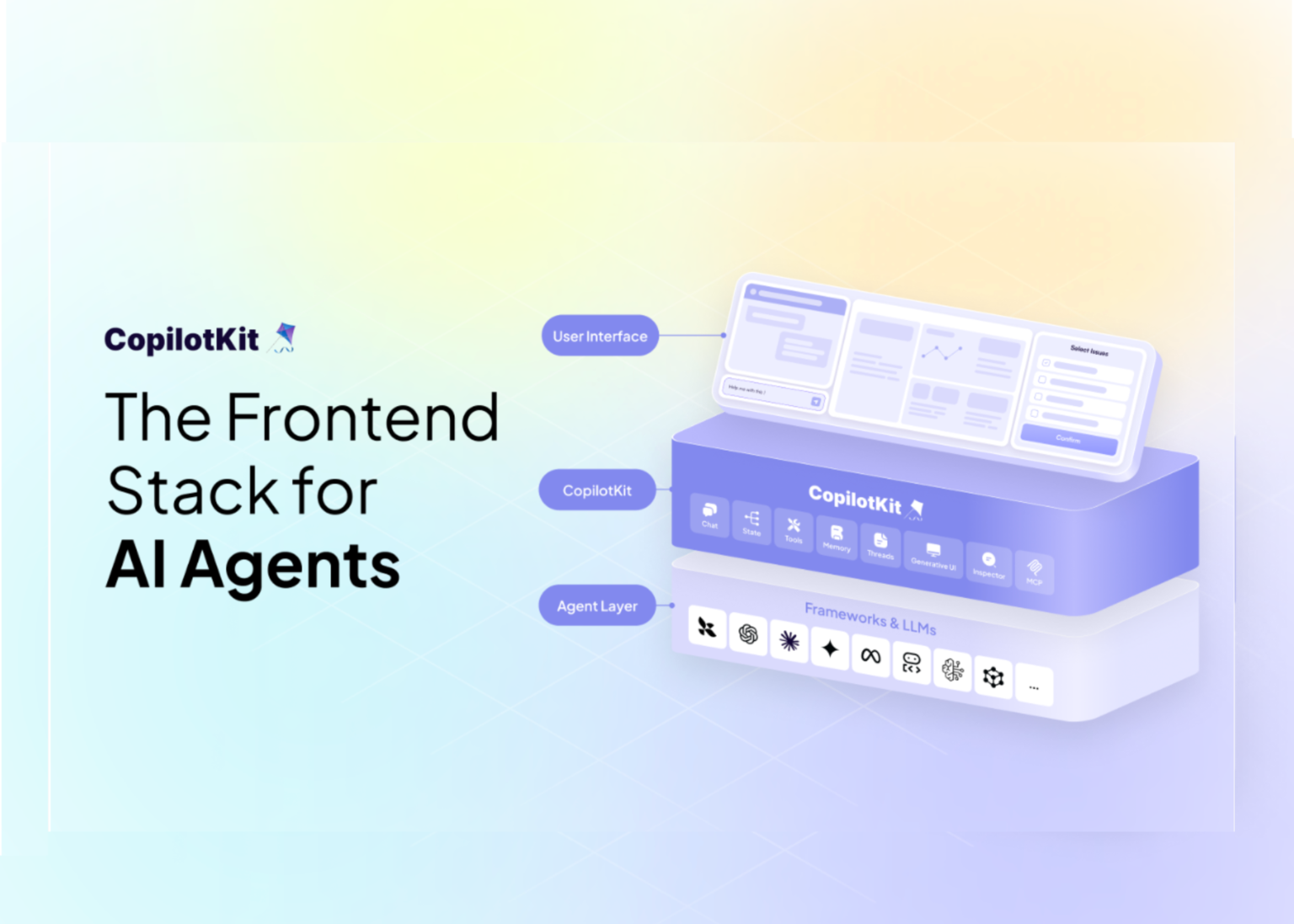
For years, AI inside software meant a chat widget bolted onto the corner of an application. You typed, the model responded with text, and you manually translated that output into whatever you actually needed it to do. It was useful the way a calculator is useful: functional, but fundamentally passive. CopilotKit, a Seattle-based startup co-founded by Atai Barkai and Uli Barkai, has spent the last two years arguing that the model is broken — and in 2026, the developer community is agreeing loudly. Give CopilotKit a ⭐️ on GitHub The company’s approach is straightforward: the way forward is to enable…

Microsoft Research’s AI Frontiers lab has introduced Fara1.5, a series of computer-use agent (CUA) models designed for web browsing. This release includes three variants: Fara1.5-4B, Fara1.5-9B, and Fara1.5-27B. These models work seamlessly with MagenticLite, Microsoft’s secure browser environment built specifically for these agents. Computer-use agents are visual-action systems that control an actual browser. They analyze screenshots and generate mouse and keyboard inputs to accomplish tasks. Modern agent tools such as OpenAI’s Operator and Google’s Gemini 2.5 Computer Use belong to this category. Fara1.5-27B achieves a 72% task completion rate on Online-Mind2Web. This benchmark evaluates performance across 300 tasks on 136…