


Trending
- Game-Changer in Tech: Discover the Revolutionary Innovation That’s Set to Transform Our Lives!
- Revolutionary New Tech Promises to Change Our Daily Lives Forever
- Revolutionary Tech Breakthroughs Set to Transform Our Daily Lives in 2024!
- Revolutionary AI Breakthrough Promises to Change the Way We Live and Work
- Breakthrough AI Tech Set to Revolutionize Everyday Life: Discover What’s Coming Next
- Revolutionary AI Breakthrough Promises to Change Your Everyday Life Forever
- Revolutionary AI Breakthrough: How This New Technology is Changing the Future of Work
- Revolutionary Tech Breakthrough Promises to Change Our Lives Forever
Author: Carter

Carter
Hi, I'm Carter, a Wisconsin-based tech writer and creator. I launched this blog as a comprehensive resource to help people navigate the fast-moving tech landscape. Covering multiple facets of the industry—from software insights to digital tools—my goal is to break down complex concepts into actionable, easy-to-understand guides. When I'm not tracking the latest tech trends, I'm focused on developing my skills in business administration and digital management.
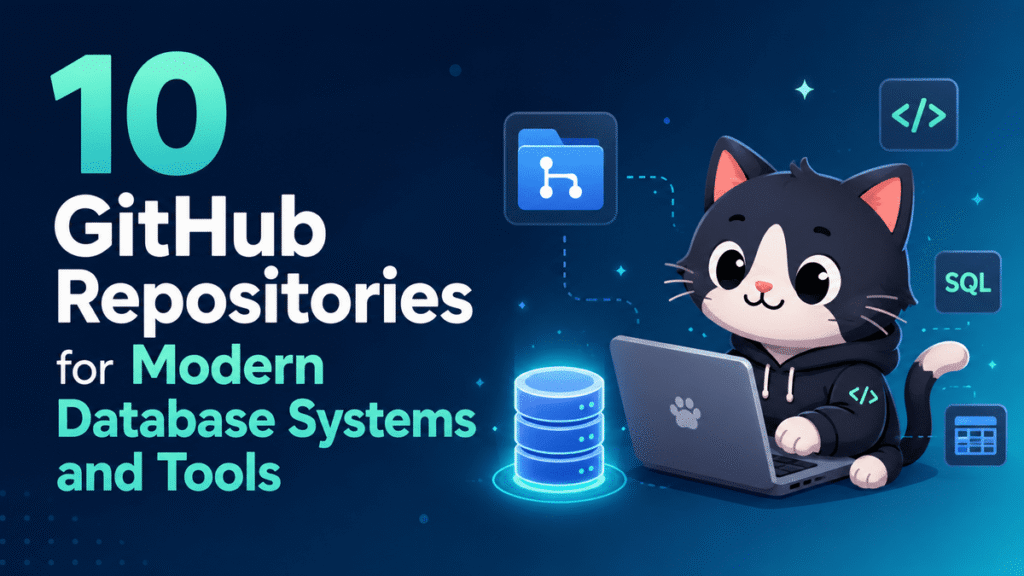
# Introduction Databases have evolved far beyond simple data storage. They now drive real-time analytics, embedded SQL processing, caching, monitoring, replication, AI agent memory, and even full application backends. This guide highlights 10 open-source GitHub repositories that are widely adopted, practical, and highly regarded by developers. These tools are free to explore, simple to test locally, and flexible enough to run as self-managed servers when required. Whether you’re developing a web application, analytics dashboard, AI product, or distributed system, these repositories will help you navigate the modern database landscape and select the ideal tool for your next project. # 1.…
SpaceX is scheduled to make its Nasdaq debut under the ticker symbol SPCX as soon as June 12, 2026, following its S-1 filing with the SEC on May 20. Elon Musk has committed to a 366-day lockup period for all of his shares. This arrangement has significantly altered how cryptocurrency platforms are valuing the company prior to its official listing. Exchanges such as Hyperliquid, Binance, OKX, Bitget, and BingX are all offering synthetic SPCX perpetual contracts. Meanwhile, accredited investors can purchase actual shares through platforms like Forge Global and EquityZen, which reflect a $1.75 trillion valuation. Six Investor Questions on…

Cybercriminals have created a ransomware toolkit powered by artificial intelligence that automatically maps out Active Directory environments and sidesteps endpoint detection and response systems. The toolkit and its attack payloads were developed with help from Cursor and Claude Opus AI agents, which were involved throughout every phase – from writing the initial code to debugging and improvement cycles. The AI agents were even instructed to browse security research articles to find bypass strategies they could incorporate. Several AI-generated malware samples were put to the test, pitted against endpoint security platforms from leading vendors including Sophos, CrowdStrike, and Microsoft Defender. Even…

Customer experience has become the real performance metric In today’s federal IT environment, successful service delivery is measured by how well agencies deliver positive customer experiences. Surprisingly, this has less to do with technical expertise and more to do with people skills like empathy and strong communication abilities. I’ve witnessed this truth from both perspectives. Earlier in my career, I worked in digital services at the Department of Veterans Affairs, where I played a key role in establishing what those measurements should involve. Today, as a contractor focused on IT service delivery and user experience, I’m the one meeting those…

Michael Nagle/Bloomberg via Getty ImagesFollow ZDNET: Add us as a preferred source on Google. Highlights from ZDNET Microsoft is developing Work IQ for organizations built around AI agents.AI agents can explore and understand data setups on their own, as they go.The main worries involve expenses, oversight, and security.Work IQ is a brand-new tool from Microsoft. It shows off two typical Microsoft strengths: solving tough technical and setup problems with a smart, polished fix, and making something very tricky to explain. Still, I’ll give it a shot.Work IQ comes from Microsoft’s total overhaul of how business software is built. Yes, it’s…
Samuel Boivin/NurPhoto via Getty ImagesStay updated with ZDNET: Set us as a preferred source on Google.ZDNET’s main pointsMicrosoft is transforming AI into a tool for prioritizing security threats.Microsoft aims to protect code, AI agents, data, and models.MDASH leverages AI agents to filter out irrelevant security warnings.Last month, Microsoft launched MDASH, known as the Microsoft Security multi-model agentic scanning harness. While the name might not be the catchiest, this initiative represents a significant step forward. Its goal is to streamline the overwhelming flood of security alerts, highlighting only those vulnerabilities that pose a genuine, immediate risk.At Build 2026, the latest update is that…

The foundations of our society are shifting. That was a key insight from Max Buckley’s presentation at AI Engineer Singapore, and it’s been on my mind ever since. For years, software development revolved around limited resources. Writing code was costly, skilled engineers were hard to find, and shipping features required significant time. These constraints dictated how teams operated. We chose priorities carefully because every feature came with substantial trade-offs. Now AI has shattered that old model. With coding agents growing more powerful, the price of building software is plummeting. Tasks that once took weeks can now be mocked up in…

In brief At Build 2026, Microsoft unveiled Scout—its inaugural “Autopilot” agent. Scout is powered by OpenClaw, the open-source agent framework that reached 180,000 GitHub stars within three months of its January 2026 debut. Microsoft is integrating enterprise-grade security into Scout and contributing policy controls to the project. Copilot alone isn’t enough. Microsoft is now building an AI that doesn’t wait to be asked. Announced at Build 2026, Microsoft Scout integrates with your Teams messages, Outlook, OneDrive, and SharePoint, then quietly works behind the scenes to handle the coordination tasks you keep putting off—scheduling meetings across different time zones, highlighting decisions…

The time it takes to exploit security flaws after they’re discovered is getting shorter at breakneck speed—and this trend shows no signs of reversing. Vulnerabilities are being found, recreated, and used as weapons more rapidly than ever before in the history of corporate security. Consequently, the gap between a vulnerability going public and widespread attacks being spotted online is now counted in hours, not days. The standard response from the cybersecurity industry has largely been: apply patches more quickly. Regulatory bodies promote it, company boards anticipate it, and senior executives insist on it. But for the majority of organizations, flipping…

For years, cybersecurity defense worked on a predictable schedule of about two to three weeks. When a security flaw was uncovered, attackers usually needed 15 to 20 days to study the code, build an exploit, and prepare it for use. This delay gave defenders enough time to install patches or reconfigure their network protections. That breathing room has vanished. With nation-states now embedding artificial intelligence and generative AI into their attack methods, the gap between discovering a weakness and exploiting it has shrunk from weeks to mere hours, often happening before the vulnerability is even made public. In this transformed…