



Follow ZDNET: Add us as a preferred source on Google.
ZDNET’s key takeaways
- Alpine Linux is a compact yet powerful distribution.
- With some effort, it can be transformed into an incredibly fast desktop operating system.
- Alpine Linux is available for free download and installation.
I’ve tried every type of Linux distribution imaginable, ranging from ultra-lightweight to overly complex and resource-heavy. With nearly every distribution category, I can identify a reliable purpose to fully leverage its capabilities.
Also: The best Linux laptops: Expert tested for students, hobbyists, and pros
Alpine Linux is no exception. That said, I’ve primarily used this lightweight, security-oriented distribution for container deployments — one of the most popular applications for Alpine Linux since its base image is remarkably small (between 2.67 and 5 MB – yes, megabytes). This gives Alpine Linux a minimal attack surface, making it ideal for containers.
But can Alpine Linux work as a desktop operating system? The answer is yes, but with a significant caveat.
Let me elaborate.
What is Alpine Linux?
Alpine Linux is an extremely minimal distribution, meaning, “It doesn’t come with a desktop environment or many of the applications and tools you’re used to.” In fact, it doesn’t even include sudo or bash.
As a result, it does require some effort to make Alpine Linux a practical choice for desktop use. However, that doesn’t eliminate it as an option, particularly for those who prioritize simplicity and security.
Also: Want to save your aging computer? Try these 5 Linux distributions
At the same time, preparing Alpine Linux for desktop use isn’t exactly beginner-friendly. If you know what you’re doing, you can have a fully functional desktop up and running in minutes. If you’re unfamiliar with the process, it could take considerably longer.
Is the effort worthwhile? If you enjoy a modest challenge and want to appreciate the results of your work, the answer is absolutely yes. Alpine Linux as a desktop distribution is definitely worth the investment of time.
Let me walk you through what that process involves.
Installing Alpine Linux
The Alpine Linux installation is text-based, but it’s not at all difficult (as long as you can answer a few straightforward questions).
The process includes the following steps:
- Create a bootable USB drive using the downloaded Alpine Linux ISO.
- Boot from the USB drive.
- When prompted, log in as root (no password required).
- Run the command setup-alpine.
- Choose your keyboard layout.
- Configure your hostname.
- Set up the network connection (accept the default by pressing Enter on your keyboard).
- Create a root user password.
- Select your time zone.
- Choose an Alpine mirror. (I recommend the official Alpine mirror, as I’ve encountered issues with the fastest option.)
- Create a regular user account.
- Select your secure shell daemon. (Press Enter to accept OpenSSH as your default.)
- Partition your disk. (Since we’re using this as a desktop, type sys for a traditional hard-disk installation.)
- The installation will finish in approximately one minute. Once it’s done, reboot using the command: reboot
Also: After 30 years with Linux, I gave Windows 11 a chance – and found 9 clear problems
After rebooting, log in as the standard user you created during the installation process.
Installing the KDE Plasma desktop
Before installing KDE Plasma, there are a few preliminary steps to complete. First, you’ll need to enable the community repository. To accomplish this, install the nano text editor with:
doas apk add nano
Once that’s done, install bash and sudo with:
doas apk add bash bash-completion sudo shadow
Reboot once more.
Log back in as your standard user and then run the command:
setup-desktop
Type plasma and press Enter on your keyboard. This will guide you through installing everything needed for the KDE Plasma desktop.
Also: The most beautiful Linux distributions
When that’s finished, reboot again. After the reboot, you’ll see the KDE Plasma login screen, where you can log in as your standard user and begin using the desktop.
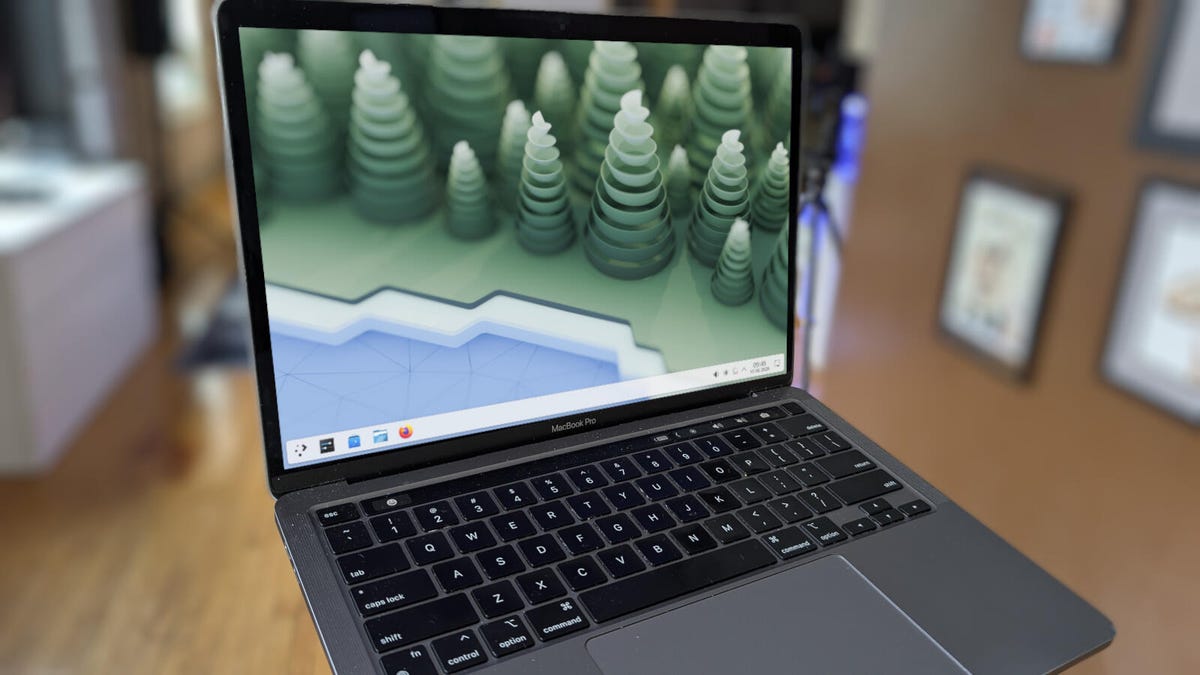
KDE Plasma is truly stunning.
Screenshot by Jack Wallen/ZDNET
The first thing you’ll notice is how incredibly fast Alpine Linux runs. It’s remarkably quick. You might also notice that, despite having a network connection, some applications don’t detect it. This is because the NetworkManager service isn’t running. To start and enable it, run the following commands:
doas rc-service networkmanager start
doas rc-update add networkmanager default
You should now be able to use everything as expected, including KDE Discover for installing applications (such as Flatpak).
I would strongly recommend installing Flatpak to expand your software options.
Screenshot by Jack Wallen/ZDNET
That’s quite a few steps to follow, yes, but the steps aren’t particularly difficult — as long as you’re comfortable entering some commands. The result is an extremely fast desktop that can serve you exceptionally well.
Who is Alpine Linux best suited for?
I would never suggest Alpine Linux as a desktop distribution for those with no Linux experience. However, for those with even a basic understanding of the open-source operating system, Alpine Linux could be an excellent choice for personal use. Additionally, you’ll gain a deeper understanding of Linux in the process.
Also: I tried the latest MX Linux version on my PC, and it made the system look and feel like new
One final note: Alpine Linux doesn’t come with a firewall (although when you install KDE Plasma, it adds a firewall GUI). You can install a firewall with a command like:
doas apk add ufw
After installing the firewall, open the firewall GUI and activate it.
Enjoy exploring Alpine Linux.
