



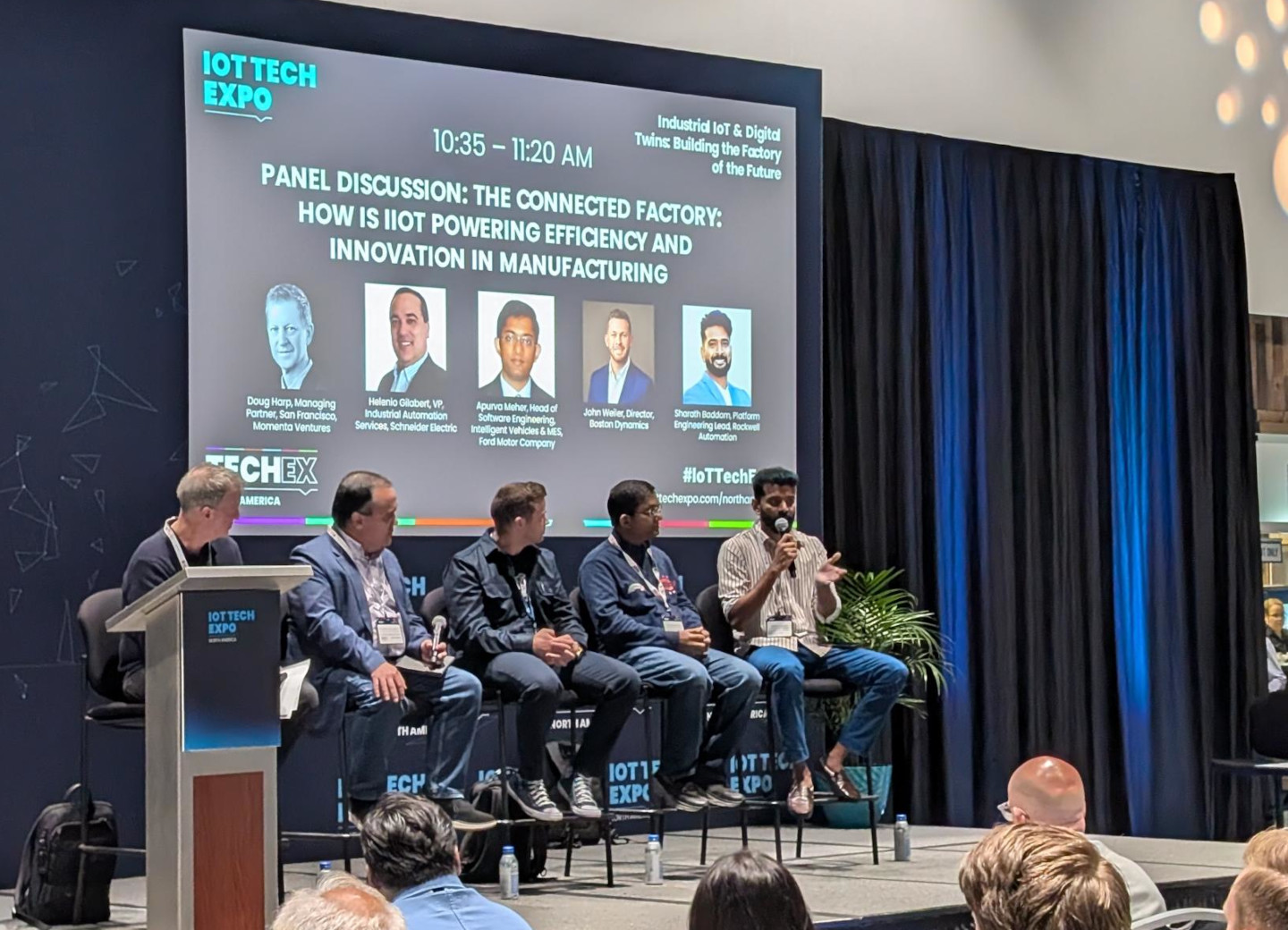
While attendees at events like TechEx North America naturally gravitate toward the latest innovations showcased front and center, it’s often the subtle yet critical insights from speakers and exhibitors that truly resonate with enterprise leaders—highlighting how seemingly minor details can carry major strategic weight.
Across key tracks including Edge Computing, IoT, Data Centre Congress, and Cyber Security, a central theme emerged: What foundational elements must be established *before* AI can effectively integrate into real-world business environments?
The Edge Computing track, grounded in traditional industrial sectors, focused on latency challenges, disciplined deployment practices, and cybersecurity for converged IIoT/IT systems. Day one framed edge computing as an opportunity for organizations to reevaluate their data assets, assess how autonomous systems make decisions, and determine necessary processing speeds.
Discussions explored scaling edge solutions across multiple locations, agentic network management, distributed inference (on-premises, cloud-based, or hybrid), resilient edge infrastructure, and applying zero-trust security principles to industrial control systems.
Ed Doran of the Edge AI Foundation led a program acknowledging the edge as a particularly challenging operational environment. Participants included representatives from Akamai, Spectro Cloud, Scylos, TÜV Rheinland, the OPC Foundation, and Schneider Electric (Germany). Conversations addressed manufacturing and IoT challenges, diving deep into industrial automation and connected control and signal-conditioning devices.
Bringing intelligence closer to machinery alters risk dynamics (though the direction of that shift sparked debate). While faster local processing can reduce latency and lessen reliance on centralized cloud services, questions remain about how decision-makers perceive observability and control.
The IoT Tech Expo’s day-one Industrial IoT and Digital Twins track centered on manufacturing, featuring sessions on smart factory evolution, AI beyond Industry 4.0, asset management, practical strategies to escape “pilot purgatory” (discussed further below), physical AI in daily operations, and digital twins.
Mirroring AI deployment debates in knowledge-based industries, the gap between proof-of-concept and real-world implementation drew the most attention. Both industrial and back-office AI may perform well in demos but often falter when interfacing with legacy equipment or outdated software.
The concept of “pilot purgatory” carried significant weight across multiple sessions and on the exhibition floor during day one. A Rockwell Automation and Ford presentation on physical AI and connected asset intelligence particularly examined why projects that appear successful in theory frequently struggle in practice. How can intelligence become part of everyday operations without turning into yet another unmonitored dashboard?
Digital twins faced similar scrutiny. The most valuable digital twin isn’t merely a visual replica for demonstrations—though those have their place. Multiple speakers advocated for functional operational models that genuinely support factories, cities, or municipal facilities. Beyond pre-testing decisions and enhancing maintenance, what core objectives should today’s digital twin fulfill?
The TechEx agenda connected insights from speakers representing Siemens, LG CNS (Korea), Boston Dynamics, and others across various tracks. The consistent takeaway: intelligent systems—whether embedded in engineering environments or back-office functions—must be designed in close alignment with the people or machines they’re meant to serve.
Day-one sessions at the Data Centre Congress tackled pressing industry challenges: construction logistics, power supply, procurement, cooling systems, water usage, and the network backbone required for AI data centers. Keynotes and panel discussions addressed construction complexities and power constraints, with early attendees hearing from Santa Clara—the host city—about its own data center development journey.
The data center remains pivotal to the broader AI conversation. AI demands intensive computing power, which in turn relies on robust infrastructure: energy, cooling, land access, and regulatory approvals. A recurring theme in infrastructure talks was the mismatch between rapidly evolving AI economics and the slow maturation of physical infrastructure.
TechEx stands out by uniting an entire industry’s challenges under one roof, enabling a holistic view. In the Data Center Congress, we saw how water and power limitations cut through hype about AI’s scale. Meanwhile, sessions under the AI and Big Data umbrella tempered expectations of an AI productivity boom, citing reasons why haphazard tech rollouts fail in modern enterprises. The data center is where AI strategy becomes *physical*—and boardroom discussions turn *practical*.
The Cyber Security and Cloud Expo track offered its own deployment perspective. Day one covered security culture, compliance, deployment speed, ransomware threats, shadow AI usage, data leaks, legacy system risks, open-source dependencies, and CISO-C-suite dynamics. There was broad agreement that AI adoption expands a company’s attack surface, and a repeated message: existing security gaps don’t vanish just because the business demands faster, smarter tools.
Sessions on shadow AI and data exfiltration were especially relevant to the wider event. Many employees use AI tools within workflows—often without approval and typically without activity logging. This blurs the line between data governance and cybersecurity, making them effectively one conversation.
The advantage of hosting complementary tracks at a single event was evident. For example, cybersecurity concerns about legacy systems echoed those raised on IoT and Edge stages, where modern smart intelligence meets aging industrial equipment. Security is often treated as an afterthought, but in critical infrastructure like transport or energy, cybersecurity must be central.
TechEx North America’s day-one infrastructure tracks grounded the conference in reality. AI may be framed around agentic automation, but real deployments depend on networks, data center capacity, and cybersecurity. Edge and IoT sessions illustrated how intelligence reaches machines—and how thoughtfully it must be applied. Data center discussions revealed the tangible limits of physical construction, while cybersecurity sessions warned that the rush for speed can undermine security.
The day made clear to thousands of attendees that deploying AI in production isn’t simply flipping a switch. Success hinges on foundational elements: buildings, power grids, networks, and security. Organizations that grasp these realities are far better positioned to adopt cutting-edge technology effectively. Understanding the full picture is precisely what this event delivers.
(Image source: TechForge)

Want to learn more about AI and big data from industry leaders? Check out AI & Big Data Expo taking place in Amsterdam, California, and London. The comprehensive event is part of TechEx and co-located with other leading technology events. Click here for more information.
AI News is powered by TechForge Media. Explore other upcoming enterprise technology events and webinars here.
