




Europe Multi-Factor Authentication Market Summary
The Europe multi-factor authentication (MFA) market is a rapidly expanding cybersecurity segment, valued at USD 5.50 billion in 2024 and projected to grow from USD 6.36 billion in 2025 to USD 20.28 billion by 2033. The market is expected to register a CAGR of 15.60% from 2025 to 2033, driven by regulatory enforcement, growth in remote and hybrid work environments, and rising credential-based cyber threats across public, financial, and enterprise sectors in Europe.
Key Insights
- Regulatory Drivers: Market growth is significantly influenced by compulsory EU regulatory frameworks such as GDPR, NIS2, DORA (Digital Operational Resilience Act), and eIDAS, along with guidance from European banking and cybersecurity authorities all of which position MFA as a mandated security and compliance control. Increasing policy emphasis on phishing-resistant authentication, secure identity governance, and strong access verification across essential services has transformed MFA from an optional enhancement into a regulatory requirement.
- Market Segmentation: In 2024, the software segment held the largest market share, driven by the adoption of cloud-based identity platforms, authenticator apps, and single sign-on solutions. By deployment mode, the cloud segment dominated due to rapid SaaS migration and support for sovereign cloud identity infrastructures, while hybrid MFA models are expanding among organizations operating both legacy on-premise and modern cloud environments. By end-user category, banking and financial institutions led adoption due to Strong Customer Authentication mandates, while the healthcare sector is expected to be the fastest-growing segment due to the expansion of telehealth and secure electronic health record access.
- Key Growth Drivers: Key drivers include the rise of remote and hybrid workforce models, increasing cloud migration, escalating credential-based breach risks, growing adoption of passwordless and FIDO-based authentication, and the rollout of EU Digital Identity Wallet initiatives supporting secure cross-border identity verification. Enterprises and public institutions are increasingly prioritizing adaptive, context-aware MFA for remote access, privileged accounts, and critical infrastructure protection.
Challenges:
- Market expansion is restrained by user experience friction and authentication fatigue, fragmented implementation of eIDAS and national identity schemes, continued dependence on legacy authentication methods such as SMS OTP, and a shortage of skilled identity security professionals capable of deploying and managing advanced MFA and zero-trust architectures across hybrid IT ecosystems.
Major Market Players:
- Key companies operating in the Europe multi-factor authentication market include: Giesecke+Devrient GmbH, GoTrustID Inc., Microsoft Corporation, Thales Group, Duo Security (Cisco Systems Inc.), Okta Inc., RSA Security LLC.
Europe Multi-Factor Authentication Market Size
The Europe multi-factor authentication market was valued at USD 5.50 billion in 2024. The regional market is projected to grow from USD 6.36 billion in 2025 to reach USD 20.28 billion by 2033, exhibiting a compound annual growth rate (CAGR) of 15.60% from 2025 to 2033.
Multi-factor authentication refers to the technologies and protocols that verify user identity through two or more distinct factors, typically knowledge (passwords), possession (mobile devices or tokens), and inherence (biometrics), to secure digital access across enterprise, government, and consumer environments. In a region defined by stringent data protection laws and escalating cyber threats, multi-factor authentication has evolved from a best practice into a regulatory and operational necessity. The European Union Agency for Cybersecurity (ENISA) consistently emphasizes that the exploitation of compromised or weak credentials remains a prominent initial access vector for a substantial portion of cyber incidents, emphasizing the critical need for strong, layered verification methods. The recently established EU Digital Identity Framework mandates that Member States provide citizens with a secure, cross-border compatible European Digital Identity Wallet, built on high-assurance identity verification principles and technical standards developed by the European Commission and Member States. Furthermore, enforcement of robust security measures like multi-factor authentication for remote access to internal systems is an increasing trend among enterprises in the European Union, driven by heightened cybersecurity awareness and evolving regulatory guidance. These converging forces position multi-factor authentication as a foundational pillar of Europe’s trusted digital infrastructure.
MARKET DRIVERS
Mandatory Compliance with EU Cybersecurity and Data Protection Regulations
European organizations are compelled to adopt multi-factor authentication due to binding legal frameworks that prioritize identity security as a core component of data protection, and thereby contribute to the growth of the Europe multi factor authentication market. The General Data Protection Regulation explicitly recommends multi-factor authentication to safeguard personal data processing, while the Network and Information Security Directive two requires essential entities, including energy, health, and finance sectors, to implement strong access controls. European Union data protection authorities increasingly emphasize robust authentication measures, such as multi-factor authentication, as a crucial control for protecting personal data in line with general cybersecurity best practices and the principles of the GDPR. The Digital Operational Resilience Act further reinforces this by obliging financial institutions to protect information and communication technology systems against unauthorized access, with multi-factor authentication cited as a baseline control. The European Banking Authority actively promotes the adoption of robust authentication methods, moving away from easily phishable systems, to ensure secure customer interactions and transactions across significant credit institutions within the European Union’s regulatory framework. This regulatory cascade transforms multi-factor authentication from an optional security layer into a non-negotiable compliance requirement across both public and private sectors.
Rapid Expansion of Remote and Hybrid Work Environments
The structural shift toward remote and hybrid work models across the region has dramatically increased the attack surface for credential-based breaches, which in turn accelerates the expansion of the Europe multi factor authentication market. There has been a notable increase in the prevalence of employees performing their professional duties from home regularly. This distributed workforce relies heavily on cloud applications and virtual private networks, both of which require secure authentication beyond static passwords. Remote access infrastructure has increasingly become a primary focal point for unauthorized network intrusions and security breaches. In response, enterprises are deploying adaptive multi-factor authentication that evaluates risk context, such as location, device health, and behavior, to dynamically enforce verification steps. National cybersecurity centers in Germany and France now recommend time-based one-time passwords or FIDO two security keys for all remote logins. This operational reality has embedded multi-factor authentication into the core of Europe’s post pandemic digital workplace strategy.
MARKET RESTRAINTS
User Experience Friction and Resistance to Authentication Complexity
Multi-factor authentication often introduces usability barriers that lead to employee frustration, reduced productivity, and workarounds that undermine security. This restricts the growth of the Europe multi factor authentication market. According to a study, a notable percentage of individuals utilizing secure systems in a business context have indicated a tendency to stop using the designated secure workflows due to persistent authentication requirements or issues with biometric verification processes. In sectors like healthcare and logistics, where rapid system access is critical, authentication delays can directly impact service delivery. In healthcare settings, a segment of personnel using mobile clinical applications in specific test areas disabled extra verification steps to better facilitate workflow efficiency, particularly in high-pressure situations. Additionally, legacy systems, still prevalent in public administration, lack native support for modern protocols like WebAuthn, forcing reliance on SMS based one time passwords that users find intrusive and unreliable. A portion of the general populace avoids using available government digital services, citing the complexity and inconvenience associated with the required login procedures. This tension between security and usability remains a persistent adoption barrier, particularly in environments where speed and simplicity are prioritized over compliance.
Fragmented National Implementation of eIDAS and Authentication Standards
National discrepancies in how the eIDAS framework is applied across the EU hinder the seamless integration of cross-border multi-factor authentication systems, which acts as a major barrier to the Europe multi factor authentication market. A majority of member states have yet to complete the notification process for their national electronic identification frameworks. The number of states facilitating cross-border recognition for secure authentication remains limited. Progress toward full integration of electronic identification systems across the region appears to be ongoing. In practice, this means a French citizen using a national identity wallet may not be able to log into a German public service without additional verification steps. The European Digital Identity Wallet initiative is a proposed solution with an anticipated resolution date, but before its implementation, vendors are required to create integrations specific to individual nations. Currently, organizations operating across multiple European Union countries encounter several distinct authentication protocols, which increases both the expenses associated with integration and the costs of ongoing maintenance. This regulatory fragmentation stifles pan-European scalability and deters smaller vendors from entering the market.
MARKET OPPORTUNITIES
Integration of Passwordless Authentication via FIDO Standards
The adoption of FIDO two and passkey technologies provides a major growth opportunity for the Europe multi factor authentication market. This is achieved by enabling secure yet seamless passwordless authentication aligned with European usability and privacy expectations. Unlike traditional multi-factor methods that rely on SMS or authenticator apps, FIDO standards use public key cryptography stored locally on devices, eliminating shared secrets and reducing phishing risk. Authentication methods compliant with FIDO standards are gaining traction in Europe. This includes major banks in the Netherlands and Sweden implementing biometric passkeys for customer logins. An official European body has endorsed FIDO within its updated digital identity framework, highlighting its alignment with data minimization principles as biometric data remains on the user’s device. Additionally, major technology companies have integrated passkey support across their cloud ecosystems used in Europe. This convergence of standards, policy, and platform support positions passwordless multi-factor authentication as a high-growth frontier.
Deployment of Digital Identity Wallets Under EU Sovereign Identity Initiatives
The European Digital Identity Wallet creates a structured ecosystem for these strong technologies and protocols across public and private services, which offers fresh prospects for the Europe multi factor authentication market. Each wallet will store verified credentials, such as driver’s licenses, academic diplomas, and bank account proofs, and use on-device biometrics or PINs as the second factor during authentication. The initiative is intended to encompass a broad population to facilitate verified age identification and authorized payment processing. Cross-border access to various services is enabled through this framework, and recent pilot programs suggest that wallet-based authentication can be integrated with national healthcare systems and financial applications. Digital wallets are utilized as a model for secure remote user onboarding, and their implementation is associated with a decrease in identity-related fraud. More information is available from the European Commission. For vendors, this represents a regulated, large-scale deployment channel where authentication solutions must interoperate with national wallet schemes. Companies that align with the EU’s technical architecture, based on EBSI and decentralized identifiers, will gain privileged access to a continent-wide identity infrastructure.
MARKET CHALLENGES
Persistent Vulnerabilities in Legacy Authentication Methods
Many European organizations continue to rely on outdated multi-factor methods such as SMS based one time passwords, which are increasingly vulnerable to SIM swapping and interception attacks, and thereby negatively impact the growth of the Europe multi factor authentication market. Account takeovers frequently exploit weaknesses in SMS authentication methods. This trend has led to formal guidance suggesting that this method is outdated for applications requiring high security. Despite this recommendation, the use of SMS for primary second-factor authentication continues among some retail banks due to legacy system integrations and the limitations of customer devices. Migrating away from SMS requires significant investment in modern protocols like WebAuthn or time-based one-time password hardware tokens, which smaller institutions struggle to afford. The disparity creates a two-tier security landscape where advanced organizations adopt phishing-resistant methods while others remain exposed. This technological lag not only increases systemic risk but also complicates regulatory enforcement, as supervisory bodies must accommodate transitional periods that delay overall market maturation.
Shortage of Skilled Professionals for Secure Authentication Implementation
Short supply of talent across the region is hindering the effective deployment and management of advanced multi-factor authentication systems, which in turn challenges the growth of the Europe multi factor authentication market. These systems demand specialized expertise in identity and access management protocols, cryptography, and zero-trust architecture. The need for individuals with specific competencies related to safeguarding digital information and systems in the European Union is substantial, with a significant number of positions remaining open, particularly in areas focusing on managing digital identities. A recent examination indicated that the majority of organizations within the public sector do not possess the necessary internal capabilities to set up and manage advanced systems for verifying user identities based on varying levels of risk. This deficit forces organizations to rely on external consultants or default to basic authentication methods that are easier to manage but less secure. In the eastern part of Europe, this disparity is more pronounced; few educational institutions provide dedicated instruction covering contemporary methods for confirming user identity. Consequently, even when budgets are available, implementation delays and misconfigurations undermine the effectiveness of multi-factor authentication investments, creating a human capital bottleneck that constrains market advancement.
REPORT COVERAGE
REPORT METRIC | DETAILS |
Market Size Available | 2024 to 2033 |
Base Year | 2024 |
Forecast Period | 2025 to 2033 |
Segments Covered | By Offering Type, Authentication Model, Deployment Mode, Enterprise Size, Access Channel, End-user Industry, and Country. |
Various Analyses Covered | Global, Regional, and Country-Level Analysis, Segment-Level Analysis, Drivers, Restraints, Opportunities, Challenges; PESTLE Analysis; Porter’s Five Forces Analysis, Competitive Landscape, Analyst Overview of Investment Opportunities |
Countries Covered | UK, France, Spain, Germany, Italy, Russia, Sweden, Denmark, Switzerland, Netherlands, Turkey, Czech Republic, and the Rest of Europe. |
Market Leaders Profiled | Giesecke+Devrient GmbH, GoTrustID Inc., Microsoft Corporation, Thales Group, Duo Security (Cisco Systems Inc.), Okta Inc., RSA Security LLC, and Others. |
SEGMENTAL ANALYSIS
By Offering Type Insights
The software segment was the largest in the Europe multi factor authentication market in 2024. The prominence of the software segment is driven by the widespread adoption of cloud-based identity platforms and mobile authenticator applications that eliminate the need for physical tokens. Enterprises increasingly favor software solutions for their scalability, lower total cost of ownership, and seamless integration with single sign-on and identity governance systems. A noticeable pattern is an increased preference for software-based authentication methods in various agreements and institutional practices. There is a general move away from traditional methods in favor of solutions that can be integrated more quickly and require less physical infrastructure. Specific instances highlight a preference for software authenticators, including time-based one-time password applications or biometric push notifications, for identity verification processes. The shift is further accelerated by mobile penetration. This convergence of policy, infrastructure, and user behavior solidifies software as the dominant offering type across regulated and commercial sectors.
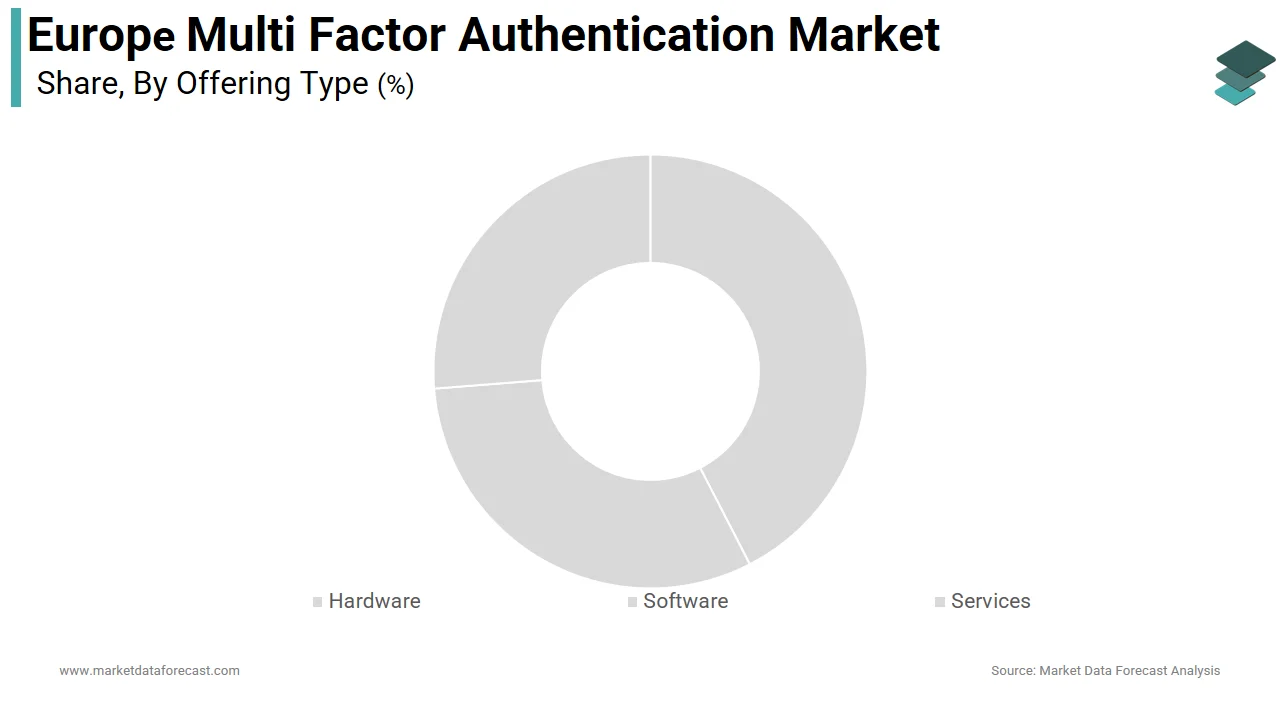
The services segment is on the rise and is expected to be the fastest-growing segment in the market by witnessing a CAGR of 16.3% from 2025 to 2033 due to the rising complexity of identity ecosystems that demand strategic consulting, integration support, and managed detection and response for authentication anomalies. Public agencies often lack the internal specialized knowledge required to implement advanced authentication systems that adapt to security risks. Many organizations are choosing to delegate the deployment and oversight of digital resilience measures to external service providers. Financial institutions are increasingly collaborating with third-party providers to ensure their identity verification processes meet regulatory standards. A growing reliance on external vendors is emerging as entities seek to fulfill complex customer authentication and compliance requirements. Managed services also address the operational burden of maintaining authentication systems across hybrid environments, on-premises legacy applications, and cloud SaaS platforms, requiring continuous policy tuning and user support. This reliance on external expertise, especially among small and medium enterprises and public institutions, transforms services from an ancillary offering into a core growth engine for the market.
By Deployment Mode Insights
The cloud segment dominated the Europe multi factor authentication market in 2024. The supremacy of the cloud segment is attributed to the region’s accelerated migration to software as a service applications and the regulatory endorsement of secure cloud identity infrastructures. Enterprises in the European Union have a substantial rate of adoption of cloud computing services, particularly for common applications like email and general office productivity tasks. The widespread use of these cloud-delivered services naturally contributes to an increased demand for cloud-based authentication solutions. The European Commission’s GAIA X initiative further legitimizes cloud identity by promoting sovereign European cloud providers that embed certified multi-factor authentication into their platforms. Moreover, cloud-based solutions offer automatic compliance updates, critical for adhering to evolving mandates like the Digital Operational Resilience Act, without requiring on-site intervention. The scalability and device-agnostic nature of cloud authentication also align with Europe’s mobile-first workforce, where employees access systems from personal and corporate devices across borders. These factors collectively position cloud as the preferred deployment model for both new and legacy modernization projects.
The hybrid segment is expected to exhibit a noteworthy CAGR of 18.1% during the forecast period, owing to the reality that most large European organizations operate in transitional IT environments running core legacy systems like SAP or mainframe banking applications on premises while adopting cloud-based collaboration and customer engagement tools. Multi-factor authentication in such settings must bridge both worlds without compromising security or user experience. According to sources, A noticeable pattern is that many organizations are adopting integrated identity systems. This approach allows them to manage access to both internal infrastructure and cloud-based services effectively. A similar trend is observed where various entities require the use of combined authentication systems. These models help maintain control over critical local resources while still permitting necessary external access. Vendors respond by offering federated identity gateways that synchronize on-premises Active Directory with cloud identity providers using protocols like SCIM and OAuth two point zero. This architectural necessity, driven by regulatory pragmatism and technical legacy, fuels sustained hybrid adoption across finance, energy, and public administration.
By End User Industry Insights
The banking and financial institutions segment captured the majority share of the Europe multi factor authentication market in 2024. The leading position of the banking and financial institutions segment is credited to stringent regulatory mandates and the high financial stakes of account compromise. The revised Payment Services Directive requires Strong Customer Authentication for electronic payments. This regulation compels financial institutions to implement multi-factor verification for certain transactions. Many payment service providers across the relevant regions have since adopted compliance measures. These methods commonly include biometric verification or one-time passcodes delivered through secure applications. The Digital Operational Resilience Act further obliges financial entities to protect administrative access to critical systems with phishing-resistant authentication. Fraud losses in transactions made without the physical card present have decreased in recent periods, which appears connected to new safety measures. Open banking systems, utilized by many approved third-party providers, have incorporated mandatory multi-factor authentication for user consent during data sharing. This regulatory and operational density ensures that the financial sector remains the most intensive and consistent adopter of advanced authentication technologies across Europe.
The healthcare segment is predicted to witness the highest CAGR of 20.4% from 2025 to 2033. The rapid expansion of the healthcare segment is fuelled by the digitalization of patient records, telemedicine platforms, and cross-border health data exchanges under the European Health Data Space. Several nations have implemented multi-factor authentication requirements for clinicians accessing national electronic health record systems to mitigate the risk of unauthorized data breaches. Certain regions utilize a combination of hardware and software solutions, such as professional electronic cards paired with personal identification numbers, to secure practitioner access to patient information. Adaptive authentication measures are being utilized for research purposes, where verification requirements are dynamically adjusted based on the sensitivity of the datasets being accessed. The rise of remote patient monitoring also introduces new access points. These converging digital health initiatives transform authentication from an administrative control into a patient safety imperative.
By Access Channel Insights
The VPN and remote login segment led the Europe multi factor authentication market in 2024. The prominence of the VPN and remote login segment is because of the region’s entrenched reliance on secure remote access for distributed workforces and third-party vendors. According to research, A majority of workers across Europe have adopted hybrid work arrangements, frequently utilizing virtual private networks to connect with their company’s network. This shift in work practices has been accompanied by a significant pattern in cybersecurity incidents, where many ransomware attacks are initiated through the exploitation of remote access credentials. Consequently, adopting multi-factor authentication has become a critical security measure within the evolving landscape of remote work. National cybersecurity strategies reinforce this. National cybersecurity organizations have established requirements for multi-factor authentication regarding remote administrative access to public systems. Governmental security bodies increasingly expect critical infrastructure operators to implement phishing-resistant authentication for remote connections. There is a visible shift toward standardized authentication protocols to secure sensitive administrative access across various sectors. Authorities are emphasizing the necessity of robust identity verification measures to mitigate risks associated with remote system management. Security frameworks are evolving to prioritize stronger authentication methods as a primary defense for critical digital environments. Legacy applications that cannot be migrated to cloud single sign-on, such as industrial control systems or mainframe databases, further cement the role of VPN as a persistent authentication gateway. This operational reality ensures sustained dominance of the remote login channel across enterprise and government sectors.
The customer-facing web and mobile segment is estimated to register the fastest CAGR of 22.7% over the forecast period. The swift expansion of the customer-facing web and mobile segment is fuelled by digital service proliferation in banking e commerce and public administration, all of which must comply with Strong Customer Authentication under the revised Payment Services Directive and eIDAS assurance level two requirements. As per various studies, a substantial number of citizens across Europe utilized digital platforms provided by their governments, generally using established digital identification methods for secure access. Retail banks lead adoption. In some regions, specific mobile banking applications have implemented advanced biometric verification for certain transactions, which has helped decrease instances of fraudulent activity. E-commerce platforms also implement adaptive authentication, triggering additional verification only for risky transactions, to balance security and conversion rates. The integration of FIDO two-passkeys into browsers and mobile operating systems further streamlines customer authentication without passwords. This shift transforms multi-factor authentication from an internal IT control into a visible consumer experience layer, driving innovation and volume across digital service providers.
COUNTRY-LEVEL ANALYSIS
Germany Multi-Factor Authentication Market Analysis
Germany was the top performer in the Europe multi factor authentication market and captured a 23.7% share in 2024. The demand for multi-factor authentication in Germany is credited to its advanced digital economy and rigorous cybersecurity posture. The nation, a key industrial and financial hub for Europe, implements rigorous access control protocols to safeguard its manufacturing, financial, and essential infrastructure systems. Operations of essential services and other in-scope entities in Germany must implement robust risk management measures, including strong access controls, under the new national cybersecurity act that entered into force in December 2025, with industry guidance emphasizing a move toward phishing-resistant multi-factor authentication to counter prevalent cyber threats. The nationwide Telematics Infrastructure for healthcare, connecting thousands of medical practices, mandates electronic professional cards with PIN verification, creating one of Europe’s largest hardware and software authentication deployments. Besides, Germany’s GAIA X initiative promotes sovereign cloud identity solutions compliant with European data protection standards. Hence, Germany sets the benchmark for enterprise-grade identity security in continental Europe.
United Kingdom Multi-Factor Authentication Market Analysis
The United Kingdom followed closely in the Europe multi factor authentication market and held a 17.1% share in 2024 because of its early and comprehensive adoption of Strong Customer Authentication and government digital identity frameworks. The UK’s Open Banking framework is moving towards strengthening security for data access and payments, in line with regulatory requirements for enhanced customer authentication. UK central government departments are increasingly adopting phishing-resistant authentication methods for remote access, following National Cyber Security Centre guidance to improve cyber resilience. The GOV UK Verify platform, though transitioning, laid the groundwork for future digital identity wallets now being developed under the Digital Identity and Attributes Trust Framework. Additionally, the National Health Service in the UK is promoting the widespread implementation of multi-factor authentication for staff access to patient records to enhance data security and ensure patient confidentiality. Despite Brexit, the UK aligns closely with European standards to maintain data flow adequacy, ensuring continued interoperability and market relevance.
France Multi-Factor Authentication Market Analysis
France is another major player in the Europe multi factor authentication market, with national sovereignty initiatives and robust cybersecurity mandates for critical sectors. The French National Cybersecurity Agency requires all operators of vital importance, spanning energy transport and finance, to deploy adaptive multi-factor authentication that evaluates real-time risk context. In healthcare, the Health Data Hub enforces strict authentication for research access, while the rollout of electronic professional cards for physicians mirrors Germany’s approach. The French government also promotes sovereign authentication solutions developed by local vendors to reduce dependency on non-European cloud identity providers. This blend of regulatory rigor, public service digitization, and strategic autonomy positions France as a high compliance high control market.
Netherlands Multi-Factor Authentication Market Analysis
The Netherlands witnessed a consistent growth in the Europe multi factor authentication market due to its world-leading digital banking sector and tech-savvy population. Dutch banks adopted biometric mobile authentication for payments early in Europe, leading to widespread usage. Most online transactions now follow strong authentication protocols, and instances of fraud are minimal within the European Union. The national platform supports advanced authentication methods, including the YubiKey and mobile biometrics, for access to tax, health, and education services. Additionally, the Netherlands’ open and innovation-friendly regulatory environment encourages pilot programs with FIDO two-passkey and decentralized identifiers. This combination of financial leadership, public digital infrastructure, and early adoption of passwordless standards makes the Netherlands a high velocity market for next generation authentication.
Sweden Multi-Factor Authentication Market Analysis
Sweden is predicted to expand in the Europe multi factor authentication market from 2025 to 2033, owing to its citizen-centric digital identity model and strong privacy norms. The Swedish eID system serves a substantial portion of the resident population. This system accommodates several authentication methods. These methods adhere to relevant authentication standards. The system architecture is designed to collect minimal user data. Approved eIDs are mandatory for access to public digital services. This requirement establishes a unified approach to secure digital authentication across public services. The country’s banks developed BankID in close collaboration with the government, making it the de facto standard for both public and private services, including age verification and digital signatures. Sweden also leads in adopting privacy-preserving authentication. This culture of trust, usability, and data minimization positions Sweden as a model for human-centric authentication in Europe.
COMPETITIVE LANDSCAPE
The Europe multi factor authentication market features intense competition among global cloud identity providers, European sovereign technology firms, and specialized cybersecurity vendors, each navigating a complex landscape of regulation, interoperability, and user experience. Global leaders like Microsoft and Okta leverage their cloud ecosystems to offer scalable adaptive authentication, while European players such as Thales and Cryptomathic emphasize data sovereignty, cryptographic integrity, and compliance with national security mandates. The market is further shaped by the European Union’s push for digital autonomy, which encourages public institutions to favor locally developed or certified solutions. At the same time, financial and healthcare sectors demand phishing-resistant methods that balance security with seamless customer access. This duality creates a bifurcated competitive environment where global scale meets regional trust. Innovation is concentrated in passwordless authentication, FIDO standardization, and integration with digital identity wallets, all under the overarching influence of European regulatory timelines. Success requires not only technical excellence but also deep alignment with Europe’s evolving vision of secure, trustworthy, and citizen-centric digital identity.
KEY MARKET PLAYERS
The leading companies operating in the Europe multi-factor authentication market include:
- Giesecke+Devrient GmbH
- GoTrustID Inc.
- Microsoft Corporation
- Thales Group
- Duo Security (Cisco Systems Inc.)
- Okta Inc
- RSA Security LLC
TOP PLAYERS IN THE MARKET
- Microsoft Corporation plays a pivotal role in the Europe multi factor authentication market through its Azure Active Directory and Microsoft Authenticator solutions, which are deeply embedded in enterprise and public sector identity architectures across the region. The company supports compliance with European regulations, including the Digital Operational Resilience Act and eIDAS, by offering FIDO two security keys, passwordless sign-in, and conditional access policies. The company also partnered with national identity schemes in Sweden and the Netherlands to enable seamless integration of citizen eIDs into workplace logins, reinforcing its position as a foundational identity provider in Europe’s trusted digital ecosystem.
- Thales Group is a leading European provider of hardware and software-based multi-factor authentication solutions with a strong presence in defense, finance, and critical infrastructure sectors. The company supplies FIDO-certified security keys, biometric smart cards, and enterprise authentication platforms that meet the stringent requirements of the Network and Information Security Directive two and the European Defence Agency. Additionally, Thales collaborates with national cybersecurity agencies to develop sovereign authentication solutions that reduce dependency on non-European vendors, aligning with the European Commission’s digital autonomy strategy and strengthening its strategic relevance across public and regulated industries.
- Okta Inc contributes significantly to the Europe multi factor authentication market by delivering cloud native identity and access management solutions tailored for multinational enterprises and digital service providers. The company’s adaptive multi-factor authentication engine supports Strong Customer Authentication under the revised Payment Services Directive and integrates with European national eID schemes through OpenID Connect. Okta also established a dedicated European data residency zone in Germany, ensuring customer data remains within EU borders. These actions reinforce Okta’s commitment to regulatory alignment and data sovereignty while expanding its footprint among European SaaS companies and financial technology firms.
TOP STRATEGIES USED BY THE KEY MARKET PARTICIPANTS
Key players in the Europe multi factor authentication market prioritize regulatory alignment by embedding features that comply with the Digital Operational Resilience Act eIDAS Strong Customer Authentication, and Network and Information Security Directive two to ensure legal adherence and build institutional trust. They invest heavily in phishing-resistant and passwordless technologies such as FIDO two security keys and biometric passkeys to meet European cybersecurity agency recommendations. Companies establish European data residency zones and partner with national eID schemes to support digital sovereignty and cross-border interoperability. Strategic collaborations with public sector agencies and financial regulators enable co-development of compliant authentication frameworks. Additionally, vendors emphasize privacy by design through on-device biometric processing and minimal data collection, aligning with the European Data Protection Board’s guidance on identity verification.
EUROPE MULTI-FACTOR AUTHENTICATION MARKET NEWS
- In February 2024, Microsoft Corporation expanded phishing-resistant authentication features in Azure Active Directory to support European Central Bank cybersecurity guidelines, strengthening its Europe multi factor authentication market presence.
- In November 2023, Thales Group launched Common Criteria-certified cryptographic tokens compliant with EU security standards, enhancing its position in government and critical infrastructure sectors across Europe.
- In March 2024, Okta Inc established a European data residency zone in Germany, ensuring customer identity data remains within EU borders and reinforcing compliance with General Data Protection Regulation mandates
- In May 2024, Thales partnered with the Swedish Civil Contingencies Agency to integrate its biometric smart cards with the national eID system, enabling secure citizen access to public digital services.
- In January 2024, Microsoft collaborated with the Dutch government to enable BankID integration into Microsoft Entra ID, allowing seamless workforce authentication for over one million public sector employees.
MARKET SEGMENTATION
This research report on the Europe multi-factor authentication market has been segmented and sub-segmented into the following categories.
By Offering Type
- Hardware
- Tokens (USB, Smart Card, Smart Key)
- Biometric Devices (Fingerprint, Palm Vein, Facial Recognition)
- Other Devices (Wearables, NFC Smart Cards)
- Software
- Authenticator Solutions (TOTP, Push, U2F)
- Mobile Applications (Native Apps, SDKs)
- Services
- Managed Services
- Professional Services
By Authentication Model
- Two-Factor Authentication (2FA)
- Multifactor Authentication (3F and 4F)
- Adaptive / Risk-Based MFA
- Password-less Authentication (WebAuthn, Passkeys)
By Deployment Mode
By Enterprise Size
- Small and Medium-sized Enterprises (SMEs)
- Large Enterprises
By Access Channel
- VPN and Remote Login
- Web and SaaS Applications
- Mobile Workforce
By End-user Industry
- Banking and Financial Institutions
- Cryptocurrency and Web3 Exchanges
- Technology (SaaS, IT Services, DevOps)
- Government (Federal, State, Local, Integrators)
- Healthcare and Pharmaceutical
- Retail and E-commerce
- Energy, Utilities, and Manufacturing
- Education, Immigration, and Public Services
By Country
- United Kingdom
- France
- Spain
- Germany
- Italy
- Russia
- Sweden
- Denmark
- Switzerland
- Netherlands
- Rest of Europe
