



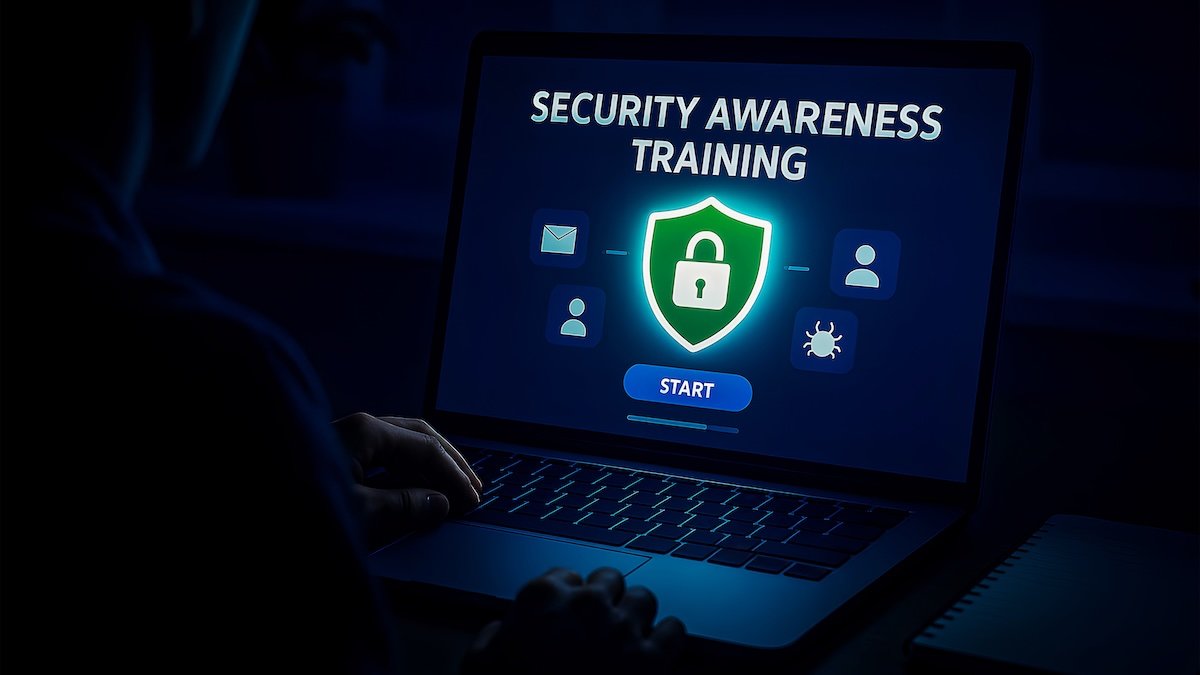
**The Limits of Human Vigilance: Rethinking Security Awareness in the AI Era**
Organizations across all industries invest heavily in educating their workforce about digital threats. Yet, the measurable impact of these programs remains a subject of intense debate. As successful breaches continue to rise, security leaders are forced to ask whether current educational approaches actually yield meaningful results or merely serve as an administrative formality.
**The Bureaucratic Checkbox**
A significant portion of modern training initiatives suffer from a bureaucratic curse. Driven by insurance mandates and audit requirements, many programs rely on repetitive, one-size-fits-all modules delivered annually. This approach reduces complex security concepts to a mere administrative task—a box that must be checked rather than a skill that needs to be honed. When staff are forced to rehash outdated material year after year, engagement plummets, and the training fails to translate into actual behavioral change. The result is a workforce that completes modules without absorbing the skills required to stop a real attack.
**The AI Asymmetry Problem**
The threat landscape has fundamentally shifted with the integration of artificial intelligence. Threat actors now wield tools capable of generating flawless, hyper-targeted phishing messages and convincing voice clones at unprecedented speeds. Defenders face a severe asymmetry: malicious actors need only exploit a single moment of distraction, whereas human defenders must remain flawless against an endless barrage of attacks. Furthermore, educators are inherently stuck teaching yesterday’s tactics, while attackers continuously innovate tomorrow’s. You cannot prepare someone for a threat that does not yet exist, making traditional curricula perpetually one step behind.
**Cognitive Limits and the Memory Gap**
From a scientific perspective, the human brain is not naturally equipped to act as a permanent firewall. Cognitive science demonstrates that memory decays rapidly, and the ability to recall the correct response in a high-pressure moment is highly fragile. Training that focuses solely on abstract recognition—such as spotting obvious red flags in old scam templates—often backfires. If a malicious message lacks those outdated red flags, employees might mistakenly interpret the absence of danger as a sign of legitimacy. Predicting the future of these social engineering tactics is akin to trying to perfectly forecast financial markets: possible in the short term, but largely unreliable over time.
**Moving Forward: Beyond Awareness**
To bridge this gap, the industry must move beyond traditional awareness models. The focus should shift toward continuous, contextual behavioral nudges that activate at the exact moment an employee encounters a potential threat. Micro-learning, gamification, and rewarding positive security habits—such as prompt reporting and consistent authentication practices—can transform a passive workforce into an active sensor network. Ultimately, human education should complement, not substitute, robust technical infrastructure and engineering controls. Relying on staff to be the ultimate line of defense against machine-speed attacks is a losing strategy.
***
**FAQ**
**Q1: Why do traditional security training programs consistently fail to stop breaches?**
A: They often become repetitive, generic, and driven by compliance checklists rather than practical skill-building. By forcing employees through identical annual modules, the content quickly becomes irrelevant to the actual threats they face, resulting in no meaningful behavior change.
**Q2: How does artificial intelligence impact the effectiveness of human-centered defense?**
A: AI allows attackers to automate and personalize social engineering attacks at machine speed, creating deepfakes and flawless phishing messages that are extremely difficult for humans to distinguish from legitimate communications. It creates an unfair advantage where attackers only need to succeed once, but defenders must block every single attempt.
**Q3: What is the best alternative to traditional awareness training?**
A: Moving toward behavioral conditioning and continuous micro-learning. Instead of annual lectures, organizations should use contextual nudges, reward measurable security behaviors like multi-factor authentication usage and threat reporting, and ensure that technical controls do the heavy lifting rather than relying solely on human vigilance.
**Q4: Can cognitive science improve how we train employees?**
A: Yes. Cognitive science shows that memory fades quickly, and people struggle to apply abstract knowledge in real-time. Effective training must account for this by reinforcing learning frequently and providing behavioral prompts exactly when they are needed, rather than relying on long-term recall of generic rules.
***
**Conclusion**
The debate over whether security education works is largely a matter of definition and execution. While it is unrealistic to believe that any single training session can fully immunize an organization against evolving threats, abandoning human-focused education entirely is equally shortsighted. The goal must shift from creating a perfect human firewall—something impossible against machine-speed attacks—to fostering a resilient culture of continuous learning and behavioral awareness. When paired with strong technical safeguards and adaptive engineering, modernized training can still play a vital, albeit supplementary, role in a layered defense strategy.
Thank you for reading
