



# Hyundai’s Metaplant: A New Vision for Automotive Manufacturing in Georgia
## A Facility Like No Other
Hyundai Motor Group has unveiled a manufacturing facility in Georgia that challenges every preconception about how cars are built. Stretching across 2,900 acres just 30 miles west of Savannah in the small community of Ellabell, the complex represents a $12 billion commitment to the future of mobility and marks a dramatic departure from conventional automotive assembly plants.
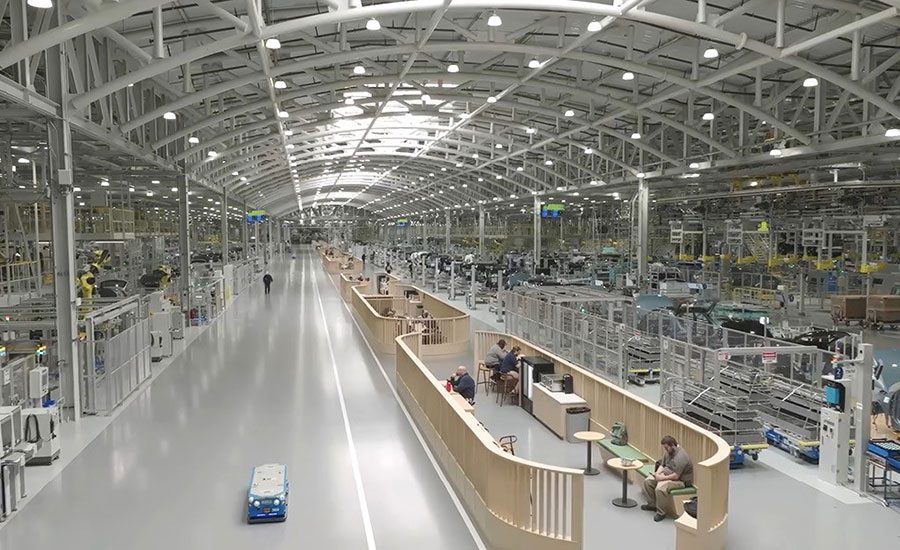
From the outside, the facility signals its unconventional nature. Motorists passing along Interstate 16 can see a sprawling parking lot covered in solar panels, along with a 3,000-foot-long glass-enclosed structure housing an elevated bridge with two parallel lines inspired by the flow of a stream. Inside, vehicles glide on conveyors from the paint shop to the final assembly line in a carefully orchestrated dance of automation and human ingenuity.
Hyundai has dubbed the facility a “metaplant,” borrowing the prefix “meta” — meaning transformative or transcending — to describe a next-generation factory that goes far beyond traditional manufacturing. This $12 billion investment is Hyundai’s first factory dedicated exclusively to producing electric vehicles and serves as a showcase for cutting-edge automation, adaptability, and sustainability.
## The Software-Defined Factory
At the heart of the metaplant’s philosophy is the concept of a software-defined factory, where artificial intelligence optimizes every aspect of production. All manufacturing processes — from order collection and procurement to logistics and final assembly — are seamlessly connected through digital technology that analyzes real-time data and continuously improves operations.
Yet despite the heavy reliance on automation, the facility is deliberately designed around the people who work there. Hyundai refers to its factory operators as “meta pros,” and the plant features a human-centric environment where robots assist rather than replace human workers. The goal is to reduce physical strain on employees while allowing them to focus on tasks that require judgment, problem-solving, dexterity, and adaptability.
“The facility was initially designed to produce electric vehicles, allowing teams to plan from the beginning for EV-specific components,” explains Jerry Roach, senior manager of general assembly at the plant. “Building a new site gave us the opportunity to design the plant, equipment, and movement of materials as one connected system.”
## Scale and Scope
The metaplant comprises 11 air-conditioned buildings spanning more than 7 million square feet of space. Two flexible assembly lines flow in a horseshoe-shaped layout, with 116 workstations positioned an average of 20 feet apart. One line is dedicated to high-volume production of the Hyundai Ioniq 5, while a second line builds the larger Ioniq 9 SUV and the Kia Sportage hybrid.
The facility currently assembles three models — the Ioniq 5, the Ioniq 9, and the Kia Sportage hybrid — with a fourth model expected to join the production mix soon and Genesis-branded vehicles to follow. The long-term ambition is to eventually produce up to 10 different models and reach an annual output of at least 580,000 vehicles. Hyundai plans to employ 8,500 people at the site by 2030 and has already added a second shift as production volumes ramp up.
## Vertical Integration at Its Finest
One of the metaplant’s most striking features is its deep vertical integration. Rather than relying heavily on outside suppliers for critical components, Hyundai has built an ecosystem of affiliated manufacturing operations right on the campus. This approach enables faster parts delivery, more responsive inventory management, and tighter quality control.
Hyundai Mobis, the company’s parts and systems subsidiary, operates its largest global production facility at the site. There, workers assemble 300,000 battery systems annually along with cockpit modules, front-end modules, chassis components, and power electric systems that integrate motors, inverters, and reduction gears. This facility supplies not only the Georgia metaplant but also Hyundai’s factory in Montgomery, Alabama, and Kia’s plant in West Point, Georgia.
Next door, Hyundai Transys runs a high-capacity seat production facility with an annual output of 420,000 units. Using advanced automation including auto-docking systems and mold-release application robots, the plant assembles both front and rear seats for the vehicles rolling through the main assembly building.
In the northwest corner of the campus, Hyundai Steel transforms heavy steel coils into flat blanks. Those blanks travel to a nearby body shop equipped with large Hyundai Rotem high-speed servo presses that stamp out metal components such as fenders, roofs, and side outer panels. An AI-based vision system automatically inspects each panel for defects like holes or cracks, ensuring quality at the source.
Six hundred six-axis robots perform spot-welding tasks throughout the body shop, handling approximately 95 percent of all joining operations. Autonomous mobile robots made by Hyundai Wia transport bodies between stations, while Boston Dynamics Spot quadruped robots equipped with high-resolution cameras and optical inspection systems patrol the floor checking for weld defects.
## Battery Production On-Site
A critical element of the metaplant’s competitiveness is its on-site battery cell factory, operated as a joint venture between Hyundai Motor Group and LG Energy Solution. The 1.5-million-square-foot facility has an annual production capacity of 30 giga-watt hours — enough to supply batteries for roughly 360,000 vehicles per year based on the 84-kilowatt-hour battery pack used in the Ioniq 5.
This localized battery strategy is designed to strengthen Hyundai’s position in the U.S. electric vehicle market by reducing dependence on overseas supply chains, shortening delivery timelines, and lowering logistics costs. It also provides a buffer against the kind of disruptions that have affected the global automotive industry in recent years.
## Mixed-Model Flexibility
The metaplant was engineered from the ground up to be adaptable. Its integrated mixed-model production system allows it to manufacture both electric and hybrid vehicles on the same lines, ensuring it can respond quickly to shifting consumer preferences in the U.S. market. When the company decided to add hybrid vehicles to the production mix, the facility’s flexible design made the transition far smoother than it would have been in a traditional factory.
The trim line uses a one-kit system powered by AI and vision-based technology that verifies the correct parts are properly sequenced for each vehicle. High-volume, high-mix components such as bolts, clips, hoses, seals, and wire harnesses are kitted on trolleys that travel alongside each vehicle, with each cart carrying about 100 components. This lean approach reduces line-side complexity, minimizes errors, and improves overall throughput.
Assemblers use cordless fastening tools connected via a 5G network to a smart factory platform that interacts with AI-based software. The tools automatically collect data and are digitally controlled to stop precisely when the correct torque is applied, eliminating the possibility of over- or under-tightening critical bolts. Ergo conveyors — moving platforms synchronized to specific takt times — allow workers to ride alongside vehicles as they progress through the line, featuring wood surfaces and height-adjustable skillet systems designed to reduce repetitive-motion injuries.
## Pioneering Robotic Applications
With more than 1,000 robots in operation, the facility ranks among the most technologically advanced auto factories anywhere in the world. Several of its robotic applications are firsts for the industry.
The plant features the first robotic door assembly station on a moving assembly line in automotive manufacturing. A team of 14 robots equipped with AI-powered cameras works in perfect synchronization to automatically install front and rear doors. The six-axis machines pick doors from an elevated conveyor, align them in the correct position, insert and drive fasteners, and then verify alignment to ensure doors sit flush with no gaps. This innovation reduces the risk of back, shoulder, and repetitive-motion injuries while improving first-time quality.
Another notable innovation is a robotic front-end module installation station where six-axis robots use cameras to select matching modules before aligning and fastening them. Artificial intelligence and vision system technology help make this complex process more accurate, flexible, and reliable. The system recognizes variations, detects potential quality issues, and optimizes installation movements based on process data, delivering an optimal fit and finish for headlamps, fenders, hoods, and front bumpers.
At the end of the line, parking robots supplied by Hyundai Wia move vehicles from the final assembly line to three automated inspection stations. These 110-millimeter-tall machines slide underneath each vehicle, lift the wheels, and transport the car to stations where collaborative robots adjust, calibrate, and test brakes, headlights, steering systems, turn signals, and advanced driver assistance systems. The robots can lift vehicles weighing up to 3.4 tons and navigate in any direction at speeds up to 1.2 meters per second using cameras, lidar sensors, and QR codes embedded in the plant floor.
The metaplant also recently began producing a derivative of the Ioniq 5 for Waymo’s fleet of robotaxis. These vehicles feature proprietary roof and body mounting brackets, along with unique hose and wire routing configurations. Special latches enable doors to automatically unlock and open when picking up Waymo passengers. Once assembled at the Georgia facility, the vehicles are shipped to Waymo’s facility in Mesa, Arizona, where sensor hardware stacks housing cameras, lidar, radar, and other autonomous-driving equipment are installed before deployment.
## Sustainability Features
Environmental responsibility is woven into every aspect of the metaplant’s design. A solar panel-covered parking lot at the front of the complex generates approximately 5 percent of the facility’s electricity needs. The site includes an on-site wastewater pretreatment facility that ensures all wastewater is processed safely before discharge, as well as a 160-acre stormwater detention pond that mitigates the impact of urban development on local water resources.
An ecological park spanning 41 acres is under construction nearby. When completed, it will feature native landscaping, walking trails, ponds, picnic tables, and environmental art displays — a nod to the area’s rural heritage. The exterior of the buildings themselves features rounded corners and muted colors that blend harmoniously into the surrounding countryside, a deliberate architectural choice that acknowledges the site’s origins as former farmland.
The company’s broader sustainability goals include delivering 2 million electric vehicles worldwide by 2030, electrifying its entire lineup by 2035, and producing at least 80 percent of the vehicles it sells in the U.S. domestically by the end of the decade, up from roughly 40 percent in 2024.
## Workforce Development and Training
While technology plays a starring role, the people who operate the metaplant are equally vital. More than 60 percent of the facility’s workers come from within a 60-mile radius of Ellabell. The factory has successfully recruited veterans from nearby Fort Stewart and other military installations, and has found that individuals with food service experience often transition well into manufacturing roles.
“Employees with fast-food backgrounds can be especially well suited for automotive assembly environments, because many of the core behaviors required for success transfer directly to manufacturing,” notes Susan Williams, executive director of Georgia Quick Start, a workforce training program funded by the state of Georgia to encourage manufacturing investment. “Fast-food employees are accustomed to working in fast-paced, highly standardized environments where speed, quality, teamwork, safety, and consistency must occur simultaneously.”
Every new employee spends their first four weeks at the Hyundai Mobility Training Center, a standalone 89,000-square-foot facility on the campus. The center can train up to 824 individuals at a time across six flexible classrooms, a robotics lab, a welding lab, a paint lab, and simulated production environments.
The training curriculum includes two progressive assembly-line experiences. The S.T.E.P. (Safe Transition for Efficient Production) line introduces workers to a conveyor-based environment where they develop timing awareness and coordination skills. The I.M.P.A.C.T. (Immersive Manufacturing Process and Conveyor Training) line is the final phase of general assembly training — a full-length moving assembly line with 20 assemblies and 50 assembly-related tasks that replicates the full build rhythm of a production vehicle, including takt time.
The curriculum also includes metric system training, high-voltage safety instruction, and hands-on practice with wiring harnesses and electrical connectors specific to electric vehicles. The goal is to ensure that every meta pro is fully prepared to work safely and efficiently on the plant floor before they ever touch a production vehicle.
## A Growing Ecosystem
The metaplant is part of a broader Hyundai expansion across the United States. Hyundai’s first U.S. factory opened in Montgomery, Alabama, in 2005 and currently produces SUVs including the Santa Cruz, Tucson, and Santa Fe. A Kia manufacturing plant in West Point, Georgia, opened in 2009 and produces the EV6, EV9, Sorento, Sportage, and Telluride.
Hyundai also operates a design center in Fountain Valley, California, a technical center in Ann Arbor, Michigan, and is currently building a $6 billion steel mill in Donaldsonville, Louisiana, with an annual capacity of 2.7 million tons that is expected to ramp up production in 2029.
More than 20 key suppliers are either expanding or establishing new operations near the Ellabell campus, further strengthening the regional manufacturing ecosystem. Parts are transported to the general assembly building by a fleet of Hyundai Xcient hydrogen-powered Class 8 trucks — zero-emission vehicles that attach to Hyundai Transys semi-trailers for a cleaner, more sustainable supply chain.
## Looking Ahead
Hyundai Motor Group’s Georgia metaplant represents more than a new factory. It is a statement of intent — a vision for what manufacturing can look like when innovation, sustainability, and human ingenuity converge on a single campus. As the company continues to expand its electric vehicle lineup and increase domestic production capacity, this facility will serve as both a production powerhouse and a blueprint for the next generation of automotive manufacturing, not just in America but around the world.
With ambitious goals for electrified vehicle output, workforce growth, and vertical integration, the metaplant positions Hyundai to compete aggressively in the rapidly evolving U.S. auto market. It is a facility built not merely to assemble cars, but to shape the future of mobility itself.
—
## Frequently Asked Questions
**What exactly is a “metaplant”?**
A metaplant is a term coined by Hyundai Motor Group to describe a next-generation manufacturing facility that transcends traditional automotive assembly plants. The prefix “meta” conveys the idea of something transformative — a factory designed from the ground up to integrate advanced automation, artificial intelligence, sustainability, and human-centric design into a single, cohesive production environment.
**What vehicles are currently produced at the Georgia facility?**
The facility currently assembles three models: the Hyundai Ioniq 5 (a fully electric compact crossover SUV), the Hyundai Ioniq 9 (a fully electric three-row SUV), and the Kia Sportage hybrid. A fourth model is expected to join the production lineup soon, with Genesis-branded vehicles to follow.
**How many employees will the facility eventually have?**
Hyundai plans to employ 8,500 people at the site by 2030. The facility has already added a second shift as production volume increases.
**What makes this factory different from traditional auto plants?**
Several factors set it apart: it was designed exclusively for electric vehicle production from day one; it uses more than 1,000 robots in advanced configurations; it features a software-defined factory approach powered by AI and real-time data; it incorporates extensive vertical integration with many components made on-site; and it prioritizes a human-centric work environment with features like natural lighting, collaborative team centers, and uniform attire for all employees.
**Is the facility really sustainable?**
Yes. The plant includes solar panels that generate approximately 5 percent of its electricity, an on-site wastewater pretreatment facility, a 160-acre stormwater detention pond, and hydrogen-powered trucks for parts transport. Hyundai also aims to produce only electrified vehicles by 2035 and is investing in localized battery production to reduce its supply chain’s environmental footprint.
**What training do workers receive before starting on the production floor?**
Every new employee spends four weeks at the Hyundai Mobility Training Center, which includes the S.T.E.P. line for developing timing and coordination skills and the I.M.P.A.C.T. line, a full-length moving assembly line that replicates real production conditions. Training covers metric measurement, high-voltage safety, wiring harness handling, and the specific tasks associated with their role.
**How does the facility handle quality control?**
Quality assurance is integrated throughout the production process. AI-based vision systems inspect body panels for defects, robotic door assembly stations verify flush alignment, and automated end-of-line inspection stations use collaborative robots to test brakes, headlights, steering systems, turn signals, and advanced driver assistance systems. Boston Dynamics Spot robots also patrol the body shop checking for weld defects.
**What is Hyundai’s long-term goal for the Georgia plant?**
The long-term goal is to produce up to 10 different models and reach annual production of at least 580,000 vehicles. Hyundai also aims to manufacture at least 80 percent of the vehicles it sells in the United States domestically by the end of the decade, and the Georgia metaplant will be central to that strategy.
—
## Conclusion
Hyundai Motor Group’s metaplant in Georgia stands as a bold reimagining of what a car factory can be. By combining massive scale with remarkable flexibility, deep vertical integration with cutting-edge automation, and technological ambition with a genuine commitment to the well-being of its workers, the facility sets a new standard for the automotive industry. It demonstrates that manufacturing excellence and sustainability are not opposing goals but complementary ones — and that the factories of the future can be both highly productive and deeply human. As Hyundai continues to invest in American manufacturing and accelerate its electrification strategy, the Ellabell metaplant will undoubtedly serve as a model for industrial innovation for decades to come.
Thank you for reading
