



# Crypto Market Roundup: SEC Brings Clarity to Token Buybacks, BTC ETFs See Massive Inflows
The cryptocurrency markets experienced a mixed week of developments, ranging from significant regulatory clarity from the U.S. Securities and Exchange Commission to impressive institutional adoption milestones. Here’s a comprehensive breakdown of the stories shaping the industry right now.
## Bitcoin Retreats After Record Weekly Performance
Bitcoin, the world’s largest cryptocurrency by market capitalization, pulled back nearly 2% to trade around $83,000 following its strongest weekly close since January. The correction came as broader financial markets showed weakness, with stock futures declining on rising interest rates and commodity prices.
Ethereum slipped roughly 2% to $2,670, while Solana dropped 5% to $119. Among the higher-profile altcoins, Zcash fell 6% to $1,570, and Hyperliquid dipped 4% to $90. The broader crypto market took a breather after the rally, with analysts noting that such pullbacks are natural after sustained upward momentum.
Despite the short-term decline, the overall trajectory for Bitcoin remains bullish, with institutional demand continuing to build through exchange-traded products.
## SEC Issues Landmark Guidance on Token Buybacks
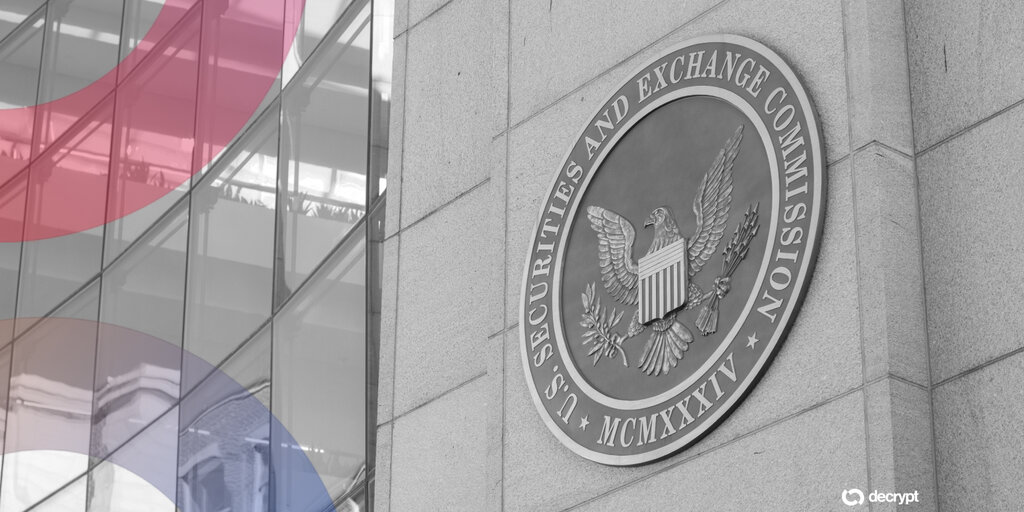
In what many are calling the most significant regulatory development of the year, the SEC’s Division of Corporation Finance updated its frequently asked questions regarding crypto networks. The updated guidance draws a clear line between protocols that operate functional networks and those that do not, particularly in relation to token buyback programs.
Under the new framework, once a blockchain network is operational, announcing a token buyback does not constitute a promise of essential managerial efforts — a key threshold in the Howey test used to determine whether an asset qualifies as a security. The SEC further clarified that maintaining, upgrading, or expanding a functioning network, promoting its current capabilities, or making aspirational statements without promising profit do not trigger securities laws.
However, the guidance is not a blanket exemption. If a network is still in development and its issuer markets the buyback as a source of yield or returns, it may still fall under securities regulations. This creates a functional test: ship a working product and buy back your token, and you’re operating within the rules; promise returns without a product, and you remain exposed.
The legal community has taken note. Industry attorneys have described the guidance as going further than anticipated, suggesting that securities laws in the crypto space are becoming opt-in rather than imposed. This marks a significant shift from the previous regulatory environment that left many protocols in a state of legal uncertainty.
## Institutional Adoption Accelerates: Citi and Coinbase Forge Stablecoin Partnership
Global banking giant Citigroup announced a strategic partnership with Coinbase to bring stablecoin support to its institutional client base. The collaboration is expected to streamline how banks and financial institutions manage digital dollar-denominated assets, providing a regulated and familiar on-ramp for corporate treasury operations.
The move signals growing acceptance of stablecoins within traditional finance and positions Coinbase as a key infrastructure provider for institutional-grade digital asset services. As regulatory clarity improves, more legacy financial institutions are expected to follow suit.
## Bitcoin ETFs Post Record Weekly Inflows
Bitcoin exchange-traded funds celebrated their seventh consecutive day of positive flows on Friday, with $135 million in net inflows pushing the weekly total to a staggering $2.39 billion. Ethereum ETFs also performed well, capturing $87 million in inflows for a weekly total of $690 million.
The sustained demand through ETF products demonstrates that institutional investors are not just testing the waters — they are actively allocating capital to cryptocurrency exposure through regulated vehicles. The consistency of inflows has become a defining feature of the current market cycle.
## Pump.fun Overtakes Hyperliquid in Weekly Revenue
In a surprising turn of events, the meme token launchpad Pump.fun has surpassed Hyperliquid as the top revenue generator among crypto protocols on a weekly basis, with its token PUMP surging 11% alongside the news. Pump.fun has now burned approximately $451 million worth of its token, representing roughly 16.6% of its total supply.
Hyperliquid, which had previously dominated the revenue charts, was displaced as protocols with established buyback mechanisms and active user bases continued to prove their commercial viability. The shift highlights the growing importance of real revenue generation in the crypto ecosystem.
## Top Altcoin Movers and Market Activity
While major cryptocurrencies retrenched, several altcoins posted impressive gains during the week. Quant led the pack with a 45% surge, followed by Hedera at 24%. Algorand also saw a 12% bump, reflecting renewed interest in established Layer 1 platforms.
In the meme coin space, leaders generally pulled back between 5% and 7%, with Dogecoin and Shiba Inu both losing 5%, while Pepe, Penguin, and Trump-themed tokens saw declines ranging from 4% to 6%. On the Binance Smart Chain and Solana ecosystems, new token launches and airdrops continued to drive activity, with several projects experiencing significant volatility.
## Other Notable Developments
– **Bitget** resumed Bitcoin withdrawals on Monday, four days after a security breach that resulted in approximately $388 million in losses. The exchange confirmed that it has addressed the vulnerability and that users’ full balances remain intact.
– **Prosecutors** seized roughly $84 million from a payments firm accused of facilitating transactions for Tether and Bitfinex, alleging the firm misrepresented its operations to major banks including Wells Fargo and JPMorgan.
– **Binance** announced support for Marscoin and other new tokens on its platform, expanding its offerings for traders.
– **Vitalik Buterin** outlined his vision for Ethereum’s evolution through 2030, suggesting that the network will increasingly rely on off-chain computation verified through cryptographic proofs rather than every node reprocessing every transaction.
– **Solana** advanced its transaction settlement upgrade to a second public test network, bringing the 150-millisecond finality goal one step closer to mainnet deployment.
—
## Frequently Asked Questions (FAQ)
**Q: What does the SEC’s token buyback guidance mean for crypto projects?**
A: The guidance establishes that functional protocols can announce and execute token buybacks without automatically triggering securities laws. The key distinction is whether the network is already operational and generating revenue. Projects that ship a working product and buy back their token are operating within the new framework, while those that promise future returns without a functional product remain subject to stricter scrutiny.
**Q: Why did Bitcoin drop 2% after such a strong week?**
A: Pullbacks after strong rallies are a normal part of market dynamics. Bitcoin’s weekly close was its best since January, and the subsequent two-day decline reflects profit-taking and broader market weakness, including rising interest rates and higher oil prices that have weighed on risk assets globally.
**Q: Are Bitcoin ETF inflows sustainable?**
A: The seven consecutive days of positive flows and the $2.39 billion weekly total suggest strong institutional demand is holding. As more traditional finance firms integrate crypto into their portfolios and regulatory clarity improves, ETF inflows are expected to remain a significant driver of Bitcoin demand.
**Q: What is the significance of the Citi-Coinbase stablecoin partnership?**
A: This partnership represents one of the most concrete examples of a major global bank integrating stablecoin infrastructure into its institutional services. It signals that traditional finance is moving beyond experimentation toward practical adoption of digital dollar assets for corporate treasury and cross-border payment purposes.
**Q: How do token buybacks benefit crypto protocol holders?**
A: Buybacks reduce token supply over time, which can create deflationary pressure and potentially increase the value of remaining tokens. When paired with protocol revenue — such as trading fees or transaction costs — buyback programs allow holders to benefit directly from the economic activity the protocol generates.
**Q: What should investors watch for next in the regulatory space?**
A: The SEC’s buyback guidance is likely just the beginning of a broader regulatory framework for crypto. Key areas to watch include further clarification on staking rewards, DeFi governance tokens, and the treatment of layer-2 networks. Industry participants expect continued incremental guidance rather than sweeping new rules in the near term.
—
## Conclusion
This week in crypto has been defined by convergence — regulatory clarity meeting institutional demand, and real revenue generation meeting innovative token mechanics. The SEC’s buyback guidance is a watershed moment that gives functional protocols a clear path forward, while the Citi-Coinbase partnership and record ETF inflows underscore that cryptocurrency is no longer on the fringe of global finance.
Bitcoin’s short-term pullback should not overshadow the broader momentum building across the ecosystem. With ETF products drawing sustained institutional capital, Ethereum’s roadmap evolving toward greater scalability, and Solana pushing the boundaries of transaction speed, the infrastructure layer of crypto is maturing rapidly.
Meme coins and speculative tokens will continue to cycle with the market’s mood, but the projects that generate real revenue and operate within a clear regulatory framework are the ones poised for long-term growth. The message from regulators, institutions, and protocol developers alike is clear: the crypto industry is building for the long haul.
Thank you for reading
