



# How This Week’s Economic Releases Could Shape the Fed’s Next Rate Decision
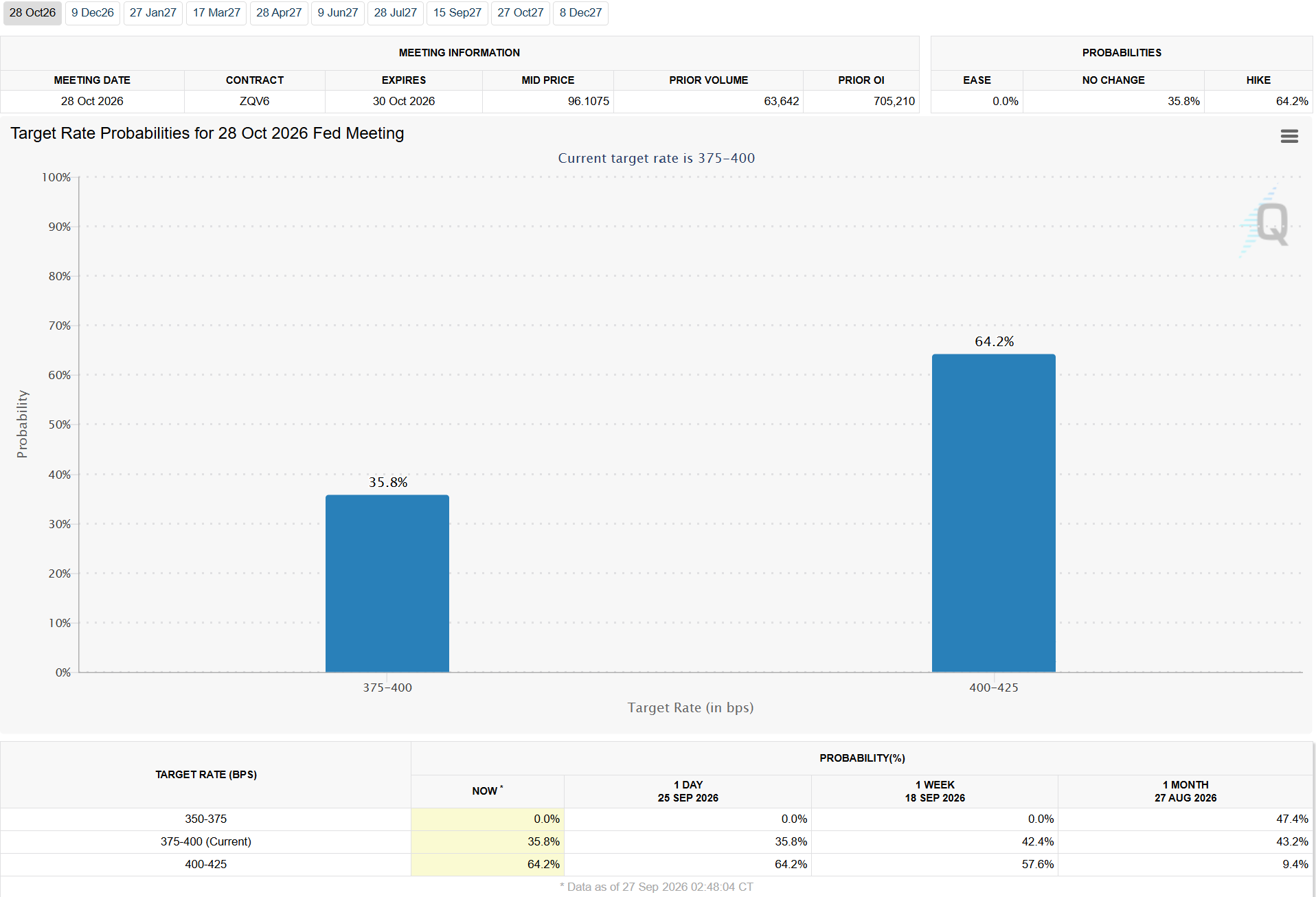
Central banks around the world closely monitor economic data to determine whether their current monetary policy is on track. In the United States, the Federal Reserve has already delivered one rate increase this cycle, bringing its benchmark borrowing cost to a range between 3.75% and 4%. Now, a packed week of official reports may reveal whether the central bank is ready for another tightening move.
While policymakers insist that no single data point should dictate their choices, market participants often use these weekly releases to adjust their expectations. Futures markets and bond traders are already attempting to forecast the Fed’s path based on what this week’s numbers might reveal.
## What the Fed Has Done So Far
In mid-September, the Federal Open Market Committee voted to push its target rate higher, citing that price pressures remain stubbornly above the central bank’s 2% goal. The move brought the benchmark to its highest level in over two decades. At the subsequent press briefing, the Fed’s chair emphasized that policymakers focus on broader trends rather than reacting to individual numbers.
Despite this language, derivatives markets are currently placing roughly a two-in-three probability that another rate increase will occur later this month. This suggests that traders are leaning toward the view that inflation remains a concern significant enough to warrant continued tightening.
## Why This Matters for Investors
Rising rates tend to strengthen the appeal of fixed-income investments like savings accounts and government bonds. At the same time, higher borrowing costs can weigh on equity valuations, particularly in technology-heavy indexes where future earnings are discounted at higher rates. Digital assets, which have historically traded with a risk-on bias, often face selling pressure when rates climb.
As of the latest available data, Bitcoin was trading in the neighborhood of $84,700. The direction of the next week’s data could push that figure either higher or lower.
## Five Key Data Releases to Watch
### Monday: Bank of Japan Meeting Minutes
The Bank of Japan will release the written record of its most recent policy meeting, which took place in late July. Since then, the Japanese central bank has already hiked its rate once, bringing it to around 1.25%. The minutes could reveal whether board members are discussing further tightening.
Because Japan’s rate remains significantly below the Fed’s, any signal of accelerated hiking in Tokyo could narrow the interest-rate gap between the two economies. That shift would ripple through global bond markets and currency pairs, affecting everything from Japanese government bonds to the value of the yen and, indirectly, risk assets like digital currencies.
### Wednesday: Personal Consumption Expenditures (PCE) Inflation
The PCE index is widely regarded as the Federal Reserve’s preferred inflation gauge. It captures how much consumers spend on goods and services, and its core version strips out volatile food and energy costs to show underlying price trends.
The most recent reading showed core PCE climbing 3.3% year-over-year. Forecasts for the upcoming August report point to a slight increase to 3.4%, still well above the central bank’s 2% target. Consumer spending is also expected to accelerate, with some economists predicting the largest monthly jump in over a year.
A hotter-than-expected PCE would strengthen the case for continued rate hikes, while a cooler reading might give the Fed room to pause and assess the impact of its previous tightening steps.
### Wednesday: Gross Domestic Product (GDP)
On the same morning as the PCE release, the Bureau of Economic Analysis will publish its final estimate of second-quarter economic growth. The previous estimate showed GDP expanding at an annualized rate of 1.5%, a deceleration from the 2.1% growth reported in the first quarter.
If the revised figure comes in stronger, it would suggest that the economy is more resilient than initially thought. A resilient economy gives the Fed greater confidence to keep rates elevated for longer, which would likely support Treasury yields and the US dollar while pressuring risk assets.
### Thursday: ISM Manufacturing Index
The Institute for Supply Management surveys factory managers to gauge the health of the manufacturing sector. A reading above 50 signals expansion, while anything below indicates contraction.
The most recent data showed the index at 54.6, down from 55.6 the prior month but still solidly in expansion territory. The prices paid component remained elevated at 71.1, indicating that manufacturers continue to face rising input costs.
This release matters because it provides a window into the real economy. Strong manufacturing activity combined with persistent cost pressures could reinforce the Fed’s hawkish stance.
### Friday: Employment Situation Report (Payrolls)
The week concludes with the most closely watched labor market report of the month. Forecasters anticipate roughly 90,000 new jobs added, a notable decline from the 162,000 created in August. The unemployment rate is expected to hold steady at 4.1%.
Wage growth is another key component. If hourly earnings continue to rise at a healthy pace, it could signal persistent inflationary pressure from the labor side, supporting the case for another rate increase. Conversely, a weaker jobs report might soften expectations for further tightening.
Historically, the jobs report has had a dramatic impact on markets. A surprise weakness in payrolls, for example, has been known to trigger sharp rallies in risk assets, while a strong report tends to reinforce the value of bonds and the dollar.
## How Treasury Yields Fit Into the Picture
US Treasury yields serve as the foundation for pricing across nearly all financial markets. They influence mortgage rates, corporate borrowing costs, and the relative attractiveness of equities compared to fixed-income holdings.
The 10-year Treasury yield recently pulled back from levels last seen in 2007, but its direction over the coming days will depend heavily on what this week’s data reveals. By the close of Friday, the Fed will have a comprehensive set of evidence to consider at its upcoming policy meeting.
Whether the central bank actually acts on that evidence is, as many observers have noted, the open question.
—
## Frequently Asked Questions (FAQ)
**What does it mean when the Fed raises interest rates?**
When the Fed raises its benchmark rate, it increases the cost of borrowing across the economy. This affects everything from credit card interest rates to mortgage payments, and it is intended to slow economic activity and bring inflation back down toward the central bank’s target.
**Why does the Fed prefer the PCE over other inflation measures?**
The Personal Consumption Expenditures index is considered more comprehensive than alternatives like the Consumer Price Index (CPI). It captures a broader range of spending and is less affected by short-term volatility, making it a more stable measure of underlying price trends.
**How do rate hikes affect Bitcoin?**
Higher interest rates tend to make yield-bearing assets more attractive relative to non-yielding assets like Bitcoin. When rates rise, investors may shift capital out of speculative or risk-on assets and into bonds or savings accounts, which can put downward pressure on cryptocurrency prices.
**What happens if the Bank of Japan signals another rate hike?**
A signal of further tightening from the Bank of Japan would narrow the interest-rate gap between Japan and the United States. This could strengthen the yen, push Japanese investors to repatriate capital, and create spillover effects in global bond and equity markets.
**Can a single jobs report change the Fed’s mind?**
The Fed looks at a wide range of data over time, not just a single report. However, a surprising or outlier jobs number can shift market expectations for future rate decisions and influence how traders price in the likelihood of a hike.
**What are Treasury yields, and why should I care?**
Treasury yields represent the return an investor earns by lending money to the US government. They serve as a benchmark for nearly all other interest rates in the economy and influence stock valuations, currency movements, and investment decisions across asset classes.
—
## Conclusion
This week’s release of economic data from the Bureau of Economic Analysis, the Bureau of Labor Statistics, the Institute for Supply Management, and the Bank of Japan will give investors and policymakers alike a clearer picture of where the economy stands. Inflation, growth, employment, and manufacturing activity all feed into the Fed’s decision-making process ahead of its next meeting.
While no single report will definitively determine the central bank’s next move, the cumulative weight of this week’s releases could shift market expectations significantly. Whether the Fed chooses to tighten further or pause to assess the impact of its previous actions, the data will provide the backdrop for whatever decision emerges.
For investors across equities, fixed income, and digital assets, staying informed about these key indicators remains essential to understanding the broader monetary policy landscape.
Thank you for reading
