



# Qualcomm to Acquire PickNik Robotics in Move Toward Unified Robotics Development Platform
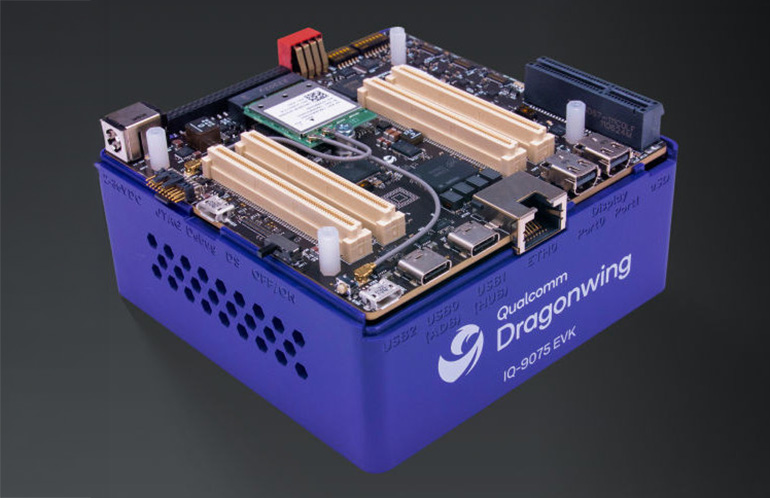
**Qualcomm Technologies has announced plans to acquire PickNik Robotics**, a software company known for developing the MoveIt open-source manipulation framework used widely across the robotics industry. The acquisition aims to merge PickNik’s motion-planning and AI-driven robotics software with Qualcomm’s Dragonwing hardware platform, offering developers a more cohesive pathway from artificial intelligence models to physical robot deployment.
## Background on PickNik Robotics and MoveIt
PickNik Robotics was founded in 2015 in Boulder, Colorado. The company’s engineering roots trace back to the Robot Operating System (ROS) project, which originated at Willow Garage, a pioneering robotics research lab. Over the years, PickNik contributed to high-profile efforts such as the Amazon Picking Challenge and secured Google as one of its earliest customers.
The company’s flagship product, MoveIt, has become one of the most widely adopted robotics software frameworks in the world. It is used by developers, researchers, students, and commercial organizations to build applications spanning industrial automation, mobile manipulation, service robotics, and emerging physical AI systems. In 2024, PickNik rebranded its professional offering, MoveIt Studio, as MoveIt Pro, reflecting its evolution into a full-featured system with runtime orchestration and decision-making tools. More recently, the company launched MoveIt Pro 9.0, which introduces upgraded perception-to-motion features, improved teleoperation interfaces, and new capabilities for collecting training data.
## Qualcomm’s Dragonwing Platform and Robotics Strategy
Qualcomm, headquartered in San Diego, is best known for its Snapdragon processors, wireless system-on-chip modems, and Internet of Things platforms. Earlier this year, the company introduced a general-purpose architecture stack designed to unify hardware, software, and artificial intelligence capabilities. The Dragonwing platform is built to support advanced AI models, including vision-language models (VLMs) and vision-language-action models (VLAs), which are critical for enabling robots to perceive, reason, and act in real-world environments.
By bringing PickNik and MoveIt into the Dragonfold ecosystem, Qualcomm aims to lower the barriers that developers face when transitioning from AI research and experimentation to working prototypes and eventually full-scale production. Nakul Duggal, Qualcomm’s executive vice president for automotive, industrial, embedded IoT, and robotics, described software as the “connective tissue” that transforms hardware into capable robots.
## Commitment to Open Source
One of the central commitments Qualcomm has made is to preserve the open-source nature of MoveIt. The company has stated that MoveIt 1 and MoveIt 2 will remain available under their existing open-source licenses, with community-driven roadmaps and resources continuing as before. Additionally, Qualcomm said it will maintain MoveIt’s hardware-agnostic architecture, allowing developers to select from a wide range of robot platforms, compute units, and sensor hardware.
Both PickNik and Qualcomm are founding members of the Open Source Robotics Alliance (OSRA). Qualcomm also indicated its intention to continue backing initiatives such as Space ROS, alongside the open-source evolution of MoveIt and ROS more broadly. PickNik CEO Dave Grant called the deal “an exciting new chapter” for MoveIt, citing the additional resources and institutional support that the acquisition would bring.
## Broader Industry Context
The move comes amid a wave of consolidation in the robotics and AI sectors. In January, Mobileye acquired Mentee Robotics for $900 million. In June, Bear Robotics purchased Kinisi Robotics. Meanwhile, Qualcomm’s rival NVIDIA announced plans to acquire Hugging Face while keeping its AI platform open, and Google’s Intrinsic unit released new capabilities compatible with ROS. These developments underscore growing interest from major technology companies in securing the software and hardware foundations needed to compete in the physical AI space.
Looking ahead, Qualcomm has also outlined plans to combine its prior acquisition of Arduino with the PickNik deal. The company intends to integrate MoveIt with Arduino’s VENTUNO Q boards, aiming to make advanced robotics, edge AI, and heterogeneous computing accessible to a broader developer community. At ROSCon Toronto, representatives from both companies demonstrated MoveIt Pro running on VENTUNO Q and Dragonwing platforms, showcasing the near-term integration roadmap.
## FAQ
**What is MoveIt, and why does it matter?**
MoveIt is an open-source software framework designed for robotic manipulation and motion planning. It powers a wide range of robotics applications, from factory automation to research experiments and emerging physical AI systems. MoveIt is built on top of the Robot Operating System (ROS) and is used by developers and organizations worldwide.
**What is Qualcomm’s Dragonwing platform?**
Dragonwing is Qualcomm’s general-purpose robotics architecture stack, introduced in early 2026. It integrates hardware, software, and AI capabilities and is designed to support vision-language models, vision-language-action models, and real-time robot control.
**Will MoveIt remain open source after the acquisition?**
Yes. Qualcomm has publicly committed to keeping MoveIt 1 and MoveIt 2 open-source under their existing licenses and maintaining community-driven development roadmaps. The company has also pledged to continue supporting MoveIt across third-party hardware providers.
**What is MoveIt Pro?**
MoveIt Pro is PickNik’s professional-grade version of the MoveIt framework. It includes advanced features such as runtime orchestration, decision-making tools, perception-to-motion capabilities, enhanced teleoperation, and training data collection systems. In 2024, the product formerly known as MoveIt Studio was rebranded to MoveIt Pro.
**How does the Arduino acquisition relate to this deal?**
Qualcomm acquired Arduino, an open-source hardware and software company, in October 2025. The company plans to integrate Arduino’s VENTUNO Q boards with MoveIt and the Dragonwing platform, making advanced robotics development more accessible to a larger base of developers.
**What are vision-language-action models (VLAs)?**
VLAs are a type of AI model that combines visual perception, natural language understanding, and action generation. They enable robots to interpret visual scenes, understand verbal instructions, and translate those inputs into physical movements and tasks.
**Who are the key people involved?**
Dave Coleman is the founder and chief product officer at PickNik. Dave Grant is PickNik’s CEO. Nakul Duggal is Qualcomm’s executive vice president and group general manager for automotive, industrial, embedded IoT, and robotics.
## Conclusion
Qualcomm’s planned acquisition of Picknik Robotics represents a significant step toward unifying robotics software and hardware development. By combining MoveIt’s mature, open-source motion-planning capabilities with Dragonwing’s AI and heterogeneous computing power, the two companies aim to give developers a more streamlined and powerful toolset for building robots. The commitment to preserving MoveIt’s open-source status and hardware-agnostic design suggests that the move is intended to grow the robotics ecosystem rather than create proprietary lock-in. As the physical AI industry continues to attract major investment and consolidation, this acquisition positions Qualcomm as a more formidable player in bridging AI research with real-world robotic deployment. Thank you for reading
