



# North Korean Cyber Campaigns: The Growing Shadow of State-Backed Digital Exploitation
In recent years, a sophisticated and well-funded cyber operation attributed to North Korean threat actors has been quietly wreaking havoc across the global technology landscape. The campaign, which has been active since at least 2022, has ensnared tens of thousands of devices across more than 100 countries, draining cryptocurrency wallets, stealing sensitive credentials, and turning unsuspecting tech professionals into unwitting victims of a state-sponsored crime network.
## The Contagious Interview Campaign
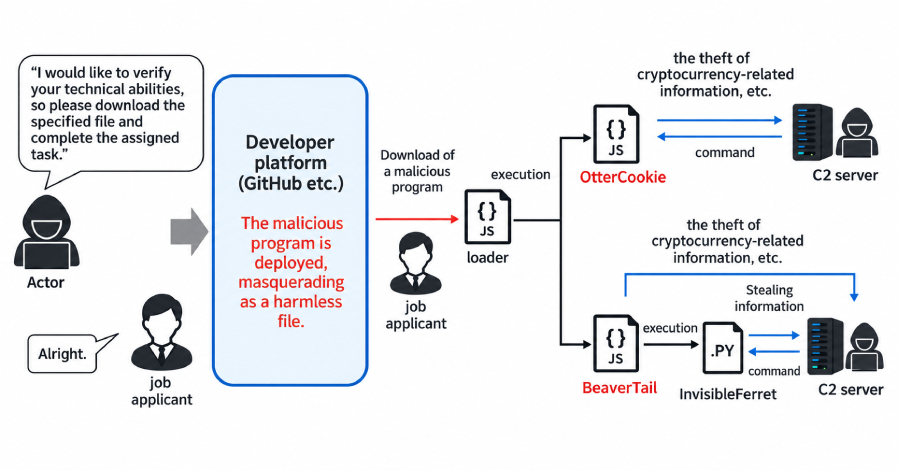
At the heart of this operation lies a long-running social engineering strategy known as the Contagious Interview campaign. North Korean threat actors pose as recruiters and prospective employers on professional networking platforms, particularly LinkedIn, dangling lucrative job offers to lure in software developers, web designers, engineers, and blockchain specialists.
Once a target takes the bait, the actors guide them through a seemingly routine job assessment or coding exercise. What appears to be a standard hiring process is, in reality, a carefully orchestrated multi-step infection chain. Victims who follow the instructions unwittingly download malware that grants the attackers persistent backdoor access to their devices.
The malware toolkit used in these attacks is extensive and evolving, incorporating families such as BeaverTail, InvisibleFerret, FlexibleFerret, GolangGhost, PylangGhost, OtterCookie, RATatouille, OtterCandy, and StoatWaffle. These tools allow the attackers to maintain long-term access, exfiltrate data, and even move laterally into the broader networks of companies employing the targeted individuals.
## The Financial Toll
The financial damage is staggering. According to joint cybersecurity advisories issued by intelligence and security agencies from Japan, the United States, Australia, and Germany, the campaign has resulted in the theft of at least **$10.71 million** in cryptocurrency from more than **7,000 wallets**. Over **30,000 devices** have been compromised, with victims spanning every inhabited continent.
Beyond the immediate monetary losses, the campaign serves a deeper strategic purpose. By infiltrating the personal devices of tech professionals, North Korean operatives gain a foothold in corporate environments, enabling espionage, intellectual property theft, and further lateral movement within targeted organizations. Stolen identity documents and photographs can also be repurposed by North Korean IT workers to impersonate victims and generate foreign currency through fraudulent employment schemes.
## The IT Worker Scheme: Exploiting Human Capital
Complementing the Contagious Interview campaign is North Korea’s infamous IT worker program — a sprawling network of disguised laborers who infiltrate Western companies under false identities to funnel revenue back to the regime. This operation has deep historical roots, drawing on a practice that dates back to the 1960s and 1970s when North Korea dispatched labor abroad to earn foreign currency in sectors like logging, construction, and textiles.
In the digital age, this program has evolved dramatically. The IT workers now leverage artificial intelligence to fabricate convincing identities, craft fraudulent job advertisements, and even recruit foreign nationals to act as proxies during job interviews. This proxy system is designed to circumvent international sanctions, Know Your Customer (KYC) identity verification controls, and regional hiring restrictions that would otherwise block North Korean operatives from securing positions.
According to cybersecurity researchers, the North Korean IT workers have been observed using commercial VPN services — specifically Astrill VPN and Mullvad — to establish exit nodes in targeted regions, primarily the United States and Japan. They also operate laptop farms, often managed through facilitators in various countries, to remotely control compromised devices and maintain their deceptive digital personas.
## Discord and the Proxy Recruitment Frontier
A particularly alarming development in recent months has been the expansion of the IT worker recruitment process into gaming and community chat platforms like Discord. A report by cybersecurity firm Silent Push detailed the discovery of a North Korean IT worker operating through a Discord server called “Mouse Review,” specifically targeting individuals in the United States, the European Union, and Latin America.
The job advertisement, written with AI-generated polish, offered a seemingly straightforward role: handle communications and interviews while the North Korean operative completed the actual technical work remotely. The ad promised compensation of **$3,000 to $5,000** for facilitators and revealed a real-time technical proxying arrangement, where the operative could remotely access the proxy’s screen during live coding challenges to complete tasks while the proxy carried on the conversation as if they were the applicant.
The financial incentive structure was laid bare in the advertisement, with a **35% to 65%** split favoring the North Korean IT worker. Foreign nationals were essentially being recruited as financial and identity mules — the “face” and legal identity needed to bypass international controls and secure employment at legitimate companies.
## Infrastructure and Attributions
The cyber threat group behind these operations is tracked by the global cybersecurity community under numerous monikers, including CL-STA-0240, DeceptiveDevelopment, DEV#POPPER, Famous Chollima, Gwisin Gang, PurpleBravo, Tenacious Pungsan, UNC5342, Void Dokkaebi, and WaterPlum. Intelligence agencies have also linked some WaterPlum actors to the 313 General Bureau of North Korea’s Munitions Industry Department, placing the operation firmly within the scope of the country’s state-directed cyber capabilities.
A laptop farm operated by a facilitator based in Japan was identified and dismantled, highlighting the international cooperation required to disrupt these networks. Nevertheless, the decentralized and resilient nature of the infrastructure — spread across dozens of countries — makes complete eradication a formidable challenge.
## Broader Implications
The scope of these North Korean operations extends well beyond financial theft. By targeting the technology sector — an industry central to global innovation and economic stability — Pyongyang is effectively weaponizing the very talent and infrastructure that drives the modern digital economy. The stolen intellectual property, compromised credentials, and infiltrated corporate networks represent a threat not just to individual professionals and companies, but to national security and international economic stability.
Moreover, the use of AI to generate fake identities and the exploitation of community platforms like Discord for proxy recruitment signal an alarming trend: state-sponsored cyber operations are becoming increasingly automated, adaptive, and difficult to distinguish from legitimate activity.
—
## Frequently Asked Questions
**Q1: What is the Contagious Interview campaign?**
A: The Contagious Interview campaign is a long-running North Korean cyber operation in which threat actors pose as recruiters on professional networking platforms, targeting software developers and IT professionals with fake job offers. The goal is to infect victims’ devices with malware and steal cryptocurrency, credentials, and sensitive data.
**Q2: How do the attackers gain access to victims’ devices?**
A: The attackers typically initiate contact on social media platforms like LinkedIn and build rapport with potential targets. They then ask victims to complete a job assessment or coding test, which triggers a multi-step infection chain leading to the installation of various malware families that grant persistent remote access.
**Q3: What kind of malware is used in these attacks?**
A: The campaigns employ a wide variety of malware, including BeaverTail, InvisibleFerret, FlexibleFerret, GolangGhost, PylangGhost, OtterCookie, RATatouille, OtterCandy, and StoatWaffle. These tools serve different functions, from data exfiltration to establishing backdoor access.
**Q4: How much cryptocurrency has been stolen?**
A: According to joint advisories from cybersecurity agencies in the U.S., Japan, Australia, and Germany, at least **$10.71 million** worth of cryptocurrency has been plundered from over 7,000 wallets.
**Q5: What is North Korea’s IT worker program?**
A: The IT worker program is a scheme in which North Korean operatives infiltrate Western companies under false identities, using stolen or fabricated credentials to secure employment and funnel salaries and revenue back to the North Korean regime.
**Q6: How do North Korean IT workers bypass sanctions and identity verification?**
A: They increasingly rely on foreign nationals — recruited through platforms like Discord — to act as proxies during job interviews and work assignments. The proxies provide the legal identity and physical presence needed to pass KYC checks and geographic restrictions.
**Q7: What role does artificial intelligence play in these operations?**
A: AI is used to generate fictitious identities, craft convincing job advertisements, and streamline the recruitment of proxy workers. The technology makes it easier for North Korean operatives to scale their deception across multiple targets simultaneously.
**Q8: Are these operations limited to the technology sector?**
A: While the primary targets are tech professionals — particularly those in cryptocurrency, blockchain, and web development — the implications extend to any organization employing these individuals, as compromised personal devices can serve as entry points into corporate networks.
**Q9: What can individuals and organizations do to protect themselves?**
A: Key protective measures include verifying the identity of recruiters through official company channels, being cautious of unsolicited job offers on social media, avoiding downloads or code execution from unverified sources, using multi-factor authentication, and keeping software and security tools up to date.
**Q10: What has been done to disrupt these campaigns?**
A: International cybersecurity agencies have issued joint advisories, and specific infrastructure — including a laptop farm in Japan — has been identified and dismantled. However, the decentralized and multinational nature of the networks makes comprehensive disruption an ongoing challenge.
—
## Conclusion
The North Korean cyber operations detailed above represent one of the most insidious and far-reaching state-sponsored threat campaigns targeting the global technology sector today. By combining sophisticated social engineering, advanced malware, and the exploitation of human vulnerability — whether through fake job offers or financial temptation — North Korean threat actors have built an infrastructure capable of victimizing tens of thousands of individuals across more than a hundred countries.
As artificial intelligence continues to lower the barriers for creating convincing fakes and automating recruitment, the scale and reach of these operations are only expected to grow. The international cybersecurity community, governments, and private-sector organizations must remain vigilant, invest in proactive defense, and continue collaborating across borders to counter these threats.
For individual professionals, awareness remains the first and most critical line of defense. Recognizing the hallmarks of a social engineering attack — unsolicited offers, rushed technical assessments, requests for unusual access or downloads — can mean the difference between remaining safe and becoming another victim in an increasingly digital battlefield.
Thank you for reading
