



# How Metaplanet Became the Only “Bad”-Rated Digital Asset Treasury on Executive Compensation
A prominent research firm recently downgraded Metaplanet’s executive compensation practices to a failing grade, making it stand out among its peers in a crowded sector. The finding has reignited debates about governance in companies that build their treasuries around digital assets.
## What Sets Digital Asset Treasury Companies Apart
Digital asset treasury companies are publicly traded firms whose primary strategy revolves around holding cryptocurrency on their balance sheets. They raise capital through a combination of equity issuances, debt, and preferred stock to fund large-scale cryptocurrency purchases.
When a company issues new shares, existing shareholders see their ownership percentage shrink — a process known as dilution. The implicit bargain is that the value created by the cryptocurrency holdings more than offsets the damage from dilution, leaving each share worth more than before.
This structure works well on paper, but it introduces a governance vulnerability: the more shares a company issues, the more those shares can also flow into executive compensation plans.
## The Executive Compensation Mechanism
Many companies reward senior leaders with stock options — contracts that give executives the right to purchase shares at a predetermined price. If the company’s share price climbs, those options become valuable.
All these options come from a single reservoir called an option pool. The larger that pool, the more of the company’s future value is earmarked for management rather than rank-and-file shareholders. A pool representing 2% of the company, for example, means executives could eventually lay claim to 2% of every share outstanding.
In healthy governance structures, the size of that pool is carefully controlled and subject to shareholder oversight. When it is not, the consequences can be significant.
## How One Company’s Option Pool Spiraled
Metaplanet’s option pool traces its origins to early 2023, when the company was a struggling hotel operator. Shareholders approved a restructuring plan that granted seven staff members options over 46 million shares, set at a fixed strike price.
What made this arrangement unusual was a built-in clause that automatically adjusted the total award to 20% of every new share the company could issue. At the time, the clause had limited practical impact.
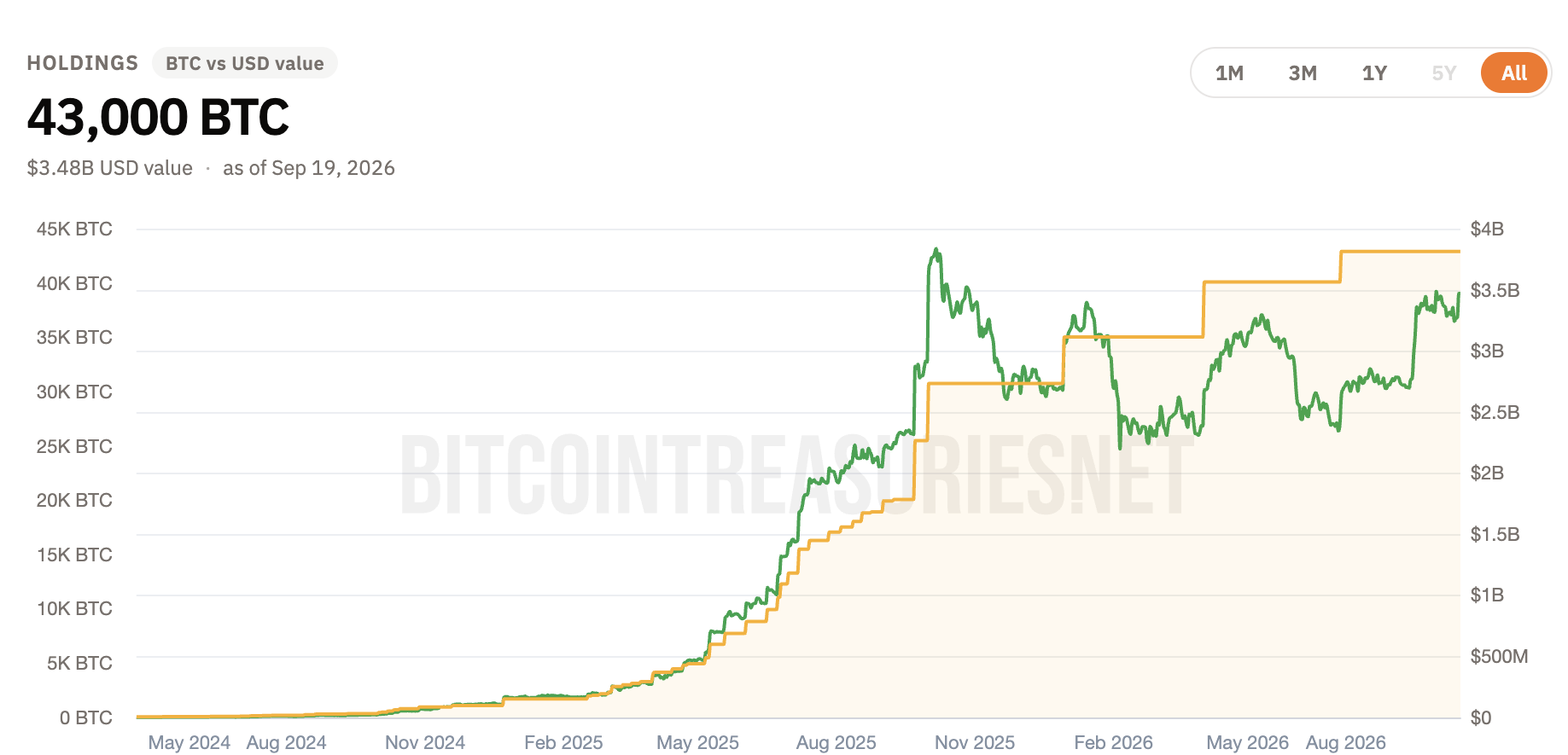
Everything changed in April 2024, when Metaplanet pivoted to a Bitcoin treasury strategy. From that point forward, the company began issuing equity — along with debt and preferred shares — to finance its cryptocurrency acquisitions. Each new share issued through equity sales triggered the clause, simultaneously shrinking the stake of ordinary shareholders and inflating the executive pool.
Over roughly two years, Metaplanet’s total share count ballooned from approximately 153.9 million to around 1.35 billion. The option pool grew in lockstep, expanding from 46 million shares to roughly 319.5 million.
## The Impact on Shareholders
According to estimates from independent analysts, Metaplanet passed through approximately 80% of the Bitcoin it acquired to shareholders in the form of retained value. The remaining roughly 20% was absorbed by the dilution of management’s growing claim on the company.
Critically, this outcome was not the result of a deliberate board decision. It was the product of an automatic formula embedded in the original plan, which meant that no vote or approval was needed each time new shares were issued. This is precisely why the company came under scrutiny from researchers who study corporate governance.
## The Four Tests That Were Failed
The research firm evaluated the ten largest digital asset treasury companies using a four-part framework:
1. **Pool size relative to fully diluted shares** — Is the option pool an outsized share of the company?
2. **Concentration among named executives** — How much of the pool is held by a small group of senior leaders?
3. **Ability to grow without shareholder approval** — Can the pool expand without a formal vote?
4. **Performance hurdles on the largest awards** — Do the biggest grants require actual results, or are they guaranteed?
Metaplanet scored poorly on every single criterion. Its option pool represents 14.7% of fully diluted shares, compared to a peer average of 4.0%. Executives individually hold 8.2% of the company against a peer average of just 0.8%. That translates to roughly four times the average pool size and roughly ten times the average executive concentration.
Furthermore, shareholders were never asked to approve the pool’s expansion, and none of the two amendments made in 2026 required a vote. The largest awards carry no performance conditions beyond continued employment.
## Recent Attempts at Reform
Facing mounting pressure, Metaplanet’s board acted twice in quick succession.
First, in mid-August, the board eliminated the evergreen dilution clause that had driven the pool’s automatic growth. However, the pool itself remained at its bloated level.
Then, in early September, the board rolled the compensation terms back to where they stood before a September 2025 equity sale. This rollback reduced the pool by 41%, bringing it down to approximately 188.2 million shares.
Despite these moves, researchers maintained the failing grade. Approximately 82.8 million shares had already been distributed to insiders under the previous terms, and 105.4 million potential new shares remained in the pool — still representing roughly 7% of the company, which is well above peer norms.
To truly remedy the situation, the research firm outlined four specific steps: canceling the roughly 273 million shares created by the original clause, establishing a smaller plan subject to stockholder approval, tying executive pay directly to Bitcoin per share performance, and implementing a written policy governing the timing of all grants.
—
## Frequently Asked Questions
**What is a digital asset treasury company?**
A digital asset treasury company is a publicly listed firm whose primary business activity is holding cryptocurrency — such as Bitcoin — on its balance sheet. It raises funds through equity issuances, debt, and preferred stock to purchase and hold these assets.
**Why does issuing new shares matter for shareholders?**
Every new share issued divides the company’s ownership into more pieces. For existing shareholders, each piece becomes smaller, which is called dilution. The expectation is that the value of the assets the company holds will more than compensate for this reduction in ownership.
**What is an executive option pool?**
An option pool is a reserved allocation of company shares set aside for senior management. These options give executives the right to buy shares at a fixed price in the future. The larger the pool, the greater the share of the company’s value that can eventually be claimed by management.
**What did VanEck find wrong with Metaplanet’s compensation structure?**
VanEck found that Metaplanet’s option pool was four times larger than the peer average, that its executives held ten times the typical concentration, that the pool could grow automatically without a shareholder vote, and that the largest grants had no performance requirements. The company failed all four governance tests.
**Has Metaplanet tried to fix the problem?**
Yes. The board repealed the automatic dilution clause in August and rolled back compensation terms in September, cutting the pool by 41%. However, analysts say these changes do not go far enough, as the pool remains significantly larger than industry peers.
**What would it take for Metaplanet to improve its rating?**
The research firm suggested canceling the shares created by the original clause, adopting a smaller plan approved by stockholders, linking executive pay to Bitcoin per share, and creating a formal written policy for grant timing.
—
## Conclusion
Metaplanet’s case highlights a structural risk that is unique to digital asset treasury companies. When a firm’s strategy depends on continuously issuing new equity to fund cryptocurrency purchases, governance mechanisms that tie executive compensation to share issuance can create a perverse incentive — rewarding management for the very dilution that harms other shareholders.
While the company has taken steps to address the issue, the research firm’s assessment that these measures are insufficient signals that meaningful reform is still needed. For investors considering digital asset treasury companies, executive compensation structure deserves as much attention as the underlying cryptocurrency holdings themselves.
Thank you for reading
