



# Kevin O’Leary: Bitcoin Could Reach $1 Million — But Only If Quantum Threat Is Solved
## The Billionaire Investor’s Vision for Crypto’s Future
The world of high-stakes investing has a new rallying cry: Bitcoin could reach $1 million per coin. But according to one of the most prominent voices in global finance, that milestone depends entirely on solving a threat that hasn’t fully materialized yet — the potential for quantum computers to crack the encryption underpinning the entire cryptocurrency ecosystem.
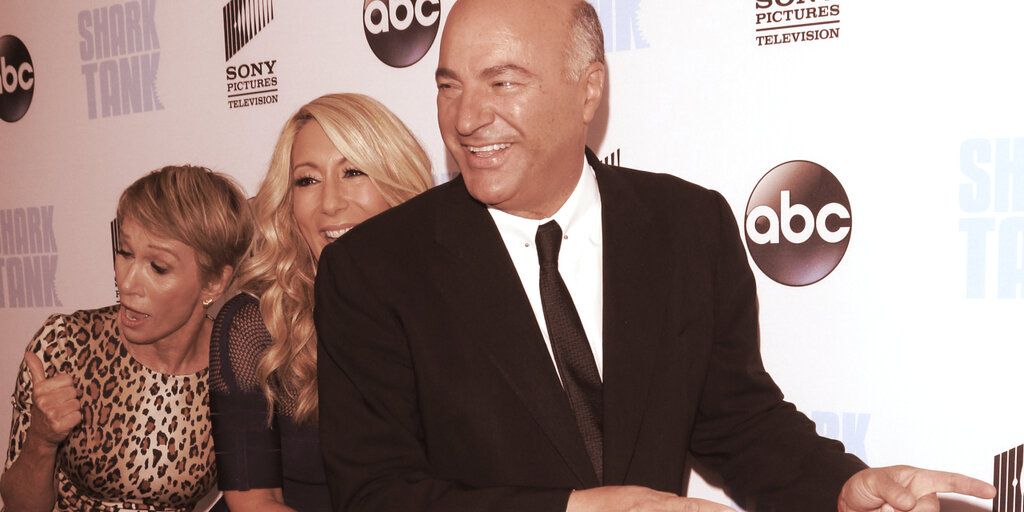
Known widely for his blunt opinions and his role on a popular Shark Tank-style television show, the investor laid out his conditions for Bitcoin’s seven-figure future during a recent public appearance at a major blockchain summit in New York City. His message was both bullish and cautious — optimistic about the long-term upside, but deeply aware of the technical hurdles standing in the way.
## The Quantum Computing Problem
The central concern, frequently referred to in industry circles as “Q-Day,” is the theoretical moment when a quantum computer becomes powerful enough to break the cryptographic algorithms that secure Bitcoin transactions and wallet signatures. If such a capability existed, it could undermine trust in the entire network, potentially rendering the world’s largest cryptocurrency vulnerable to forgery and theft.
“We need this asset class to be taken seriously by institutional money, and right now, quantum uncertainty is the biggest obstacle,” the investor explained. “Until the industry finds a way to neutralize that threat, major funds will continue to treat Bitcoin as more of a speculative curiosity than a serious reserve asset.”
Currently, no quantum computer on Earth is capable of mounting such an attack. However, experts estimate that the necessary hardware could emerge anywhere from the early 2030s to possibly never. Despite the uncertainty, the fear is already influencing how large financial institutions allocate capital, with many capping Bitcoin exposure at roughly 3% of a portfolio — a figure that keeps it closer to a niche commodity than a foundational holding.
The investor noted that some forward-thinking firms are already placing counter-bets on quantum-resistant software companies, viewing it as both a security measure and an on-chain investment opportunity.
## From Two-Chain Bet to Industry-Wide Standardization
Eighteen months ago, the investor’s strategy was straightforward: own Bitcoin and Ethereum, capturing the vast majority of the industry’s volatility. The assumption was that Ethereum would become the universal standard for decentralized applications and tokenization. That thesis has since been revised.
“Ethereum was supposed to be the winner, and clearly that didn’t play out the way I expected,” he admitted. “The question now is which industry picks which chain.”
His updated view is that entire sectors — not individual retail investors — will each gravitate toward a single blockchain, the way different collectibles markets might converge on one platform while traditional stock exchanges choose another entirely. This means the first major platform to adopt a particular chain for tokenizing real-world assets could trigger a massive surge in that token’s value, effectively becoming the infrastructure backbone for all subsequent trades.
“I don’t think Ethereum is the answer anymore. In my view, it’s not fast enough and not secure enough,” he stated plainly.
This week, the U.S. Securities and Exchange Commission introduced a new regulatory framework called the “Innovation Exemption,” which allows approved platforms to trade tokenized stocks — digital tokens representing shares of public companies that settle on a blockchain rather than a traditional exchange. The move signals growing institutional embrace of blockchain-based trading, a shift the investor sees as pivotal.
## The $11 Million Necklace and the Tokenization Thesis
At the summit, the investor made a bold fashion statement by wearing a collectible baseball card valued at $11 million. The item — a one-of-one Shohei Ohtani card sealed in a Tiffany-designed holder featuring 110 carats of diamonds and over two pounds of white gold — served as a physical demonstration of his broader argument.
“This asset class should be on-chain,” he said, holding the card up for attendees. “And right now, it technically is on a chain. But the real value comes when it lives on blockchain infrastructure.”
His long-term vision is that digital tokenization of real-world assets — from sports memorabilia to equities — will expand the crypto ecosystem into what he calls the “12th sector” of the S&P 500, one that supports and interconnects with all other industries. He follows a strict personal rule of no more than 5% in any single stock and no more than 20% in any one sector, though his crypto holdings have historically peaked at 23% of his overall portfolio over the past several years.
## Betting on Power, Not Models
Beyond the blockchain world, the investor is making major moves in artificial intelligence infrastructure — and deliberately avoiding the trap of picking individual AI model winners.
“You can’t run artificial intelligence without a massive power supply,” he said. His portfolio now includes BitZero, a publicly traded company that was once a Bitcoin mining operation and has pivoted into energy infrastructure, with land holdings, fiber optic networks, and development permits in Norway and Finland. He also has private energy projects underway in Alberta and Utah.
In a first for his investment career, he has taken a long position in uranium — the raw fuel that powers nuclear reactors. His reasoning is tied to small modular reactors, compact nuclear power plants designed to be built faster and at smaller scale than traditional facilities. These reactors are increasingly being positioned as the energy source for next-generation data centers that will power AI workloads across the United States.
“Buy the picks and shovels,” he advised, referring to the classic strategy of investing in the tools and resources that enable an industry rather than the industry’s end products.
When asked about the future of AI, he identified himself firmly as an accelerationist. “There is no scenario where AI slows down. You let the Chinese dominate? That’s not going to happen.” When pressed to choose between AI doomsday and AI utopia, he replied without hesitation: “I’m firmly in the camp that believes AI will cure cancer.”
## Regulation and the Road Ahead
On the regulatory front, the investor expressed skepticism that the Clarity Act — a proposed bill designed to clarify which U.S. federal agency has jurisdiction over cryptocurrency trading — will advance before upcoming midterm elections. He believes the current political climate makes it unlikely for the administration to secure a bipartisan win on the issue in the near term, but expects a revised version to resurface once the electoral cycle concludes.
## Frequently Asked Questions
**What is Q-Day?**
Q-Day is the hypothetical date when a quantum computer becomes powerful enough to break the cryptographic signatures that secure Bitcoin and other cryptocurrencies. If that day arrives without quantum-resistant upgrades, it could threaten the integrity of blockchain networks worldwide.
**Why does Kevin O’Leary think Bitcoin could reach $1 million?**
He believes Bitcoin’s path to $1 million depends on the industry solving the quantum computing threat. Once institutional confidence is restored and the encryption risk is mitigated, he expects massive inflows of institutional capital that could drive the price dramatically higher.
**What is tokenized stock trading?**
Tokenized stock trading refers to the process of representing shares of publicly traded companies as digital tokens that exist on a blockchain. These tokens can be bought, sold, and settled on blockchain networks instead of traditional stock exchanges, potentially increasing speed, transparency, and accessibility.
**Why did the investor abandon the Bitcoin-and-Ethereum thesis?**
His original assumption was that Ethereum would become the universal blockchain standard. However, the industry has not converged on Ethereum as expected, and he now believes different sectors and industries will each adopt their own preferred blockchain platforms based on specific needs like speed, security, and transaction costs.
**What are small modular reactors?**
Small modular reactors (SMRs) are compact nuclear power plants designed to be manufactured in factories and transported to site, allowing for faster deployment and lower costs compared to traditional large-scale nuclear facilities. They are being developed to provide reliable, carbon-free power for energy-intensive operations like AI data centers.
**How much of his portfolio is in crypto?**
He has stated that crypto has reached as high as 23% of his total investment portfolio over the past seven years, though he generally caps any single sector at 20% of his holdings.
**What is the investor’s stance on AI regulation?**
He opposes any slowdown in AI development and believes competition, particularly with China, will drive innovation forward rather than regulatory caution. He views AI as a transformative force for good, particularly in healthcare and scientific research.
## Conclusion
The investor’s vision for the future is one where blockchain technology becomes deeply embedded in global finance, where AI infrastructure drives demand for new energy solutions, and where quantum computing threats are neutralized before they can disrupt the systems we rely on. Whether Bitcoin actually reaches $1 million remains to be seen, but the roadmap he has laid out connects the dots between cryptography, energy, regulation, and institutional adoption in a way that demands attention from anyone watching the intersection of finance and technology.
The road to $1 million is conditional, but the conversation around it is already reshaping how the investment world thinks about digital assets, quantum risk, and the infrastructure powering the next technological era.
Thank you for reading
