



# The Ethereum Market in the Aftermath of the Failed Clarity Act: What Investors Need to Know
The cryptocurrency world braced for impact as a landmark piece of legislation known as the Clarity Act stalled in the Senate, sending ripples through the digital asset landscape. Ethereum, the second-largest cryptocurrency by market capitalization, found itself at the center of the storm, though the degree of its vulnerability surprised many observers.
## Initial Impact on Ethereum’s Valuation
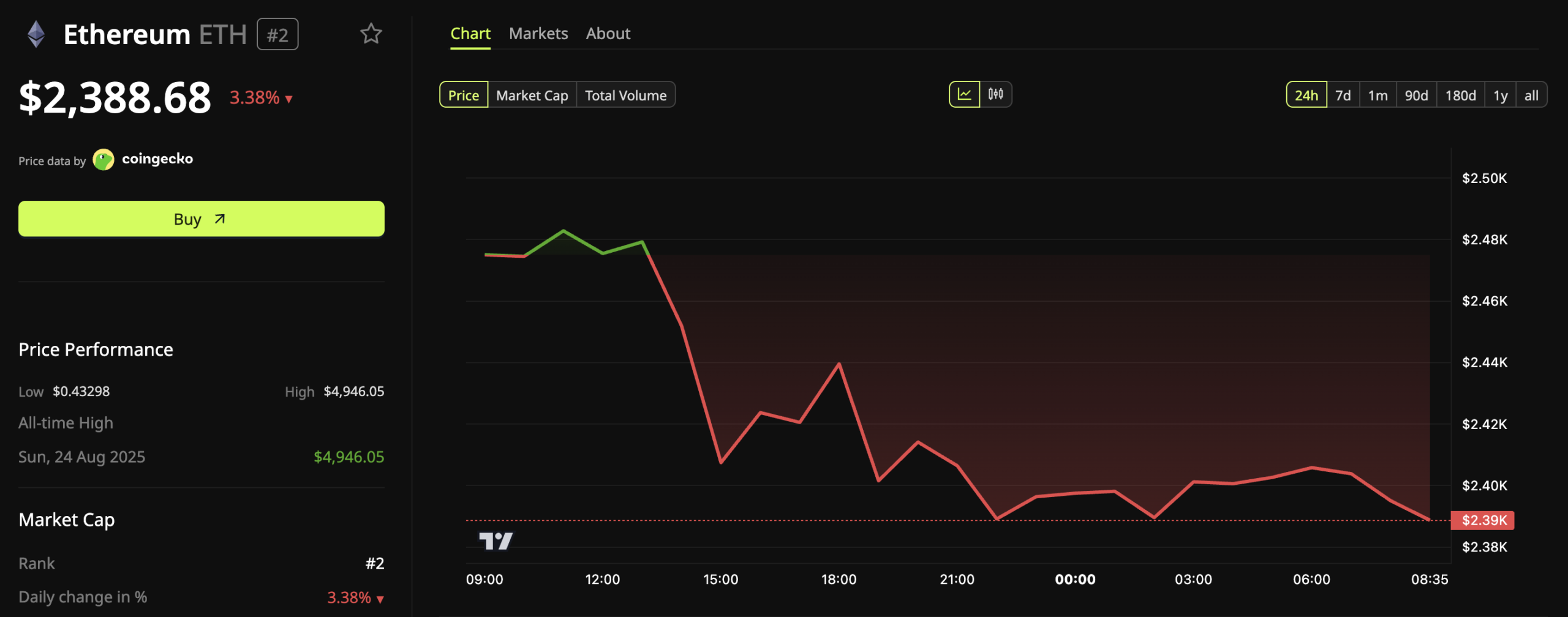
Market analysts had previously positioned the Clarity Act as a significant catalyst that could have propelled Ethereum beyond key resistance levels. When the bill failed to advance, those projections were immediately recalibrated. Over a seven-day period leading up to the vote, Ethereum’s price declined by approximately 3%, falling to a low of $2,388 before staging a modest recovery to settle near $2,400.
What makes this movement particularly noteworthy is the comparison with other digital assets. Several prominent altcoins, including Ripple and Hyperliquid, experienced far steeper declines exceeding 8% over the same timeframe. This suggests that while Ethereum absorbed a notable blow, its relative resilience distinguished it from many of its peers.
## Institutional Selling Pressure
The legislative setback triggered substantial institutional repositioning. US-listed spot Ethereum funds experienced their most significant capital outflow since the beginning of the year, with Tuesday marking a peak in selling activity as the vote outcome became clear.
However, the selling pressure did not originate solely from Washington’s legislative chambers. Technical indicators show that Ethereum was already trending downward before the Senate cast its ballots, and the decline accelerated meaningfully once the results were confirmed.
Data from CryptoQuant revealed that roughly 709,400 ETH were deposited into Binance on September 11, four days prior to the scheduled vote. This represented the highest single-day inflow to the exchange since June, potentially signaling that large holders were positioning themselves for uncertainty ahead.
## The Broader Market Shock
The legislative failure had a domino effect across the entire crypto ecosystem. Within twenty minutes of the failed vote, approximately $275 million in leveraged long positions were liquidated. Bitcoin dropped by over $2,200 to $74,900, and Ethereum slid below the $2,400 threshold. Combined, the digital asset market shed nearly $70 billion in total value during that brief window.
## Supply Dynamics Remain Bullish
Despite the near-term turbulence, Ethereum’s fundamental supply architecture tells a different story. CryptoQuant reported that exchange reserves have contracted to 14.6 million ETH, marking the lowest level since 2016. This steady decline has been consistent throughout 2022 and beyond, meaning the recent exchange inflow barely registers against the broader trend of coins leaving circulation.
Staking activity further reinforces this narrative. According to analyst Leon Waidmann, approximately 43 million ETH are currently locked in validators, representing a record high of nearly 35% of the total supply. Coins committed to validators cannot be freely traded until the unstaking queue clears, effectively removing a significant portion of available liquidity from the market.
## Valuation Metrics Offer Mixed Signals
On the valuation front, analyst MorenoDV highlighted that Ethereum’s Market Value to Realized Value (MVRV) ratio has remained above 1 for multiple consecutive sessions. Additionally, Ethereum continues to trade above its realized price of approximately $2,300.
This combination of metrics suggests that the June-July period may have established a cyclical bottom, with the broader market potentially shifting from a recovery phase into an expansion phase. However, these signals are tempered by the Coinbase Premium Index sitting near negative 0.08, which reflects weaker demand for US spot Ethereum relative to offshore exchanges.
## The Macro Factor Takes Center Stage
Some industry voices argue that the Clarity Act’s failure may not be as consequential as feared. Grayscale’s head of research suggested that regulatory clarity for digital assets can progress through alternative channels, even without comprehensive congressional legislation.
This perspective shifts attention to macroeconomic variables. The Federal Reserve recently implemented an interest rate increase, with economist Kevin Warsh signaling that additional tightening measures may follow. This marks the first rate hike of the current cycle, and markets are now scrutinizing every statement from Fed officials for clues about the path forward.
## What Traders Are Watching
The current market appears to have already absorbed the double blow of the failed Clarity Act and the Fed’s rate decision. Traders are now looking for forward guidance on whether this represents an isolated move or the beginning of a more aggressive tightening cycle.
If the rate hike proves to be a one-off event, many analysts believe a recovery rally could follow. Conversely, if the Fed maintains its stance on achieving a 2% inflation target through continued rate increases, the consequences could extend across equities, digital assets, precious metals, and fixed-income markets simultaneously, with bond yields potentially surging.
## FAQ Section
**Q: What was the Clarity Act, and why did it matter for Ethereum?**
A: The Clarity Act was proposed legislation aimed at establishing clearer regulatory frameworks for digital assets in the United States. It was viewed as a major positive for Ethereum because it would have provided institutional investors with greater confidence and legal certainty, potentially driving significant capital inflows.
**Q: How much did Ethereum’s price drop after the Act failed?**
A: Ethereum experienced approximately a 3% decline over the week surrounding the vote, touching a low of $2,388 before partially recovering to around $2,400.
**Q: What are exchange reserves, and why are they important?**
A: Exchange reserves refer to the total amount of a cryptocurrency held on centralized exchanges. Declining reserves suggest that coins are being moved to cold storage or staked, reducing the supply available for trading and generally considered a bullish signal for long-term price appreciation.
**Q: What does staking have to do with Ethereum’s price?**
A: Staking locks up Ethereum tokens in validator nodes, preventing those coins from being sold on the open market. With a record 43 million ETH staked, roughly one-third of the total supply is effectively removed from circulating liquidity.
**Q: Will Ethereum recover from this setback?**
A: Recovery depends on multiple factors including macroeconomic conditions, institutional demand, and broader market sentiment. The strong supply dynamics and improving valuation metrics provide a supportive foundation, but demand-side catalysts are needed to drive significant upward momentum.
**Q: How does the Federal Reserve’s interest rate decision affect cryptocurrency prices?**
A: Higher interest rates generally strengthen the US dollar and increase the opportunity cost of holding risk assets like cryptocurrencies. This can lead to reduced investment flows and downward price pressure, particularly in the short term.
## Conclusion
The failure of the Clarity Act represents a significant near-term headwind for Ethereum and the broader crypto market, but it is far from a death knell. The fundamental supply dynamics remain firmly supportive, with exchange reserves at multi-year lows and staking activity at unprecedented levels. While demand has yet to provide a clear counterbalance to selling pressure, the long-term structural setup for Ethereum remains intact.
The regulatory landscape may be uncertain in Washington, but the market’s ability to absorb legislative setbacks while maintaining relatively stable price action compared to other altcoins demonstrates growing maturity. Investors should watch macroeconomic developments closely, particularly any signals from the Federal Reserve regarding future rate decisions, as these are likely to drive short-term price movements in the absence of legislative catalysts.
As always, the cryptocurrency market remains volatile and subject to rapid shifts in sentiment. Keeping a diversified perspective and focusing on long-term fundamentals will serve investors best during periods of uncertainty like the current one.
Thank you for reading
