



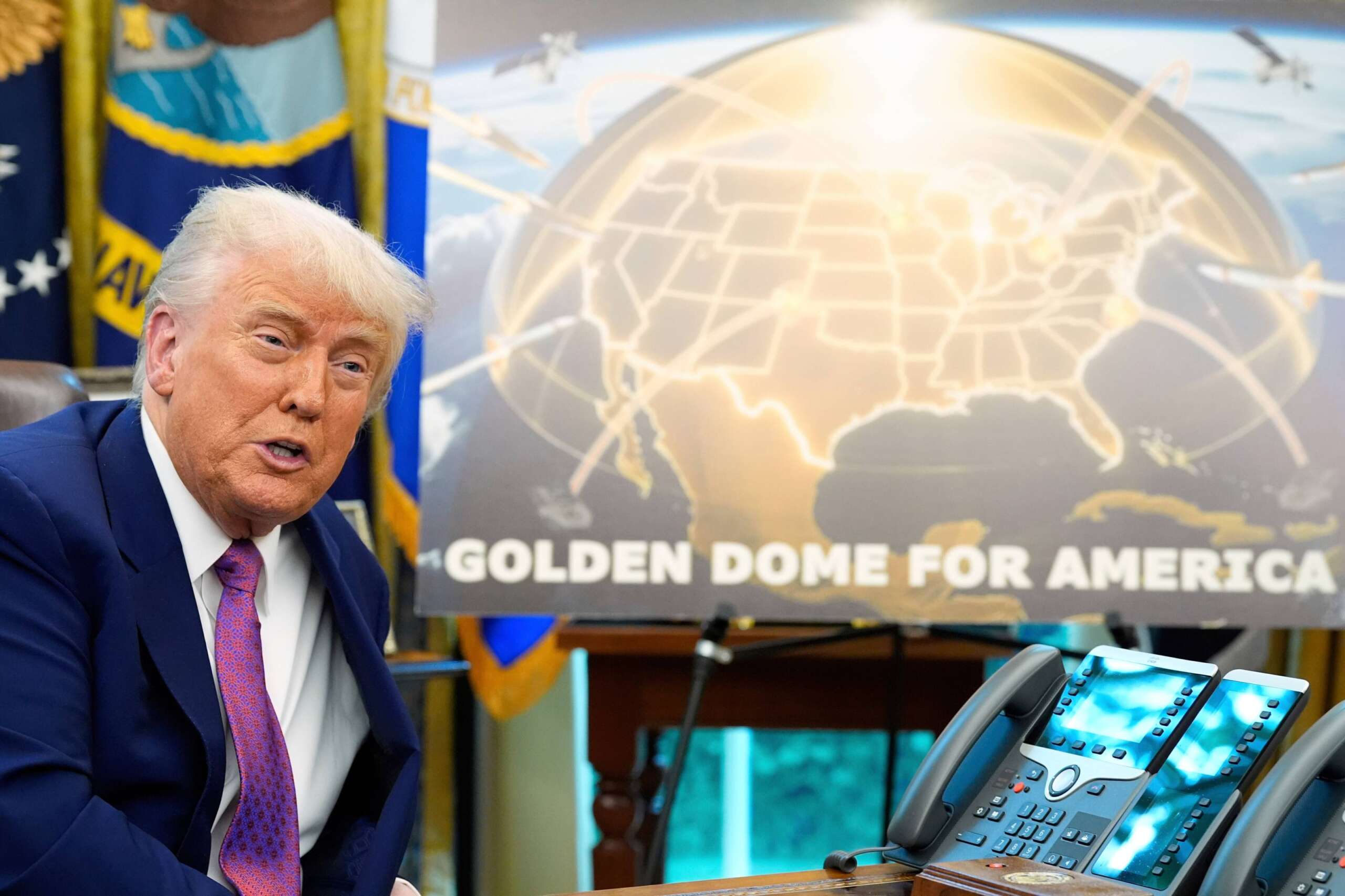
**The Golden Dome Missile Defense Initiative: Balancing Ambition, Secrecy, and Congressional Oversight**
The Trump administration’s ambitious Golden Dome missile defense system, designed to protect the United States homeland from ballistic missile threats, faces a significant hurdle: a lack of Congressional and public trust driven by profound secrecy. A prominent senator recently emphasized that building broad legislative support for the massive initiative requires overcoming a substantial information gap that has persisted for over a year since the project’s announcement.
Lawmakers have expressed growing frustration with the Pentagon’s refusal to share the architectural blueprint of the system. In a recent letter to the head of the Defense Department, a bipartisan group of legislators demanded that the department halt all spending on the initiative until it provides a clear and detailed outline of the system’s scope and mission. The letter argued that while certain technical design details can remain classified, the overall framework that Congress is being asked to approve and fund must be transparent.
This opacity has led to wildly divergent cost estimates that further complicate the path to approval. Independent budget analysts estimated that a Golden Dome architecture consistent with the president’s executive order would cost roughly $1.2 trillion over the next two decades, a staggering figure that dwarfs the administration’s initial $175 billion projection. The Pentagon has pushed back against these estimates, asserting that outside analysts are not accounting for the specific technologies and layered defense approach currently being developed.
Supporters of the initiative argue that the program is moving forward rapidly. The head of the Golden Dome program office recently stated that the system is on track to deliver an operational capability by the summer of 2028. He noted that critical components, particularly the command and control network, have already been contracted and successfully tested in multiple exercises. The official highlighted that nearly the entirety of the $22.5 billion previously allocated by Congress has been obligated, with contracts already in place for space-based interceptors, ground-based radars, and munitions, while construction sites across the homeland are actively being prepared.
The administration is currently seeking an average of about $15 billion annually over the next five years to sustain the program. However, skepticism remains among defense experts, some of whom warn that the Pentagon is either not being entirely forthcoming about the likely costs of the system or is planning an architecture so limited in scope that it will not realistically achieve its stated goal of comprehensive homeland defense.
To secure the necessary funding and long-term viability, proponents of Golden Dome stress the importance of securing buy-in not just from Capitol Hill, but from the American public. They argue that citizens must understand the specific threats being addressed, the strategic needs of the system, and the resources being committed to meet those challenges. Without this broad understanding and public debate, lawmakers warn that the program will struggle to survive the scrutiny of the legislative branch and the American taxpayer.
***
**Frequently Asked Questions (FAQ)**
**Q: What exactly is the Golden Dome missile defense system?**
A: Golden Dome is a proposed multi-layered missile defense network intended to shield the continental United States from incoming ballistic missiles. The initiative was formalized through a presidential executive order in January 2025, aiming to integrate space-based interceptors, advanced sensors, ground-based radars, and command-and-control systems into a comprehensive shield.
**Q: Why are lawmakers demanding more information about the program?**
A: Lawmakers argue that the system’s architecture and mission parameters have been kept entirely secret, leaving Congress unable to conduct meaningful oversight. They contend that the public and their constituents have a right to know exactly what they are being asked to fund before additional taxpayer dollars are spent.
**Q: What is the estimated cost of Golden Dome, and why is there a discrepancy?**
A: Estimates vary drastically. Nonpartisan budget analysts have projected the system could cost over a trillion dollars over twenty years. The Pentagon disputes these figures, claiming the estimates do not reflect the specific technologies DoD is actually building, while critics suggest the lower government figure may be artificially constrained or unrealistic.
**Q: When is the Golden Dome system expected to be fully operational?**
A: The program manager for the initiative has stated that the Defense Department aims to deliver an initial operational capability by the summer of 2028. Key foundational elements, such as command and control systems, have reportedly already undergone successful testing.
**Q: How much funding has already been allocated to the program?**
A: Congress has already appropriated billions for the initiative, with approximately 95 percent of the funds allocated in the previous fiscal year already obligated through contracts for various system components and site construction.
***
**Conclusion**
The Golden Dome missile defense system represents one of the most ambitious national security endeavors in recent decades, promising a paradigm shift in homeland defense. However, the initiative currently finds itself at a crossroads between rapid military procurement and the fundamental principles of Congressional oversight and democratic accountability. The enormous disparity between official cost projections and independent analyses underscores the urgent need for transparency. As the program races toward its 2028 deadline, the administration will need to carefully navigate the fine line between protecting sensitive defense strategies and ensuring that Congress and the public remain fully informed partners in such a monumental financial and strategic commitment.
Thank you for reading
