



# ChatGPT Images 2.5 vs. Google’s Nano Banana 2: A Head-to-Head Comparison of the Latest AI Image Generators
## Introduction
The AI image generation landscape shifted significantly in early September when OpenAI released ChatGPT Images 2.5, promising sharper details, richer textures, more natural lighting, and a dramatically improved editing experience that respects the boundaries of what users don’t explicitly ask for change. With image-generation latency dropping by as much as 50% compared to its predecessor, the new model entered the arena directly against Google’s Nano Banana 2 — the company’s name for Gemini 3.1 Flash Image.
Both models position themselves as fast, precise, and accessible, making this a same-tier showdown between two of the most influential players in AI-generated imagery. This article breaks down the comparison across six distinct test categories, examining where each model excels and where subtle mistakes reveal the gaps between them.
—
## What’s New in ChatGPT Images 2.5
OpenAI’s image generation history has been marked by a pattern of shipping models with distinctive signature flaws. The original GPT Image 1 carried a persistent warm, yellow color cast that users nicknamed the “piss filter.” Its successor, GPT Image 2, replaced that problem with oversharpening artifacts when prompts piled on too many constraints, producing crunchy, over-processed outputs.
ChatGPT Images 2.5 addresses both of these issues. None of the classic flaws appeared in this round — every generated image maintained proper color balance and detail at full complexity, without yellow casts or crunchy over-sharpening. The improvement is most visible in the steampunk and portrait tests, which represent the most photographically coherent outputs across three generations of ChatGPT image models.
Beyond image quality, OpenAI rolled out several workflow-oriented features. Sketch allows users to draw rough layouts directly in ChatGPT as generation references. Prompt sharing and inline comments on specific image regions give collaborators more control. Format templates for posters and merch streamline practical use cases. On the API side, quality tiers now run from low up through a new high and max tier, surpassing the ceiling of the previous generation. Two new models — Flare (the fast default) and Sunburst (built for premium editing precision) — are now available in the API.
—
## The Six Test Categories
### 1. Lettering Density: The Busy Street Scene
This test challenged both models with a gritty 2 a.m. intersection where nearly every surface carries readable text: ghost signs, spray-painted graffiti, vinyl storefront lettering, torn concert posters, stenciled curbs, and sticker-covered payphones.
Nano Banana 2 rendered almost everything cleanly, with the sole slip being a payphone sticker that duplicated its own text in a garbled way — a minor, easy-to-miss flaw. ChatGPT Images 2.5 added a detail that Nano Banana skipped entirely: a lamppost with overlapping stapled flyers, torn and weathered, exactly matching the prompt. However, the model’s own street-art tag rendered as “STILLL HERE” with an extra L, and the apostrophe in “KELLERMAN’S” on the ghost sign became missing or unreadable.
For a model whose pitch emphasizes precision text rendering, two separate legibility slips in one image is a notable miss. Aesthetically, ChatGPT Images 2.5 produced a more realistic scene, but text generation accuracy favored Google’s offering.
**Winner: Nano Banana 2**
### 2. Spatial Awareness: The Steampunk Clock Tower
A demanding aerial composition test featuring a massive clocktower with faces showing different times in legible Roman numerals, plus six other text elements scattered from foreground to background across five depth planes.
ChatGPT Images 2.5 produced the more atmospheric image by a clear margin — visible steam rising off rooftops, a river cutting through the mid-ground, and a richer tonal range across the five depth planes. The letters were also easier to read in this generation. Nano Banana 2’s atmosphere was flatter, but both of its visible clock faces rendered legible Roman numerals (XII, III, VI, IX), though at similar hand positions that didn’t match the prompt’s request.
**Winner: ChatGPT Images 2.5** — for following instructions more faithfully without sacrificing realism.
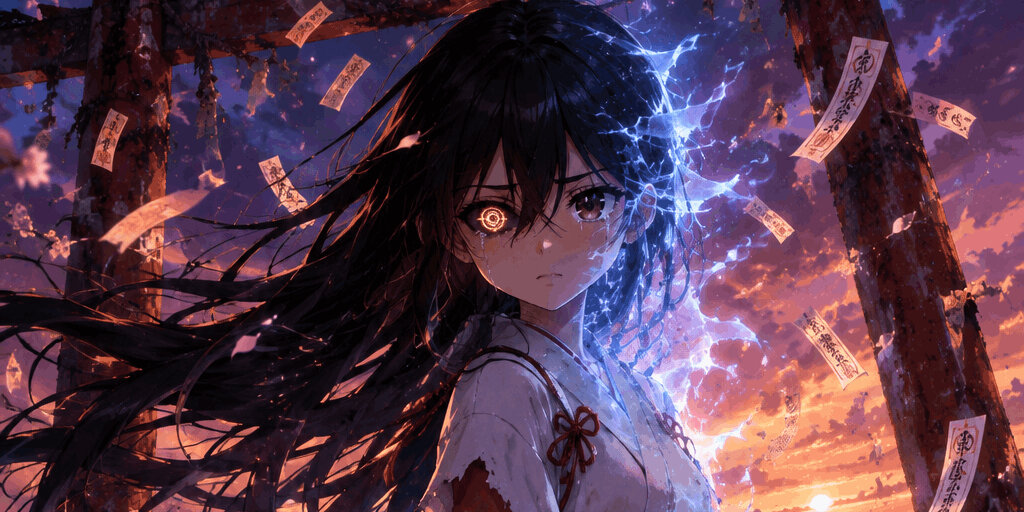
### 3. Illustration: The Anime Spirit Medium
This prompt called for a Studio Ufotable-style key visual featuring a girl mid-transformation into spiritual energy at a torii gate, accompanied by a nine-tailed kitsune fox and a Makoto Shinkai-painted twilight sky.
ChatGPT Images 2.5 delivered the best sky of any test across the entire series — an actual sun disc with water reflection and mountain silhouette that genuinely earns the Shinkai comparison. The asymmetric eyes also landed well. Where it drifted from the prompt was the “dissolving into energy” instruction, which the model reinterpreted as an electric-crackle effect running through the character’s hair rather than the flowing, translucent dissolve described.
Nano Banana 2’s wispy blue-white energy trail proved the closer literal match to that specific instruction. Neither model rendered a convincing nine-tailed fox.
**Winner: ChatGPT Images 2.5** — on overall visual impact despite the interpretive drift.
### 4. Realism: The Rooftop Architect
A cinematic portrait with numerous independent constraints: beige trench coat, round glasses, blueprints held specifically in the left hand, golden-hour lighting, shallow depth of field, and film grain.
ChatGPT Images 2.5 produced gorgeous light — the sun disc visible directly behind the subject, excellent skin micro-texture — though the skin appeared slightly too smooth. The overall scenery felt remarkably realistic, like captured on an analog camera. Interestingly, adding commands that would typically degrade photo quality (such as “realistic, highlights, crushed shadows, uneven flash, blown-out skin tones, candid moment, shot on a phone camera”) actually increased the perceived realism in one iteration.
Nano Banana 2 kept the fuller composition, correctly placing the blueprints in the right hand instead of the left, and added a legible blueprint label reading “PROJECT: 124 DUANE ST” — a detail most renders skip entirely.
**Winner: Nano Banana 2** for a single generation, though ChatGPT Images 2.5 matched it across repeated iterations.
### 5. Agentic Research: The Bitcoin Timeline
Both platforms were asked to produce a widescreen Bitcoin history timeline in kids-drawing style, with a strict requirement for factual accuracy. This category proved the most consequential for the comparison.
ChatGPT Images 2.5 built a clean two-row infographic with specific dates throughout — but one was wrong. It labeled 2023 as the year Bitcoin ETFs were approved in the U.S., when the SEC actually approved the first spot Bitcoin ETFs on January 10, 2024, a full year later (even though futures ETFs were indeed approved in 2023).
Nano Banana 2’s output was less structured but portrayed similar events. It hedged the ETF approval and the fourth halving into a “2023–2024” bracket rather than asserting a single incorrect year, meaning nothing it stated was technically false.
**Winner: Nano Banana 2** — a confidently wrong date matters more in a category specifically testing whether agentic reasoning produces accurate output.
### 6. Abstract Concepts: A Prompt Built from Invented Words
This category used a prompt composed almost entirely of words with no dictionary definition: “A woman eating shmfiyxl in Lyxin. Next to her, her Lymglsushing plays Lakishkark.” Each model had to invent meanings for the nonsense words and then decide how to visually represent them.
ChatGPT Images 2.5 solved the challenge by writing the nonsense directly into the scene as visible text. “Lyxin” glowed on a neon sign above a sleek, futuristic restaurant, and “Lakishkark” was printed on the box of a board game the woman’s tablemate was playing. The invented words stopped being abstract the moment they became readable signage.
Nano Banana 2 took the opposite approach, building a warm, culturally specific scene — a Guatemalan market stall, a woman in a traditional huipil, an orc-like creature playing a hybrid stringed-and-pipe instrument. It read “plays” as playing music rather than playing a game, a different but equally valid interpretation. However, nothing in the frame tied back to “Lyxin” or “Lakishkark” specifically, as the invented words never surfaced as visible text.
**Winner: ChatGPT Images 2.5** — turning undefined concepts into legible labels is a more literal answer to a prompt that provides nothing else to work with.
—
## Final Verdict
Nano Banana 2 claimed three of the six categories, resulting in a draw on paper. The outcome ultimately depends on user expectations and interaction style. ChatGPT Images 2.5 successfully eliminated the oversharpening artifact that plagued its predecessor, and its illustration output in the anime spirit medium test represents arguably the most visually striking single image either model has produced across two full rounds of head-to-head testing.
What distinguishes the two isn’t overall quality but rather very small, specific misses: a spelling error in a lettering-heavy scene, an incorrect year in a research-driven infographic, and interpretive choices when faced with undefined concepts. In terms of overall aesthetics and general quality, the two models are remarkably close to parity.
—
## Frequently Asked Questions
**Q: When was ChatGPT Images 2.5 released?**
A: ChatGPT Images 2.5 launched on September 8, alongside two new API models — GPT-Image-2.5 Flare and GPT-Image-2.5 Sunburst.
**Q: What is the difference between Flare and Sunburst?**
A: Flare serves as the fast default model for general image generation, while Sunburst is designed for premium editing precision and more controlled output refinement.
**Q: How much faster is ChatGPT Images 2.5 compared to the previous version?**
A: OpenAI reports latency reductions of up to 50% compared to Images 2.0.
**Q: What new features did OpenAI add to ChatGPT Images 2.5?**
A: New features include Sketch (drawing layouts as generation references), prompt sharing, inline comments on specific image regions, format templates for posters and merch, and expanded API quality tiers ranging from low through high and max.
**Q: What was the biggest flaw fixed in ChatGPT Images 2.5?**
A: The model eliminated the oversharpening artifact that appeared in GPT Image 2 when prompts contained too many stacked constraints, and it also resolved the color cast issues present in earlier generations.
**Q: What is Nano Banana 2?**
A: Nano Banana 2 is Google’s name for Gemini 3.1 Flash Image, their latest fast-tier image generation model. It should not be confused with Nano Banana Pro, which is a slower, more deliberate model.
**Q: Is one model definitively better than the other?**
A: Based on the tested categories, neither model is clearly superior. The results split evenly, with differences coming down to specific, narrow categories and the nature of the user’s particular needs.
**Q: Can these models handle text rendering within images?**
A: Both models can render text, but neither handles it perfectly. ChatGPT Images 2.5 tends to include invented text in scenes but occasionally makes spelling or legibility errors, while Nano Banana 2 handles legibility more consistently but may miss certain prompt details.
—
## Conclusion
The September 2026 release of ChatGPT Images 2.5 marks a meaningful maturation in OpenAI’s image generation pipeline. By addressing long-standing flaws like oversharpening and color casts, the model reaches a new level of reliability for both creative and technical use cases. Its competition with Google’s Nano Banana 2 demonstrates that the fast-tier AI image generation space has reached a genuine plateau of quality, where the differentiators are increasingly nuanced rather than dramatic.
For users, the practical takeaway is that both models are excellent tools, and the best choice will depend on specific workflows — whether that means prioritizing text accuracy in complex scenes, spatial reasoning in architectural compositions, or factual reliability in research-driven outputs. As these models continue to evolve, the margin for error narrows, and the focus shifts from raw capability to the fine details that separate good from great.
Thank you for reading
