



# The Rising Threat of AI Account Theft: How Cybercriminals Are Exploiting Stolen Credentials to Hijack AI Tools
The rapid expansion of artificial intelligence into everyday workflows has opened a new frontier for cybercriminals. Rather than building their own AI infrastructure from scratch, malicious actors are increasingly turning to stolen authentication tokens, API keys, and session credentials to gain illicit access to powerful AI platforms — all without ever needing to log in through legitimate channels.
## How Infostealers Fuel AI Credential Theft
At the heart of this criminal ecosystem are information-stealing malware programs such as Lumma Stealer and Vidar. These malicious tools are designed to silently infiltrate compromised devices and extract a treasure trove of sensitive data, including saved passwords, browser session cookies, authentication tokens, and software API keys.
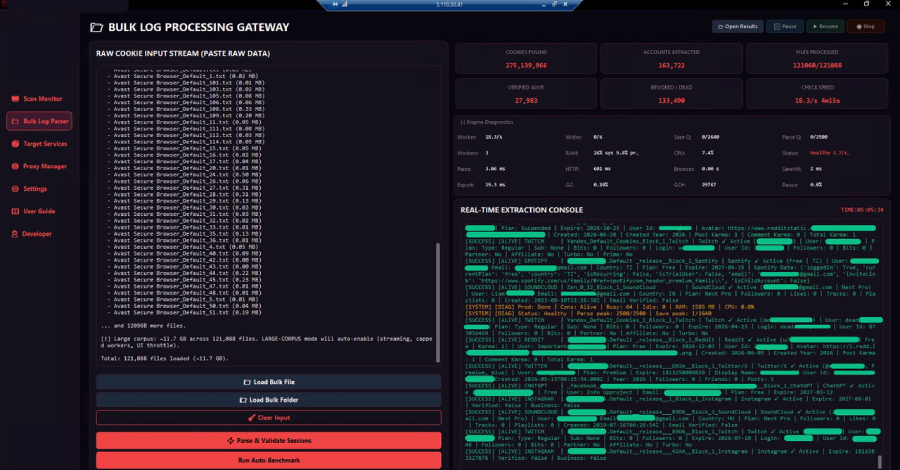
Once the data is harvested, it is compiled into what are known as “stealer logs” — packaged bundles of stolen credentials that are then sold on underground forums and messaging channels. Buyers, who are often other cybercriminals, can use these logs to replay active sessions and gain instant access to premium AI services without needing the original user’s password or multi-factor authentication credentials.
## The Mechanics of Session Replay Attacks
Security researchers have explained that session tokens and API keys are particularly prized targets because they can be reused to bypass standard authentication mechanisms entirely. When a threat actor successfully replays a valid session token, they effectively gain logged-in access to an AI service without ever entering credentials. This makes detection significantly harder, as the activity appears to come from a legitimate, authenticated user.
A single stolen JSON Web Token (JWT) can serve as a skeleton key — granting access to cloud-hosted AI models, developer platforms, and productivity tools that would otherwise require paid subscriptions. In a recent analysis, a massive 7 GB dataset of stolen data was discovered being circulated through messaging platforms, containing information from over 5,800 infected machines spanning 162 countries.
## The Scale of the Problem
The scope of compromised data is staggering. Among the harvested information were thousands of unexpired authentication tokens tied to major AI and tech providers, including Google, Microsoft, Anthropic, Amazon, OpenAI, and a growing number of emerging AI platforms. Thousands of these tokens remained active and usable at the time of discovery.
A deep dive into the stolen data revealed approximately 1,800 unexpired tokens and encrypted authentication structures still valid on the day the dataset was released. Even more concerning, a significant percentage of the stolen web tokens contained plaintext personally identifiable information — names, phone numbers, and email addresses — which do not expire and can be leveraged for targeted phishing and social engineering campaigns long after the initial theft.
## LLMjacking: A New Form of Resource Hijacking
One of the most alarming trends to emerge from this research is a technique referred to as LLMjacking — the unauthorized use of someone else’s AI service credentials to access large language models and compute resources. Much like cryptojacking, where attackers secretly use a victim’s hardware to mine cryptocurrency, LLMjacking allows criminals to run costly AI queries, generate content, or build AI-driven tools while the victim foots the bill.
During a comprehensive scan of the stolen data, researchers identified 24 still-functioning API keys tied to four major AI services, including Google Gemini, OpenAI, Groq, and OpenRouter. Armed with a valid API key, an attacker can integrate AI capabilities into their own workflows, sell access to other criminals, or exfiltrate sensitive data — all while remaining under the radar of the legitimate account holder.
## The Underground Marketplace for Stolen AI Access
The demand for stolen AI accounts has given rise to a vibrant and growing black market. Cybercriminals are now openly advertising discounted access to premium AI models and tools on underground forums and messaging platforms. Vendors offer subscriptions to services like Claude, ChatGPT, Gemini, and Cursor at reduced rates, complete with customer support and refund guarantees — mimicking the look and feel of legitimate SaaS businesses.
One notable vendor was observed offering bundled access to multiple AI platforms simultaneously, while another service specifically marketed access to advanced Anthropic models. These marketplaces have evolved to include anti-detect browser tools and automation software that allow buyers to configure stolen sessions, route traffic through proxies, and evade behavioral detection systems that might flag unusual login patterns.
## Open-Source Tools Lower the Barrier to Entry
What makes this threat particularly dangerous is that attackers do not need advanced technical skills to exploit stolen credentials. Open-source tools like Camoufox — an anti-detect browser — and SeleniumBase, an automation framework, can easily load stolen session data from a browser’s local storage and resume an active session. These tools also support proxy configuration, enabling criminals to mask their real IP addresses and evade geographic or behavioral anomaly detection.
## Why AI Credentials Are Becoming a Prime Target
As enterprises rapidly adopt AI tools for coding, content creation, data analysis, and customer interactions, the value of AI accounts has skyrocketed. Premium subscriptions to advanced models and access to high-performance compute resources come with significant costs, making them attractive targets for criminals looking to avoid paying.
Cybersecurity analysts have noted a clear shift in criminal strategy: rather than investing in expensive infrastructure, threat actors are finding it far more profitable to steal existing accounts and resell access. This trend has been amplified by the growing cost of frontier model access, which continues to rise as AI capabilities become more sophisticated.
## Defensive Measures and Best Practices
Organizations and individual users alike must adopt a multi-layered approach to securing AI accounts and associated credentials. Key recommendations include:
– **Short-Lived Tokens**: Implementing OAuth 2.0 flows that use tokens with short expiration windows limits the damage caused by credential theft, since stolen tokens become useless quickly.
– **Device-Bound Sessions**: Technologies that cryptographically link a session to a specific hardware device prevent stolen tokens from being reused on unauthorized systems.
– **IP Allowlisting**: Restricting access to known, approved IP ranges adds an additional layer of protection against session replay attacks.
– **API Key Scoping**: Limiting the permissions and scope of API keys ensures that even if a key is compromised, the potential for damage is minimized.
– **Phishing-Resistant Authentication**: Adopting passkeys and hardware-based security keys strengthens authentication and reduces the risk of initial credential theft, though it does not fully protect against session token abuse.
– **Continuous Monitoring**: Organizations should actively monitor for unusual API usage patterns, unexpected geographic access, and signs of token reuse across their AI platforms.
## FAQ
**Q: What are infostealers and how do they work?**
A: Infostealers are a category of malware designed to silently harvest sensitive data from compromised computers. They target browser-stored passwords, session cookies, authentication tokens, and API keys, then package the stolen data into logs that are sold on underground marketplaces.
**Q: How is a stolen session token different from a stolen password?**
A: A stolen session token allows an attacker to impersonate an already-authenticated user without needing to know the password or bypass multi-factor authentication. Because the session appears legitimate, it is much harder for security systems to detect unauthorized access.
**Q: What is LLMjacking?**
A: LLMjacking refers to the unauthorized use of stolen AI service credentials to access large language models and compute resources. It is similar to cryptojacking, where attackers exploit someone else’s resources for their own gain, leaving the victim to absorb the costs.
**Q: Can stolen AI credentials be detected and blocked?**
A: Detection is challenging because stolen session tokens mimic legitimate user activity. However, organizations can reduce risk by using short-lived tokens, device-bound sessions, IP allowlisting, and behavioral monitoring tools that flag anomalies in API usage patterns.
**Q: Should individual AI users be concerned?**
A: Yes. Both individuals and organizations are at risk. Anyone who stores AI service credentials in a browser or uses them across multiple devices should ensure they are using strong, unique passwords, enabling multi-factor authentication, and regularly reviewing active sessions and API key usage.
**Q: What should organizations do if they suspect AI credential theft?**
A: Organizations should immediately revoke compromised API keys and session tokens, force re-authentication for affected accounts, review access logs for unusual activity, and conduct a thorough security audit of their AI service integrations.
## Conclusion
The exploitation of AI accounts through stolen credentials represents a significant and rapidly evolving cybersecurity threat. As artificial intelligence becomes an integral part of both personal and enterprise workflows, the incentives for cybercriminals to steal rather than pay for access will only intensify. The underground economy around stolen AI credentials — complete with marketplaces, support services, and specialized tooling — underscores the urgency of adopting robust authentication practices and proactive monitoring.
Securing AI accounts requires a shift in how organizations think about digital asset protection. Short-lived tokens, device-bound sessions, tightly scoped API keys, and phishing-resistant authentication methods must become standard practice. Without these measures, the growing accessibility and power of AI tools will continue to make them a prime target for those looking to profit from stolen digital access.
Thank you for reading
