



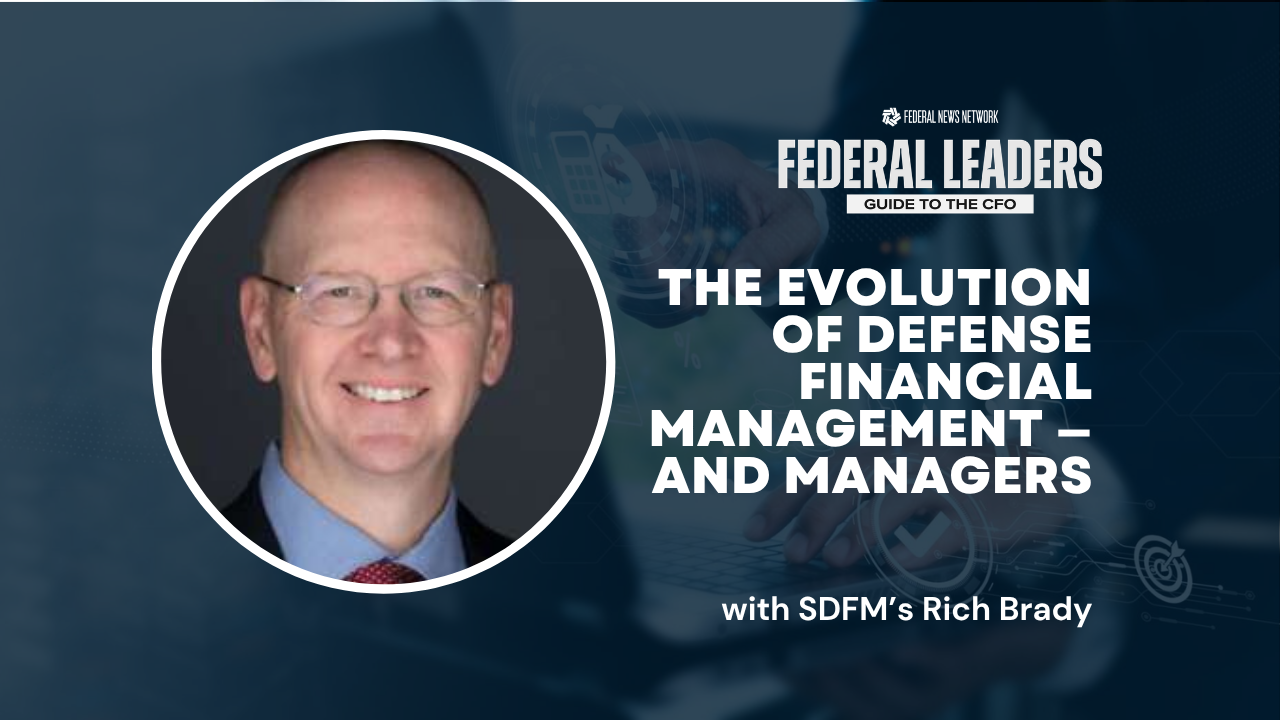
# The Evolving Role of Financial Management in Defense: Foundations, Technology, and the Future of the CFO
The world of defense financial management is undergoing one of the most significant transformations in its modern history. As organizations across the defense sector grapple with increasingly complex resource allocation challenges, the professionals who manage public funds are being asked to step beyond traditional bookkeeping and into a more strategic, forward-looking role.
## Beyond the Balance Sheet
For decades, financial professionals in defense organizations built their careers around mastering the intricate mechanics of public finance. They became experts in the rules governing appropriated funds, tracked obligations and expenditures with precision, and ensured strict compliance with accounting standards and financial regulations. Their value was tied closely to their ability to navigate one of the most complex regulatory environments in any industry.
Those core responsibilities have not disappeared. In fact, many leaders argue they are more critical than ever. But the way professionals spend their time has shifted dramatically. Much of the routine work of capturing, recording, and reporting financial information is now being handled by increasingly sophisticated systems, freeing human experts to focus on higher-order thinking.
The result is a profession whose value is moving beyond simply reporting what happened — and toward helping leaders understand what happens next.
## A New Mindset: From Obstacle to Opportunity
One of the most striking shifts in defense financial management is the changing relationship between financial professionals and decision-makers. Rather than serving as gatekeepers who say “no” based on regulatory constraints, financial managers are increasingly being invited into conversations before decisions are finalized.
The most effective professionals in this space approach every challenge by starting with the desired outcome rather than the obstacle. This mindset recognizes that there is almost always a path forward. Financial managers help leaders understand how resources can be aligned with strategic goals, how risks can be managed proactively, and how investments can be prioritized for maximum impact.
This isn’t about abandoning compliance or accountability. It’s about deepening the partnership between finance teams and the leaders they support, ensuring that financial expertise shapes decisions at the earliest possible stage.
## The Critical Importance of Shared Data
Throughout the defense sector, different military services and agencies have spent decades developing their own systems, processes, and ways of describing the same information. This fragmentation creates significant challenges when it comes to achieving reliable, consistent, and trustworthy financial data.
Leaders across the defense community have consistently identified audit readiness as a top priority. But the value of audit extends far beyond passing an external review. Reliable information is a strategic asset. When decision-makers trust the data in front of them, they can focus with clarity on priorities, risks, investments, and outcomes.
Common data standards and shared definitions matter just as much as shared software platforms. A dashboard means very little if the information it displays doesn’t align with the information being viewed elsewhere in the organization. Building a unified understanding of organizational performance requires investment in both technology and the foundational frameworks that make data meaningful.
## Technology as a Tool, Not a Replacement
The conversation around artificial intelligence and machine learning in financial management often carries an undertone of urgency — as if professionals must either adopt these tools or risk becoming irrelevant. That framing misses the mark.
The real power of technology lies in what it enables experts to do once they are freed from repetitive, transactional tasks. But technology cannot substitute for foundational knowledge. Financial managers still need to understand appropriations law, budgeting principles, accounting standards, and regulatory frameworks. These competencies remain the bedrock of the profession.
As one observer noted, having access to powerful tools does not fix the problem of unreliable input. “If you have garbage data to begin with, artificial intelligence is not necessarily going to fix that,” the reasoning goes. Technology amplifies existing quality — both good and bad. That makes the human expertise behind the data more important than ever.
## Preparing Tomorrow’s Financial Leaders
The CFOs of tomorrow will need a broader skill set than previous generations. They will need experience across multiple organizations, agencies, and services. They will need to understand technology not as technical specialists, but as informed leaders who can identify opportunities and assess risks.
Importantly, this does not mean that tomorrow’s financial executives need to abandon the fundamentals of their profession. The core responsibilities of safeguarding public resources and maintaining accountability remain unchanged. What has changed is the scope of what professionals are expected to contribute.
The profession is building on its roots rather than leaving them behind. Financial managers are finding themselves pulled into the center of organizational strategy, valued not just for their ability to account for resources, but for their ability to help leaders turn those resources into meaningful outcomes.
## Frequently Asked Questions (FAQ)
**Q: Why is appropriations law still important in an era of increasing automation?**
A: Appropriations law governs how public funds can be obligated and spent. Even as technology automates many transactional aspects of financial management, the legal and regulatory framework remains essential. Automation cannot replace the judgment required to interpret and apply these rules correctly.
**Q: How does audit readiness benefit defense financial management beyond compliance?**
A: Audit readiness drives organizations to develop reliable, consistent data and shared definitions. This creates a foundation of trust that benefits not only auditors but also decision-makers who need accurate information to set priorities, manage risks, and allocate resources effectively.
**Q: What does it mean for a CFO to be a “technologist”?**
A: It does not mean the CFO needs to write code or manage IT systems directly. Rather, it means the CFO should understand the technological landscape — what tools are available, what is emerging on the horizon, and how technology can be strategically leveraged to improve financial operations and decision-making.
**Q: How can financial managers add more value to organizational decision-making?**
A: By shifting from a reactive posture of enforcing rules to a proactive posture of advising on outcomes. Financial managers who understand strategic objectives can help leaders explore options, evaluate trade-offs, and connect financial resources to mission results while decisions are still being shaped.
**Q: Is the fundamentals-based approach to financial management becoming outdated?**
A: Not at all. The fundamentals — understanding budgeting, accounting, regulation, and stewardship — are more important than ever. Technology changes the tools available, but the underlying responsibility to manage public resources with integrity remains constant.
**Q: What role do common data standards play in defense financial management?**
A: Common standards ensure that different agencies and services are working from the same information. Without shared definitions and consistent data practices, even the most advanced software tools cannot produce a unified or reliable picture of organizational performance.
## Conclusion
Defense financial management stands at a crossroads between tradition and transformation. The profession’s core mission — safeguarding public resources and maintaining accountability — is enduring and non-negotiable. At the same time, the tools available to professionals are evolving rapidly, and the expectations placed on financial leaders are expanding in scope.
The path forward lies in embracing technological capabilities while deepening foundational expertise. Financial managers who can combine regulatory knowledge with strategic thinking and technological literacy will be best positioned to serve their organizations in the years ahead. The future of defense finance is not about replacing human judgment with machines; it is about empowering human experts to focus on the work that matters most.
The profession is not walking away from its roots. It is growing new branches — reaching toward broader impact, deeper insight, and stronger partnerships with the leaders who depend on financial expertise to navigate complex challenges.
Thank you for reading
