



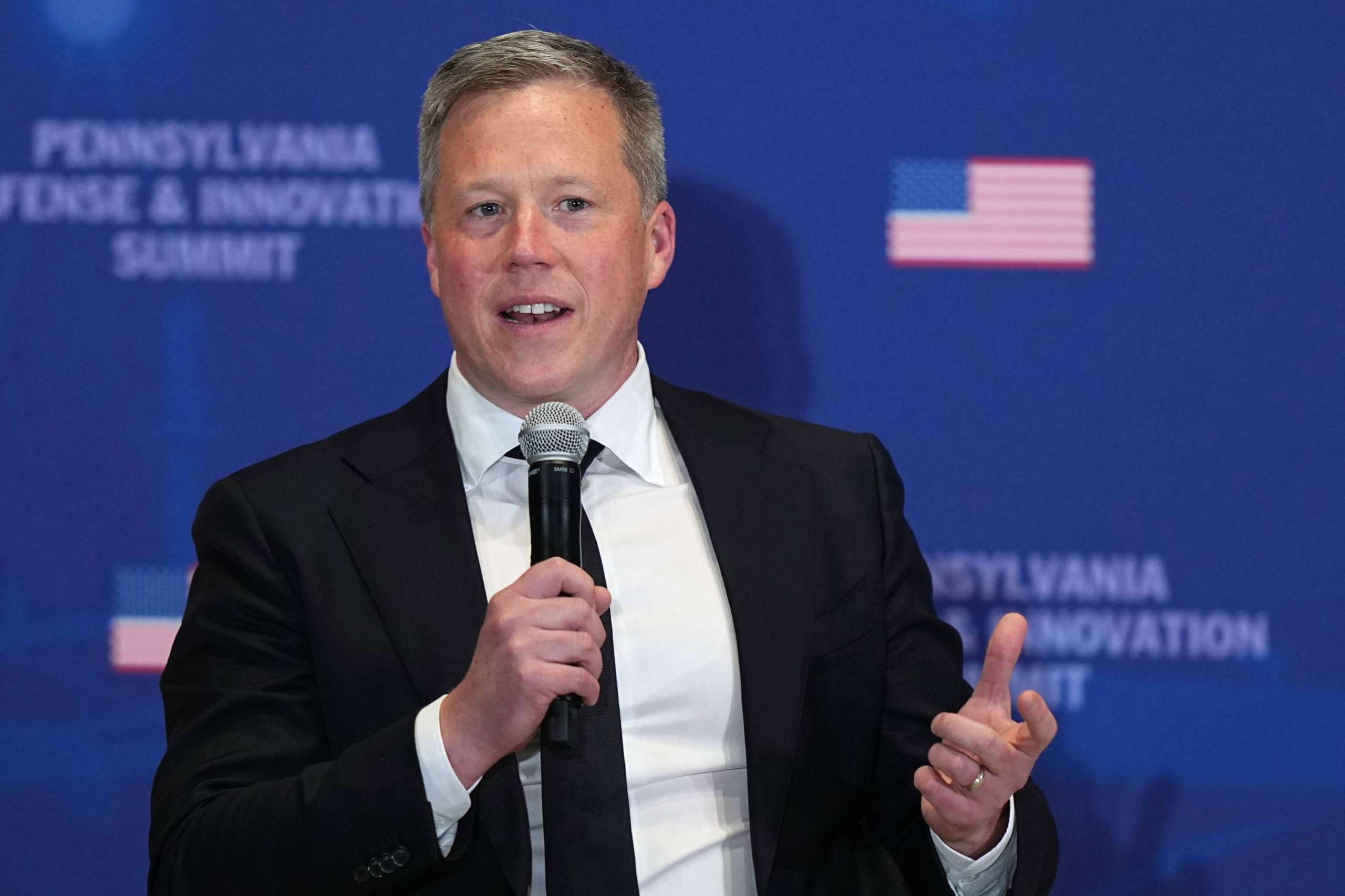
# Army Secretary Dan Driscoll Resigns After 18 Months Amid Military Leadership Turmoil
**WASHINGTON** — The Department of the Army is once again in flux after its civilian leader, Secretary Dan Driscoll, announced his resignation Monday, departing just 18 months into his tenure. The shakeup, confirmed by the White House, is the latest in a sweeping pattern of leadership changes that has reshaped the upper ranks of the U.S. military under the current administration.
Driscoll, a tech investor, Iraq War veteran, and longtime associate of Vice President JD Vance, submitted his resignation after a private conversation with President Donald Trump, according to a U.S. Army official familiar with the matter. No official explanation was provided for his sudden exit, though reports indicate underlying friction between Driscoll and Secretary of Defense Pete Hegseth had been building for months.
White House spokesperson Anna Kelly praised Driscoll’s contributions, crediting him with advancing what the administration calls “Make America Strong Again” priorities at the Department of the Army. “Secretary Driscoll provided outstanding leadership during historic military operations, restored an emphasis on readiness and lethality, and assisted with negotiations between Russia and Ukraine,” Kelly stated in her prepared remarks.
The departure is especially notable given Driscoll’s deep roots in military culture. He served as an armor officer from 2007 to 2011, deploying to Iraq in 2009 and 2010. His father and grandfather also served in the Army, and he frequently described his commitment to putting soldiers’ needs first. After leaving active duty, he attended Yale Law School, where he forged a friendship with Vance that later led to his appointment.
## A Pattern of Upheaval
Driscoll’s exit follows a dramatic series of personnel changes that have shaken the Army’s command structure. In April, Defense Secretary Hegseth abruptly removed the Army’s senior uniformed officer, General Randy George, from his post. George had been seen as a steady, experienced hand at the helm of the service. Driscoll, who was close to George, publicly expressed his dismay at the decision and told lawmakers that he had visited George’s home to offer his support after the general’s departure.
Then, in June, General Christopher Donahue, the Army’s commander in Europe and Africa, unexpectedly stepped down, leaving yet another critical position vacant. General Christopher LaNeve, who had risen rapidly under Hegseth’s leadership, was tapped to fill the gap as acting chief of staff.
Under LaNeve’s direction, the Army has also reversed a significant modernization initiative. A unit based in Europe that had been pioneering battlefield drone technology was ordered to halt its work and revert to a conventional infantry formation. The move represents a stark reversal from the aggressive push toward drone warfare that Driscoll had championed during his time as secretary.
## Bipartisan Reactions
News of Driscoll’s departure drew reactions from both sides of the aisle, with many expressing regret over the loss of his leadership. Republican Representative Steve Womack of Arkansas, a former Army National Guard member, called Driscoll “a transformative leader who brought common sense and discipline to the Department of the Army.” Womack highlighted Driscoll’s engagement ranging from mentoring cadets at West Point to overseeing the Army at the Pentagon.
Democratic Representative Jason Crow of Colorado, a former Army Ranger and member of the House Armed Services Committee, acknowledged that despite their policy disagreements, he had a productive working relationship with Driscoll. “It was actually nice, I will say, having somebody who was smart, that knew the policy, that wanted to do the work,” Crow said, lamenting that “somebody like that can’t last in this administration.”
Crow also raised broader concerns about the state of the Pentagon, describing it as “rudderless” in many respects given the number of senior leaders who have departed in recent months. “So, I’m gravely concerned about it,” he added.
Senate Armed Services Committee ranking member Jack Reed, a Democrat and former Army officer from Rhode Island, commended Driscoll for working “to transform the Army for the battlefield of the future.” Reed also drew sharp criticism of Hegseth’s management style, alleging that “the Pentagon right now is cultivating a culture where dissent is punished and competence is secondary to personal allegiance.” Reed pointed out that hundreds of thousands of soldiers remain deployed worldwide, many in active combat zones.
## Driscoll’s Role in the Ukraine-Russia Conflict
Among Driscoll’s most high-profile assignments was his involvement as a key intermediary in efforts to negotiate an end to the Russia-Ukraine war. Though the specifics of his diplomatic work remain largely undisclosed, his role placed him in an unusual position for a service secretary — one typically focused on administrative and logistical matters rather than direct geopolitical mediation.
At the same time, Driscoll pushed hard to streamline the military acquisition process so that contractors could develop drones and counter-drone systems at wartime speed. This dual focus on diplomacy and technological modernization reflected an ambitious vision for how the Army should adapt to modern threats.
When the Senate confirmed Driscoll in February 2025, the vote was 66-28. The Armed Services Committee hearing that preceded the confirmation was notable for its lack of significant opposition, with lawmakers focusing instead on modernization goals, recruiting challenges, and strengthening the military industrial base.
## Broader Context
Driscoll’s resignation is not an isolated event. It comes on the heels of Hegseth forcing out multiple senior military leaders across branches, including the Navy Secretary, John Phelan, who was the first head of a military service to leave during Trump’s second term when his departure was announced in April.
The cumulative effect of these departures has raised alarms among lawmakers and military analysts about institutional continuity and expertise at a time when global tensions remain elevated. With key positions in the Army — and across the broader defense establishment — now either vacant or filled by leaders aligned closely with a single vision, questions are being asked about how the military will navigate the challenges ahead.
—
## Frequently Asked Questions
**Q: Why did Dan Driscoll resign as Army Secretary?**
A: No official reason was provided by the White House or the Department of the Army. Reports suggest that tensions with Defense Secretary Pete Hegseth played a role, and Driscoll submitted his resignation after a meeting with President Trump.
**Q: How long did Dan Driscoll serve as Army Secretary?**
A: He served for approximately 18 months, having been confirmed by the Senate in February 2025.
**Q: Who is replacing Dan Driscoll?**
A: As of the latest reports, no replacement has been announced. The position of Army Secretary remains vacant.
**Q: What is the significance of Driscoll’s departure?**
A: It is part of a broader wave of leadership changes across the U.S. military that has seen multiple generals and service secretaries removed or resigning in a short period, raising concerns about institutional stability.
**Q: What was Dan Driscoll’s background before becoming Army Secretary?**
A: He was an Iraq War veteran who served as an armor officer from 2007 to 2011, a tech investor, and a Yale Law School graduate who was a longtime associate of Vice President JD Vance.
**Q: What was Driscoll’s involvement in the Ukraine-Russia conflict?**
A: He served as an unusual key negotiator and intermediary in efforts to broker peace between Russia and Ukraine, a role that went beyond the typical responsibilities of a service secretary.
**Q: How did Congress react to the news of Driscoll’s departure?**
A: Both Republican and Democratic lawmakers praised Driscoll’s contributions and expressed concern about the pace of leadership turnover in the Pentagon.
—
## Conclusion
Dan Driscoll’s resignation marks another chapter in a period of significant turbulence for the United States military leadership. His departure, following the removal of senior generals and other service secretaries, signals that the current administration continues to pursue a dramatic reshaping of the defense establishment. While Driscoll was credited by allies in both parties for his dedication to soldiers and his efforts to modernize the Army, the broader pattern of turnover has left many questioning whether institutional knowledge and continuity are being sacrificed in pursuit of a unified vision. As critical challenges — from ongoing global conflicts to rapid technological change in warfare — persist, the stability and experience of military leadership will remain a topic of intense scrutiny for lawmakers, defense professionals, and the public alike.
Thank you for reading
