



The biggest challenge facing retailers today isn’t a lack of technology, it’s making existing systems work together. Here’s why integration and edge intelligence are becoming retail’s next competitive advantage.
Retailers have never had access to more technology. RFID readers, smart sensors, self-checkout platforms, electronic article surveillance systems, point-of-sale infrastructure—the list keeps growing. And yet, for many store operators, more technology hasn’t meant more clarity, it’s meant more complexity.
The uncomfortable truth the retail industry confronts is this: the bottleneck is a failure to integrate what already exists.
Walk through the back end of a modern retail operation and you’ll find a patchwork of systems that were never designed to talk to each other. RFID readers from one vendor. Loss prevention tools from another. POS platforms with their own middleware requirements. Each system generates data; few share it in any meaningful way.
A Fragmented Floor Plan
The consequences are real and measurable. Integration projects consume IT budgets. Deployment timelines stretch as maintenance costs multiply due to hardware inventories growing more diverse and harder to manage. And the data that retailers desperately need to make smarter decisions sits locked in silos, inaccessible or inconsistent.
“Integration projects often break down at the protocol and data exchange layer,” said Sergio Ramos, Global Product Management Director Hardware at Checkpoint. “RFID, POS, self-checkout, sensors, and loss prevention systems frequently use different, sometimes highly proprietary communication standards, making interoperability complex. In many cases, customer integration teams are not deeply familiar with the specific protocols or data models of each system, which leads to mapping issues, inconsistent data flows, and longer deployment cycles.”
This isn’t a technology failure. It’s an architectural one.
Why “More Devices” is the Wrong Answer
The instinct in retail has long been to solve operational problems by adding tools. Inventory inaccurate? Deploy more readers. Shrink increasing? Add more cameras. Checkout slow? Install more terminals.
But layering hardware on top of hardware doesn’t resolve underlying integration challenges; it compounds them. Every new device added to a store environment represents a new integration requirement, a new maintenance obligation and a new point of potential failure.
The retailers gaining a genuine competitive edge aren’t the ones with the most technology on their floors. They’re the ones who’ve figured out how to make fewer, smarter devices do more.
The Case for Consolidated, Intelligent Platforms
What would a better retail architecture actually look like? The answer starts with a shift in design philosophy: instead of building systems by connecting many single-purpose devices, retailers need platforms that consolidate multiple functions into a single, intelligent unit.
“A more consolidated platform can often reduce multiple device-specific integrations down to a single integration layer. Instead of the retailer having to connect separately to everything, the platform manages those device integrations and exposes a standardized API that is familiar to IT teams,” stated Ramos. “This significantly simplifies deployment, reduces integration effort, and allows customers to focus on one interface while we handle the complexity of connecting and maintaining the underlying systems.
This means devices capture data that is processed locally. Platforms that integrate natively with existing POS and self-checkout infrastructure rather than requiring custom middleware. Hardware that can communicate with external sensors and automation components through open, standardized connectivity rather than proprietary lock-in.
“Embedded processing improves performance by moving decision-making closer to the device, reducing the dependency on centralized systems or cloud-based validation for every transaction or event,” noted Ramos. “This not only simplifies the cloud architecture and lowers infrastructure demands, but also enables real-time local responses, even when connectivity is limited or unavailable. As a result, retailers benefit from faster execution, greater reliability, and a more resilient store operation.”
The benefits aren’t theoretical. Fewer devices mean smaller hardware footprints and lower maintenance overhead. Embedded computing, where processing happens at the device level rather than relying on centralized servers or cloud connectivity, reduces latency and increases resilience. And when a single platform can serve multiple use cases across checkout, loss prevention and inventory management, retailers can justify the investment more easily and deploy faster.
What This Shift Looks Like in Practice
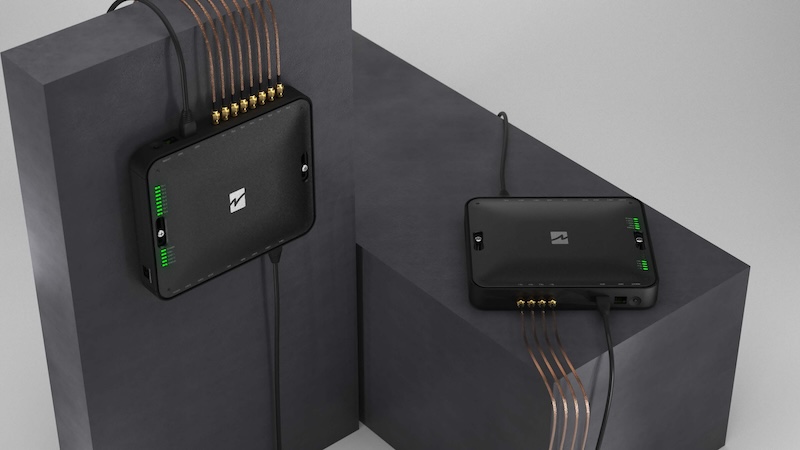
Courtesy of Checkpoint Systems
One such system is Checkpoint Systems’ READFINITY platform, that offers a concrete illustration of this architectural direction. Rather than functioning as a traditional RFID reader, it consolidates embedded computing, real-time transaction validation and expandable connectivity for external devices into a single compact unit.
The practical implications are significant. Real-time reconciliation between scanned items and actual purchases can happen at the device level, without a round trip to a central server. External components such as sensors and indicators can connect directly through GPIO ports, reducing the need for separate integration layers. And the platform is engineered to support Edge AI capabilities as they mature, meaning the same hardware investment can unlock increasingly sophisticated use cases over time, from dynamic inventory optimization to customer behavior analysis.
Critically, this isn’t a purpose-built solution for a single environment. The same platform can operate across traditional checkout lanes, self-checkout kiosks, smart shelves and EAS systems. That kind of cross-environment flexibility is what genuine consolidation looks like.
The Edge AI Opportunity
Looking ahead, the move toward edge computing in retail isn’t just about efficiency. It’s about intelligence that’s actually useful in the moment.
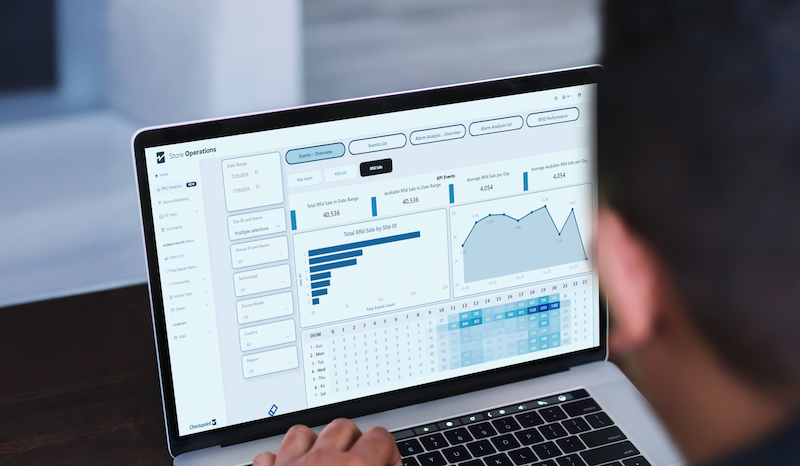
When a device can analyze RFID and sensor data locally and act on it immediately, retailers gain something they’ve long struggled to achieve: real-time responsiveness at the store level. Replenishment triggers that don’t wait for a nightly batch process. Shrink detection that flags anomalies as they happen. Inventory data that reflects what’s actually on the shelf right now, not what was there this morning.
Courtesy of Checkpoint Systems
At scale, the aggregated data from connected, intelligent devices across a store network becomes a strategic asset, feeding more accurate forecasting, sharper operational decisions and more relevant customer experiences.
The Real Transformation Ahead
The next phase of retail technology isn’t about deploying something radically new. It’s about making what already exists work together, intelligently and efficiently.
“When a single device replaces what previously required multiple systems, installation becomes much simpler by reducing the number of hardware components, connections, and infrastructure that need to be deployed and configured, particularly standalone edge computers,” said Ramos. “Maintenance is also streamlined because management, monitoring, software updates, and troubleshooting are centralized within a single platform. This reduces operational complexity, lowers support costs, and improves overall system reliability.”
Retailers who succeed in the coming years won’t necessarily be those who adopted the most technology. They’ll be those who built architectures that are coherent, scalable and genuinely integrated. That requires a different kind of conversation: not “what new tool do we need?” but “how do we make our systems smarter and fewer?”
If your organization is navigating this shift, it’s worth evaluating where your current architecture creates friction, and what a more consolidated approach could unlock. The technology to do it better already exists. The question is whether your infrastructure is designed to take advantage of it.
Key Takeaways
- Retail’s biggest obstacle isn’t a lack of technology but the failure to make existing systems work together, since fragmented, proprietary tools create data silos, higher costs and longer deployment times.
- Consolidated platforms with embedded computing and edge AI, like Checkpoint Systems’ READFINITY, replace multiple single-purpose devices with one intelligent unit that simplifies integration and enables real-time, store-level decisions.
