



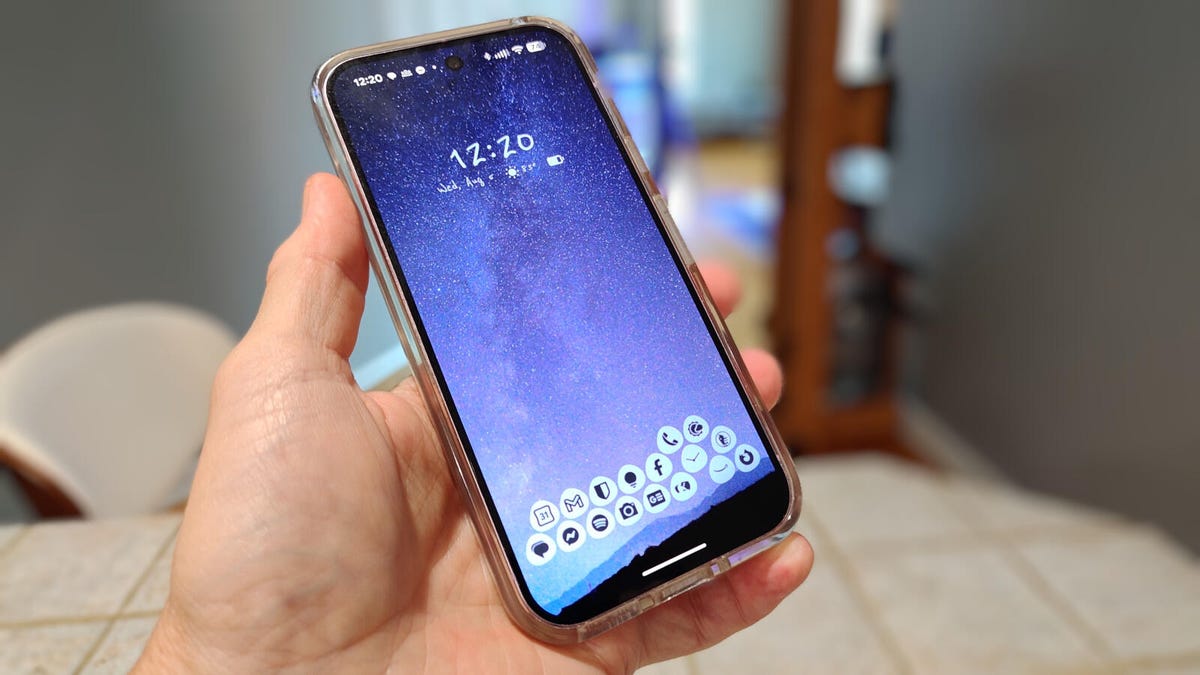
**The Case for Keeping Your Phone: Why My Pixel 9 Pro is Staying Put**
In a world where technology evolves at breakneck speed, the allure of the latest gadget is often irresistible. This is especially true in the smartphone market, where manufacturers promise revolutionary features and incremental hardware upgrades year after year. For years, I’ve been an active participant in this cycle, eagerly awaiting the unveiling of the next-generation device. However, with the recent release of the Google Pixel 11, I’ve decided to take a standstill. After a thorough two-year relationship with my Google Pixel 9 Pro, I’ve concluded that the newest models simply don’t offer enough to justify an upgrade.
My journey with the Pixel 9 Pro has been nothing short of exceptional. From the moment I unboxed it, it has been a reliable, high-performing companion that has consistently exceeded my expectations. This is the primary reason I’m choosing to skip not one, but two generations of Pixels. My experience has solidified a belief that the diminishing returns of new flagship phones no longer align with my personal or financial priorities.
Here are the specific reasons that have led me to stick with my aging—yet incredibly capable—Pixel 9 Pro.
### 1. My Pixel 9 Pro is Still Going Strong
The most significant reason for my loyalty is the sheer robustness of my current device. I anticipated that after two years of heavy use, the Pixel 9 Pro would show signs of wear, slow down, or develop glitches. Instead, it has remained a rock-solid performer. It boots up instantly, apps load without lag, and the overall user experience is as smooth as it was on day one.
This resilience is a testament to the device’s engineering and the optimization of the Android software. It has handled everything I’ve thrown at it—from intensive photo editing to marathon streaming sessions—without a single crash. Given this proven track record, the risk of switching to an unproven model feels entirely unnecessary. Why fix what isn’t broken when the alternative comes with the uncertainty of new software bugs and hardware quirks?
### 2. The Hardware Upgrades Aren’t Worth the Cost, and the New Chip is Unproven
A primary driver of consumer upgrades is the promise of a significant leap in processing power. However, the jump from the Tensor G4 in my Pixel 9 Pro to the Tensor G6 in the Pixel 10 offered a performance increase that was barely perceptible. Independent benchmarks, which often tell the real story, suggest the upgrade wasn’t the generational leap we were hoping for.
This leads to the biggest unknown: the new Tensor G6 chip. While Google markets it as a more efficient processor, efficiency doesn’t always translate to better performance. For a device that hasn’t yet been tested by the masses, it represents a significant gamble. I would rather rely on the proven, reliable performance of the G4 than be an early adopter of a chip with an unestablished track record. The cost of the new phone simply doesn’t match the tangible benefits for my specific needs.
### 3. Pixel Glow: A Gimmick I Can Live Without
One of the most publicized new features of the Pixel 11 is “Pixel Glow.” This is a notification light on the back of the phone that flashes to alert you to messages, calls, and other alerts. On paper, it sounds like a clever solution for those who might miss a notification at a glance. In practice, I see it as a frivolous gimmick.
As someone who values focus and minimizing distractions, a constantly glowing light on the back of my phone is the opposite of helpful. It creates an expectation of immediate attention, pulling me out of a workflow or a moment of peace. My current phone already serves me well, and I have no desire for a feature designed to keep me more tethered to my device.
### 4. The Color Palette is Disappointingly Bland
Smartphone personalization is a key part of the ownership experience. For me, the look of my device is a form of self-expression. The color options for the Pixel 11 are, in a word, uninspired. Reports and reviews suggest a lineup of muted, conservative colors that lack the vibrancy and personality of previous generations.
My current Pixel 9 Pro is a delightful bubblegum pink—a color that brings a smile every time I use it. The prospect of switching to a seafoam green or a muted gray feels like a step backward in terms of design flair. Google has a history of creating beautiful hardware, and the color options for the Pixel 11 feel like a missed opportunity to excite its user base.
### 5. The Price is Simply Too High
Ultimately, the decision to forgo a new phone comes down to a cost-benefit analysis. The price of a new Pixel 11 Pro starts at a staggering $1,099. For a device that offers marginal improvements over a model that is only two years old, this is a difficult pill to swallow.
In today’s economic climate, where the cost of living is rising, spending over a grand on a non-essential item is a hard justify. My perfectly functional Pixel 9 Pro provides all the performance and features I need. Spending that kind of money for a slight iterative upgrade is, for me, an exercise in diminishing returns.
### Conclusion
The decision to stick with my Pixel 9 Pro is not a rejection of innovation, but a conscious choice for pragmatism. It is a powerful reminder that the best technology is the technology that meets your needs perfectly. My current phone is fast, reliable, and continues to deliver a fantastic user experience. The allure of the new is tempered by the reality of the cost and the lack of a compelling reason to change. For now, I am content in the knowledge that my Pixel 9 Pro will continue to be my trusted device for the foreseeable future.
***
### Frequently Asked Questions (FAQ)
**Q1: Why is the author skipping two versions of the Pixel phone?**
The author states they have been using their Pixel 9 Pro since its release in August 2024. In tech terms, this is a long time, and they feel it makes sense to skip a version to avoid upgrading too frequently.
**Q2: How does the author describe the performance of their Pixel 9 Pro?**
The author describes their Pixel 9 Pro as “the best phone I’ve ever used… by far.” They report zero problems with the device and that it still runs as if it was bought yesterday, with plenty of storage space remaining.
**Q3: What is the author’s opinion on the new Tensor G6 chip?**
The author is skeptical of the new Tensor G6, calling it “unproven.” They reference benchmarks and user discussions that suggest the performance upgrade from the previous generation is not significant and that the chip’s long-term reliability is unknown.
**Q4: What is “Pixel Glow,” and why does the author dislike it?**
Pixel Glow is a notification light on the back of the Pixel 11 that flashes to alert users. The author dislikes it because they view it as a distracting gimmick that is contrary to their desire for a phone that helps them focus and disconnect.
**Q5: How much does the new Pixel 11 Pro cost, and why is this a problem for the author?**
The Pixel 11 Pro starts at $1,099. The author finds this price to be the “final nail in the coffin” because, in their current economic climate, spending over $1,000 on a phone that offers only marginal improvements over a perfectly functional two-year-old model is not a justifiable expense.
