



**AI in Security Operations: Optimizing the SOC with the Right AI for the Right Job**
The rapid advancement of AI has placed significant pressure on security leaders to adapt quickly. AI platforms like Claude, Codex, and Cursor are already empowering security teams to write detections, investigate alerts, summarize incidents, and automate repetitive tasks. The discussion has shifted from whether AI belongs in the SOC to how each type of AI can deliver maximum value in specific areas. With an influx of new AI products, it’s tempting to believe one tool can solve every problem. In reality, different AI models are purpose-built for different tasks, and understanding their distinct roles is key to transforming AI-related frustrations into better security outcomes.
—
### **AI is Changing Security Operations**
Security operations are evolving at a unprecedented pace. On one hand, attackers are leveraging AI to speed up phishing campaigns and malware development. On the other hand, defenders are utilizing AI to triage alerts, draft detection rules, and reduce manual workloads. The potential for AI to improve efficiency is enormous, but the challenge lies in identifying where each type of integration adds the most value.
—
### **Two Kinds of AI, Two Different Jobs**
Modern security operations can be broken down into three layers. At the base are existing security tools like SIEMs, EDRs, and email security platforms that generate alerts. In the middle is an autonomous AI SOC, responsible for investigating alerts, correlating data, and determining which issues require human intervention. At the top are AI platforms like Claude, Codex, and Cursor, where human analysts collaborate with AI to solve complex problems, write code, and make critical decisions.
These layers are complementary—each serves a unique purpose and is essential for a well-functioning SOC.
—
### **Why AI Platforms Like Claude Shouldn’t Investigate Every Alert**
While AI platforms are highly capable, they are designed primarily to assist human operators, not to act as autonomous investigators. Analysts can use these platforms to explain suspicious activities, summarize investigations, draft detection rules, or translate queries into other languages. However, investigating thousands of alerts requires continuous operation, deep integration with security tools, and organizational memory—capabilities better suited for an autonomous AI SOC. Attempting to use large language models (LLMs) for high-volume investigations resembles using a Formula 1 car for package delivery: impressive engineering, but not optimized for the task.
—
### **The Tokenomics Problem**
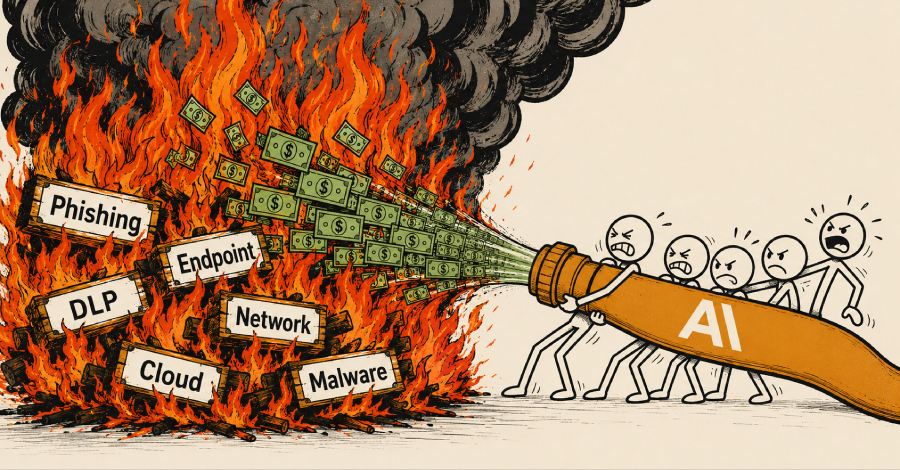
Another major limitation is cost. Effective investigations require context—endpoint telemetry, authentication logs, threat intelligence, prior investigations, and organizational knowledge—all of which consume tokens. While manageable for sporadic analyst queries, this cost becomes unsustainable at scale. Processing thousands of alerts daily using LLMs would be prohibitively expensive, especially when most alerts turn out to be benign. Autonomous AI SOC architectures are designed to combine deterministic workflows, forensic analysis, and cached context to keep costs predictable while handling alert volumes efficiently.
—
### **The MDR Reality**
Many organizations rely on Managed Detection and Response (MDR) providers for monitoring and investigations. In these setups, the MDR owns the investigation workflow, including enriched telemetry and historical data, which are often inaccessible to external systems. Without direct access to this information, AI platforms struggle to independently verify alerts. Autonomous AI SOC solutions address this by operating directly alongside an organization’s tools, retaining context, and making findings available to both analysts and AI platforms.
—
### **Investigating 100% of Alerts**
Most security teams cannot manually review every alert and often prioritize high-severity cases, inadvertently overlooking low-severity warnings. Surprisingly, a significant portion of confirmed incidents in 2025 originated from low-severity alerts. The solution isn’t overworking analysts but rather increasing their capacity. Autonomous AI SOCs can investigate every alert, escalating only those requiring human judgment, thereby reducing the risk of missing subtle but critical threats.
—
### **Where Claude and Friends Shine**
Once an autonomous AI SOC completes the initial investigation, AI platforms become even more valuable. Analysts can focus on higher-level tasks such as:
– Querying completed investigations
– Drafting and refining detection rules
– Hunting emerging threats
– Summarizing incidents for stakeholders
– Generating reports
– Exploring new hypotheses and making final decisions
This division of labor ensures that AI handles repetitive triaging while humans focus on strategy and judgment.
—
### **Better Together**
The goal isn’t to choose between autonomous AI SOCs and AI platforms like Claude. It’s about using them together. Autonomous systems handle continuous, high-volume investigations, while AI platforms empower security professionals to work more effectively. This combination enables organizations to manage scale without sacrificing depth or insight.
—
### **FAQ**
**Q: What’s the difference between an autonomous AI SOC and AI platforms like Claude?**
An autonomous AI SOC investigates alerts continuously, correlates data across tools, and filters out false positives. AI platforms like Claude are designed to assist human analysts with tasks like writing detection rules, summarizing incidents, and exploring hypotheses. They are complementary but serve different purposes.
**Q: Why can’t LLMs like Claude investigate all alerts?**
LLMs are costly at scale, lack built-in organizational context, and are designed for collaboration with humans, not autonomous operation. Using them for every alert resembles using a precision instrument for mass production—it’s inefficient and expensive.
**Q: Can autonomous AI SOCs work with MDR providers?**
Yes. Autonomous AI SOCs can sit alongside MDR platforms, retaining investigation context and making findings available to both internal teams and external providers, helping organizations move toward greater ownership of their security operations.
**Q: Do autonomous AI SOCs investigate low-severity alerts?**
Yes. They evaluate all alerts, ensuring that meaningful threats aren’t overlooked simply because they initially appear benign.
**Q: What are the tokenomics of AI-based investigations?**
Token usage directly correlates with the amount of context required for an investigation. While manageable for small-scale analyst queries, token costs become unsustainable when scaling to thousands of daily alerts. Autonomous AI SOCs optimize context usage to control costs.
—
### **Conclusion**
AI is transforming security operations, but its true potential is realized when the right tools are applied to the right problems. Autonomous AI SOCs provide continuous, scalable investigation capabilities, while AI platforms like Claude empower analysts to work faster and smarter. Together, they create a future where machines handle repetitive tasks and humans focus on strategy, judgment, and innovation—offering organizations a path to more effective, sustainable, and intelligent security operations.
