



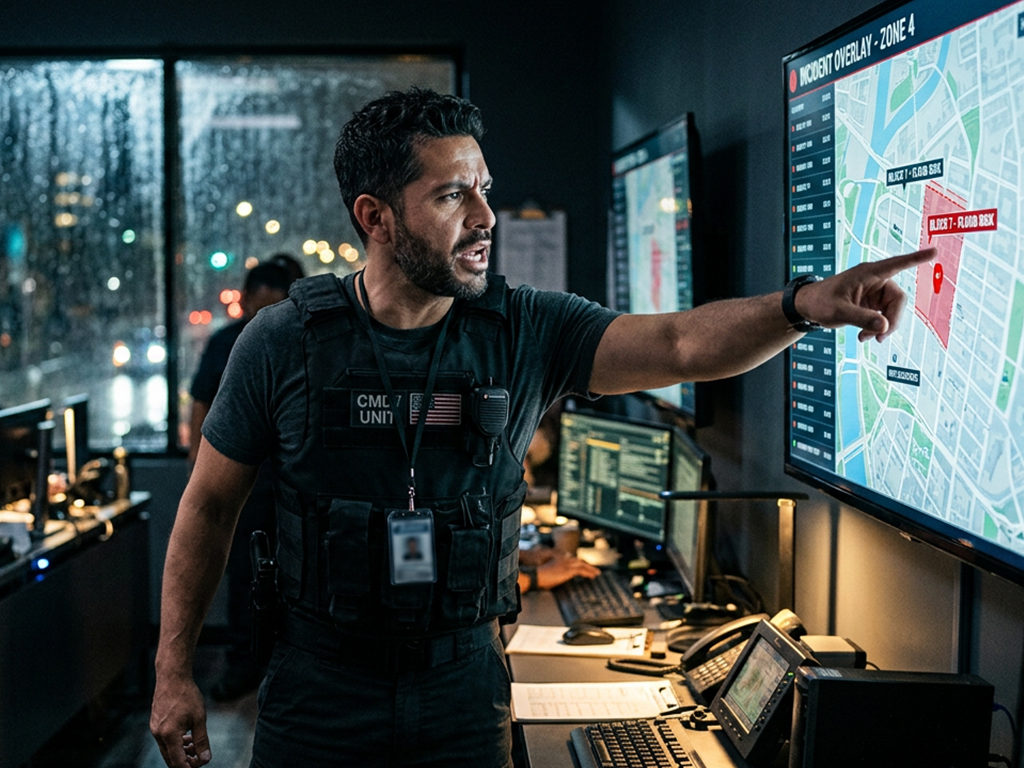
**The Missing Ingredient in Cyber Incident Response: Why Every Organization Needs an Incident Commander**
When a cyber incident strikes, the reality often hits harder than expected: the structure organizations assumed was in place doesn’t quite hold. Security teams wait on IT for critical system changes, the CISO is juggling board calls and technical details, legal scrambles to determine disclosure requirements, and communications wonders what to say and when. In the chaos, one critical role is frequently missing: the formally designated Incident Commander.
### The Strained Modern Incident Response Paradigm
Today’s incident response landscape has evolved far beyond its origins. In the past, threats were more discrete, infrequent, and contained primarily within the security function. The traditional playbook—contain, mitigate, restore, and document—largely assumed a technical problem handled by the security team.
However, modern incidents occur in a hyper-connected, highly visible environment. The moment an organization discovers a breach, awareness explodes across the business. Effective response demands cross-functional technical collaboration, business unit coordination, and clear, rapid decision-making. Boards, regulators, customers, and partners are watching, with strict regulatory timelines and significant reputational and financial stakes. While this heightened awareness is a net positive, it places unprecedented pressure on security teams.
Unfortunately, organizational structures have not kept pace. Even well-resourced, highly skilled security teams often find themselves improvising coordination models when an incident occurs, leading to confusion and delays.
### The Missing Role: Incident Commander
What many organizations lack is a formally designated Incident Commander—an explicit role responsible for coordinating every function involved in the response. This person ensures the right people are informed without being pulled into operational details, maintains accountability as decisions are made rapidly, and keeps the response on track under intense pressure.
This role is distinct from the CISO. While the CISO owns the incident strategically and is accountable to the board, regulators, and executives, the Incident Commander orchestrates the response itself. They track team progress, ensure resource availability, protect the response from constant interruption, and manage status requests so leadership isn’t overwhelmed. When the CISO or a senior security leader also serves as Incident Commander, competing demands can lead to slower decisions, coordination gaps, and executive overload.
### Building the Role Before It’s Needed
The most effective organizations identify the Incident Commander role early, staff it intentionally, and build credibility through practice. Some choose internal security leaders with strong coordination and communication skills. Others look outside security, selecting individuals from program management, customer success, or operations who excel at cross-functional communication and performing under pressure. Technical depth is helpful but secondary to the ability to translate between teams, hold people accountable without direct authority, and maintain a holistic view of the incident.
Institutionalizing this role requires deliberate preparation. Leadership and executives must know not only who owns incidents but who runs them. Regular, realistic exercises that simulate cross-business-unit responses are essential. These build the relationships, trust, and operational familiarity necessary when real incidents occur.
### Conclusion
Organizations don’t need a massive restructuring to improve incident response—they need clarity. Defining who serves as Incident Commander, what authority they hold during a crisis, and how they interface with the CISO, IT, engineering, compliance, legal, communications, and executive leadership is foundational work. The sooner this role is established and practiced, the more effectively organizations can respond when it matters most.
—
### FAQ
**Q: What is an Incident Commander?**
A: The Incident Commander is the individual explicitly designated to coordinate all functions involved in a cyber incident response. They manage cross-team collaboration, communication, accountability, and decision-making during an incident, distinct from strategic ownership by the CISO.
**Q: Why is an Incident Commander different from the CISO?**
A: The CISO has broad ownership and accountability to the board and regulators, while the Incident Commander focuses on real-time orchestration, coordination, and ensuring the response runs smoothly without overloading leadership.
**Q: Does the Incident Commander need deep technical skills?**
A: Technical understanding is helpful but not the primary requirement. The role’s core value lies in coordination, communication, accountability, and maintaining situational awareness across functions.
**Q: Who qualifies to be an Incident Commander?**
A: Potential candidates include senior incident responders, program managers, or cross-functional leaders with strong communication skills, the ability to work under pressure, and experience navigating complex stakeholder landscapes.
**Q: How can an organization prepare to implement this role?**
A: Organizations should identify candidates early, define the role and authorities clearly, conduct realistic response exercises, and ensure executive awareness and support before an incident occurs.
—
### Conclusion
In today’s high-stakes cyber environment, fragmented incident response structures are no longer sufficient. Introducing a formally designated Incident Commander bridges the gap between technical response, business impact, and executive oversight. By establishing, staffing, and practicing this role proactively, organizations can transform incident response from a reactive scramble into a coordinated, accountable, and resilient capability—ready to perform when it matters most.
