



**Harnessing Edge AI: How Smart Modules are Revolutionising Time-to-Market for AI-Powered IoT**
Digital transformation is reshaping nearly every facet of modern life, from manufacturing floors and retail spaces to smart cities, transportation networks, and healthcare systems. This sweeping change is driven by the convergence of powerful technologies such as Artificial Intelligence (AI), Cloud computing, and the Internet of Things (IoT). The primary goal for organisations embracing this shift is to create more flexible, efficient, and adaptable systems that can deliver value faster and respond to new market demands with unprecedented speed.
However, this rush to innovate brings significant challenges. Markets are evolving at a blistering pace, creating a double-edged sword: new business opportunities appear almost overnight, but companies must have the capacity to seize them instantly with a viable product or service. In this environment, **time to market has never been more critical**. The window of opportunity is fleeting, and falling behind means losing market share to competitors who are ready to act.
A key enabler of this rapid development is the integration of **Edge AI**. As IoT devices proliferate, they require high-performance computing capabilities to process and interpret data locally, in real time, without relying on constant cloud connectivity. Edge AI allows for instant local decision-making, eliminating the latency inherent in cloud-based processing. This is especially vital for applications like autonomous vehicles, predictive industrial maintenance, and real-time traffic management in smart cities.
The rise of AI-powered applications is particularly evident in several high-impact sectors:
* **Industry 4.0:** AI analyses sensor data (vibration, sound, temperature) to predict equipment failure before it happens, minimising downtime.
* **Robotics & Automation:** AI enhances the capabilities of Autonomous Mobile Robots (AMRs) and vision systems, improving navigation, safety, and production line quality.
* **Automotive & Smart Cities:** Advanced Driver Assistance Systems (ADAS) use AI to process camera and radar data for safer driving, while smart cameras manage urban traffic flow dynamically.
* **Healthcare & Agriculture:** Wearable AI monitors patient vitals for early alerts, and AI-equipped drones optimise farming by monitoring soil health and crop conditions.
While the potential is immense, a major hurdle exists. These innovative products are often designed by industry specialists who may lack deep expertise in embedded electronics. Coupled with extreme time-to-market pressures, this complexity can stall or derail successful product launches.
To overcome these barriers, a new approach is emerging: the **smart AI module**.
### Enter the Smart AI Module
For even seasoned designers, integrating the necessary hardware, software, and regulatory certifications for a successful AI design is a complex, multi-iteration process. A practical solution is to use specialised modules that encapsulate all the essential electronics and compliance requirements, leveraging standard software to accelerate development.
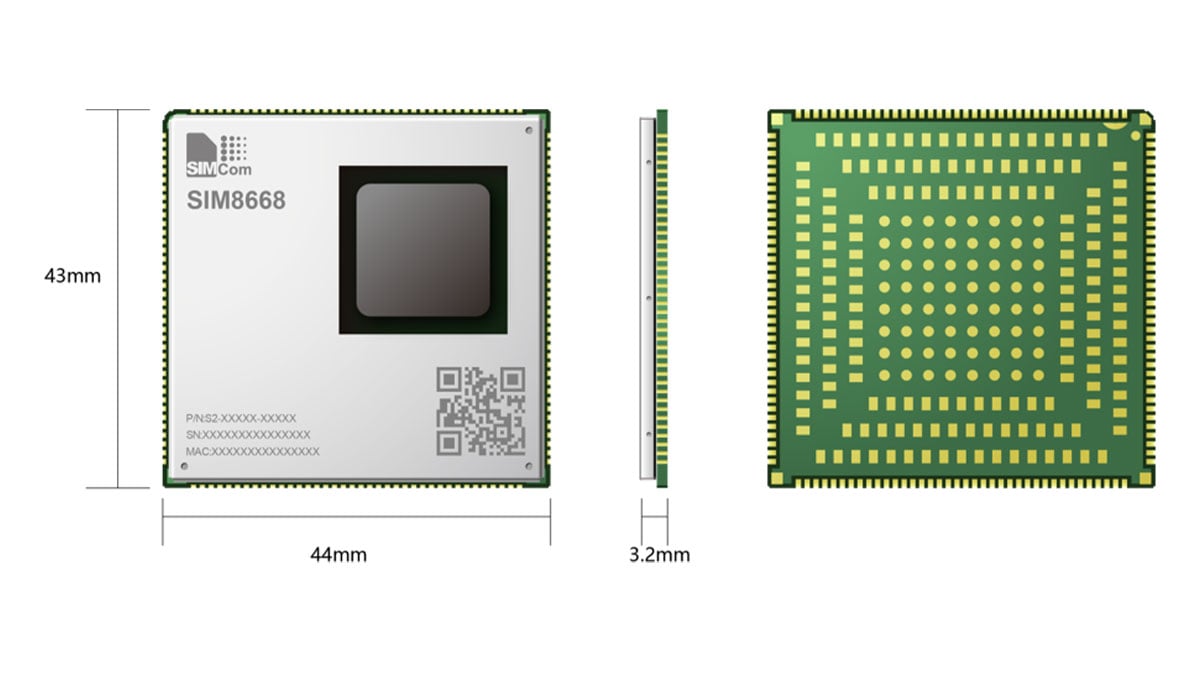
Companies like **SIMCom** are at the forefront of this shift, offering dedicated smart AI modules that provide engineers with a significant head start. Their recently introduced **SIM8666 and SIM8668 modules** are prime examples. These compact units integrate an AI core, MicroController Unit (MCU), and Wi-Fi/Bluetooth connectivity into a single, space-efficient 43 × 44 × 3.2 mm platform.
By unifying processing power, connectivity, multimedia support, and AI acceleration into one cohesive platform, these modules dramatically simplify the design process. Developers can reduce system complexity, shorten development cycles, and bring innovative Edge AI products to market far more quickly.
—
### FAQ
**Q: What is digital transformation?**
A: Digital transformation is the integration of digital technology into all areas of a business, fundamentally changing how it operates and delivers value to customers. It involves using technologies like AI, IoT, and cloud computing to create more efficient, flexible, and competitive systems.
**Q: Why is time to market so important in the current landscape?**
A: Rapidly changing markets mean that new business opportunities can disappear just as quickly as they appear. A fast time to market is crucial to capitalising on these opportunities before competitors do, making it a key determinant of success.
**Q: What are Edge AI and IoT, and why are they linked?**
A: The IoT refers to the network of connected devices that collect and share data. Edge AI is the process of running AI algorithms locally on these devices (the “edge” of the network) rather than in the cloud. This allows for real-time data analysis and instant response, which is essential for many IoT applications.
**Q: What is a smart AI module, and what problems does it solve?**
A: A smart AI module is a pre-integrated hardware and software platform that contains the processor, connectivity, memory, and other components needed for an AI application. It solves the challenge of complex hardware design and regulatory hurdles, allowing developers to focus on their product’s core functionality and significantly speeding up development.
**Q: Can you give an example of a SIMCom AI module?**
A: Yes, the SIMCom SIM8666 and SIM8668 are new modules that combine an AI core, an MCU, and Wi-Fi/Bluetooth connectivity into a single, compact 43 × 44 × 3.2 mm package designed to accelerate Edge AI development.
—
### Conclusion
The demands of a fast-paced digital world require faster, smarter, and more efficient product development. The convergence of AI, IoT, and edge computing presents incredible opportunities, but also significant engineering challenges. Smart AI modules offer a powerful solution by abstracting away much of the hardware complexity. By providing a ready-to-use, industry-standard platform, they empower developers to turn innovative AI-powered IoT concepts into reality at unprecedented speed, securing a vital competitive advantage in today’s market.
