



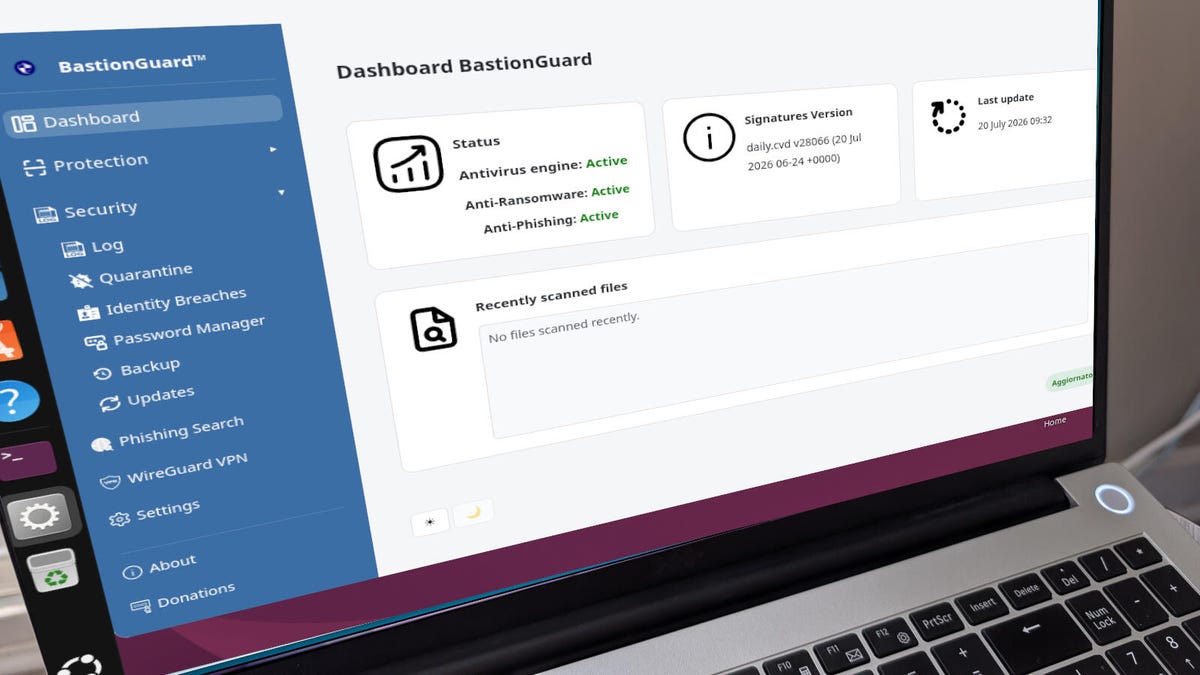
**BastionGuard: A Comprehensive Look at Linux Desktop Security**
*Follow ZDNET: [Add us as a preferred source](https://www.google.com/preferences/source?q=zdnet.com) on Google.*
—
The digital landscape is becoming increasingly treacherous, especially for Linux systems. With the advent of AI, vulnerabilities are easier to discover and exploit, making robust security more crucial than ever. After nearly three decades of experience with Linux, I’ve seen my fair share of security scares. That’s why I was particularly intrigued by BastionGuard, a platform promising “deterministic behavior, explicit policies, and visible decisions” instead of the opaque “trust us” approach common in many security tools.
In this deep dive, I’ll explore whether BastionGuard lives up to its ambitious promises. Having tested the platform extensively, I’ll share my insights on its features, performance, and potential to become a staple for Linux desktop security.
—
### **What Does BastionGuard Do?**
BastionGuard is a multi-faceted security platform designed to protect Linux desktops from a wide array of threats. Its feature set is impressive, aiming to cover nearly every conceivable vulnerability:
* **Real-Time Scanning:** Detects malware and other threats as they appear.
* **Ransomware Protection:** Specifically targets and neutralizes ransomware attempts.
* **Financial Institution Safelist:** Actively maintains an updated list of safe banking sites to prevent scams.
* **USB Device Blocking:** Prevents potentially infected USB drives from compromising your system.
* **Phishing Scanner:** Actively checks URLs to identify and block phishing sites.
* **Password Manager:** Securely stores and manages your login credentials.
* **Backup via Snapshot Management:** Creates restore points for your system.
* **Samba Scanner:** Monitors and secures file-sharing protocols.
* **WireGuard VPN:** Provides a secure, private connection to your network.
* **ClamScam Email Scanning:** Filters out malicious emails before they reach your inbox.
It essentially functions as a “security grab bag” for the modern Linux desktop, all rolled into a single, intuitive platform.
—
### **But Does It Work? A Real-World Test**
I put BastionGuard through its paces with a series of rigorous tests. While I haven’t yet explored every tool—such as the VPN, Backup, or Samba features—I focused on the core security functions.
**The Good:**
* **Effective Ransomware Detection:** I tested the platform with known ransomware samples, and it successfully detected the malicious files every single time.
* **Spot-On Phishing Protection:** The phishing scanner was remarkably accurate. I tested it with several known phishing sites, and it correctly flagged each one as dangerous. The process is simple: just enter a URL and wait for the results.
* **Functional Password Manager:** While basic, the password manager performed well. It allows for easy import of vaults from CSV files and integrates with the WireGuard VPN, which I successfully set up after installing the `wireguard-tools` package on a Ubuntu-based system.
**The Area for Improvement:**
During a ransomware test, I encountered a significant issue. When I instructed BastionGuard to quarantine an infected file, it inadvertently quarantined my entire Downloads folder. This highlights a critical bug in the quarantine management system.
Furthermore, I was unable to access a list of the quarantined items through the GUI. The system had moved the files to a hidden directory (`~/.local/share/BastionGuard/quarantine`), but they were not visible in the application’s quarantine log. This creates a major usability problem—users have no way of knowing what has been isolated or recovering files if the quarantine was accidental. This issue needs to be addressed immediately, or it could erode user trust.
—
### **My Final Observation**
BastionGuard is a powerful and ambitious platform. For users who demand comprehensive security that covers scanning, ransomware, phishing, backups, and secure networking, it could be a brilliant, all-in-one solution.
While the platform has shown great promise, its current quirks—especially the quarantine management bug—are concerning. The developer is active, which is a good sign that these issues will be resolved. Given the increasing sophistication of AI-driven cyber threats, the need for transparent and deterministic security tools like BastionGuard will only continue to grow.
I plan to keep a close watch on BastionGuard’s future updates to see how these issues are resolved. In the meantime, the platform is free to try. You can download installers for Ubuntu, Fedora, Arch, and openSUSE from the official BastionGuard download page.
—
### **FAQ**
**Q: What is BastionGuard?**
A: BastionGuard is a Linux security platform designed to provide comprehensive protection for desktops. It focuses on transparency, offering features like real-time scanning, ransomware protection, a phishing scanner, a password manager, backups, and a built-in VPN.
**Q: Is BastionGuard free to use?**
A: Yes, BastionGuard is free to download and use. It is available for major Linux distributions like Ubuntu, Fedora, Arch, and openSUSE.
**Q: What operating systems does BastionGuard support?**
A: BastionGuard supports various Linux distributions, including Ubuntu, Fedora, Arch Linux, and openSUSE.
**Q: Does BastionGuard include a VPN?**
A: Yes, BastionGuard includes a WireGuard VPN client, which you can set up after installing the necessary `wireguard-tools` package on your system.
**Q: What happened with the quarantine feature in my test?**
A: During testing, when a malicious file was quarantined, the entire Downloads folder was moved to a hidden directory. A secondary issue was that the quarantine log in the GUI did not display the quarantined items, making it difficult for users to track or recover their files. This is a bug the developer needs to fix.
**Q: Can I import my passwords into BastionGuard?**
A: Yes, the password manager allows you to import existing vaults from CSV files.
—
### **Conclusion**
BastionGuard represents a significant step forward for Linux desktop security. Its extensive feature set tackles modern threats with a philosophy of visibility and explicit user control. While my testing revealed some critical bugs—most notably the quarantine management issue—the platform’s potential is undeniable. For security-conscious Linux users, BastionGuard is a tool worth watching. As it matures and these kinks are ironed out, it could very well become the de facto standard for protecting Linux systems everywhere.
