



**Azure’s AI-Powered Cloud Reliability System: A New Era for Cloud Operations**
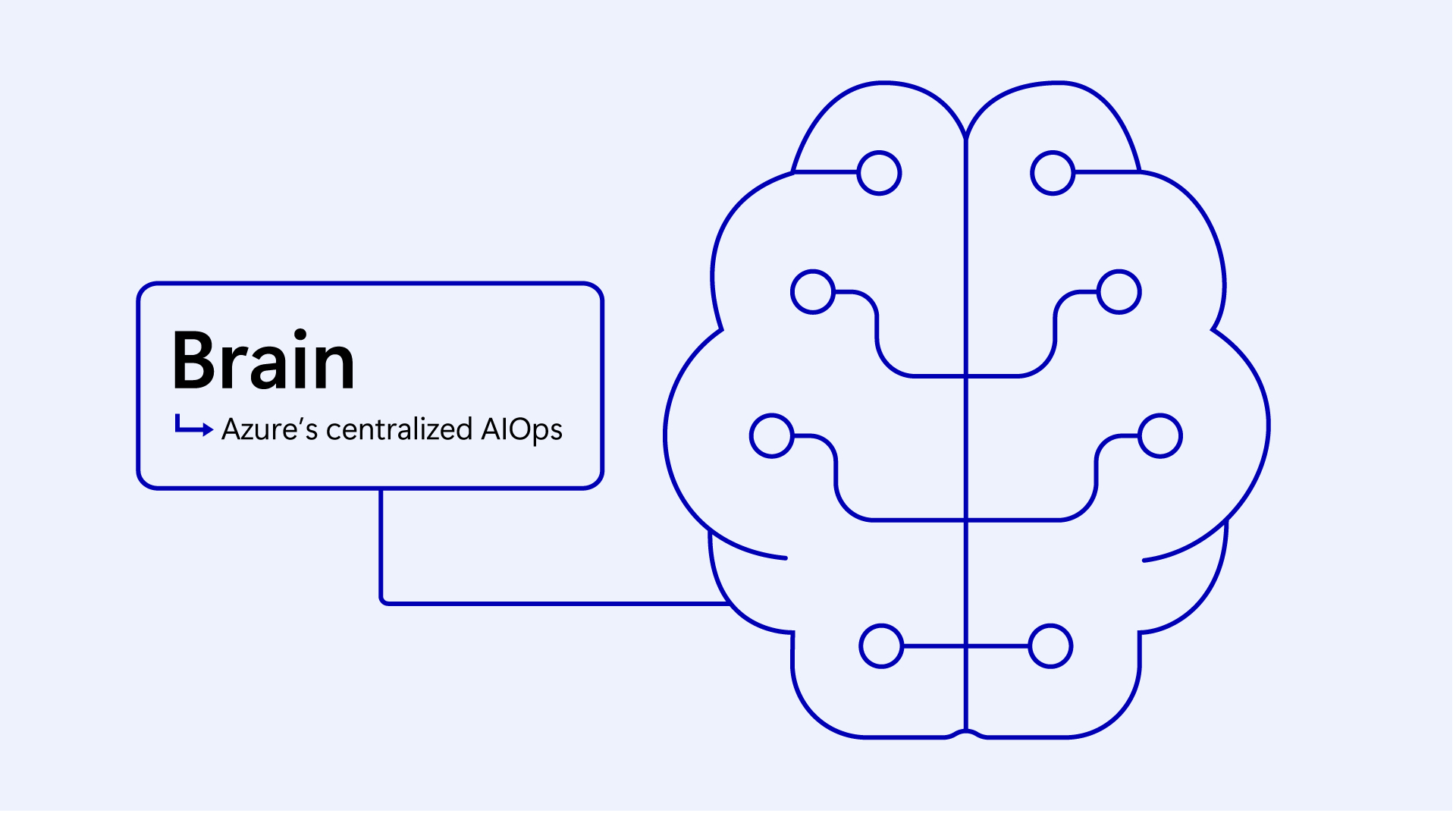
Azure’s cloud infrastructure is vast and complex, spanning hundreds of services, multiple regions, and millions of customer workloads. Managing reliability at such scale is no small feat—until now. Microsoft has introduced **Brain**, an AI-powered cloud reliability intelligence system that acts as an intelligent layer atop Azure Resource Graph, unifying telemetry, AI/ML models, service dependencies, and customer impact into a single, real-time view of platform health.
Rather than relying on dashboards and alerts, Brain represents a shift toward **automated, intelligence-driven reliability**. It ingests standardized service-level indicators, domain-specific telemetry, and third-party signals, then evaluates every service, region, deployment unit, and customer resource in real time. The output is consistent, actionable insight: health state, severity, impact, and reasoning—all delivered with the speed and precision necessary for modern cloud operations.
Today, Brain already powers critical reliability workflows across Azure, including health notifications, deployment safeguards, and outage declarations. It reduces the time to detect and communicate issues, improves accuracy in scoping problems, and ensures the right engineers are alerted at the right time. But this is only the beginning.
At its foundation, Azure’s digital twin for cloud health includes a live topology of services and dependencies, a comprehensive service catalog, real-time runtime state, intent and deployment plans, historical incident data, and crucially, **the customer’s perspective**—what tenants actually experience. By combining these elements into one unified representation, Brain eliminates the need for operators to mentally correlate data from multiple dashboards and tools under pressure.
What distinguishes Brain from traditional monitoring is how it changes operations. When a deployment causes degradation, Brain doesn’t require teams to reconstruct the problem—it already knows. It correlates rollout activity, dependency impacts, customer effects, and historical patterns to produce a single, automated determination. That determination can pause deployments, trigger targeted notifications, create focused incidents, and route issues to the right teams, all in seconds.
This marks a turning point for cloud reliability: from reactive troubleshooting to proactive, intelligence-led operations. For customers, the benefit is faster resolution, clearer communication, and greater transparency into service health.
Looking ahead, Brain lays the groundwork for the next generation of **agentic AI** in cloud operations. Agents responsible for triage, diagnosis, or communication can only be as effective as the shared reality they operate within. Brain provides that reality—a consistent, auditable, AI-driven model of the cloud that makes autonomous action possible.
In the coming months, Microsoft plans to deepen how determinations are defined and used, replacing outdated industry assumptions about cloud health with a more precise, reliable framework. The age of agentic cloud operations depends on a foundation like Brain: the intelligence system that makes autonomy trustworthy.
—
**Original source:**
Microsoft Azure Blog. “How Azure’s AI-powered reliability intelligence system works.” *Microsoft Azure Blog*, 2026, https://azure.microsoft.com/en-us/blog/wp-content/uploads/2026/07/Brain-at-a-glance-2.jpeg.
