



**Michael Saylor’s Vision: Bitcoin’s Strength Lies in Doing Almost Nothing**
Michael Saylor, executive chairman of Strategy, has laid out an ambitious and contrarian vision for Bitcoin’s next decade. His core belief? Bitcoin will win not by adding new features or chasing speed, but by refusing to change—and forcing the rest of the financial world to adapt around it.
In a recent breakdown, Saylor outlined nine key predictions pointing to a single bet: Bitcoin’s value comes from its immutability. Where most tech evolves rapidly, he argues Bitcoin should remain a stable, unchanging base layer, allowing wallets, institutions, and secondary layers to handle innovation and speed.
**1. Change Less, Matter More**
Saylor emphasizes that Bitcoin’s power comes from its lack of change. The network’s strength lies in its consistency, not its adaptability. While other projects rush to deploy new features, Bitcoin’s fixed rules—unchanged since 2009—create a reliable foundation. The base layer is designed to be slow, secure, and unbreakable, while faster, more flexible layers are built on top.
**2. Hard Consensus as Bitcoin’s Immune System**
Changes to Bitcoin’s core protocol are intentionally difficult. Saylor describes this “hard consensus” as Bitcoin’s immune system, requiring overwhelming agreement among nodes, miners, and users before any modification. This high bar prevents hasty or harmful changes. The Taproot upgrade in 2021 remains the last major update, and even minor adjustments—like recent debates over spam and ordinals—face fierce resistance, echoing the block-size wars of the past. This resistance, Saylor says, is a feature, not a bug.
**3. Bitcoin Is Digital Capital, Not Digital Cash**
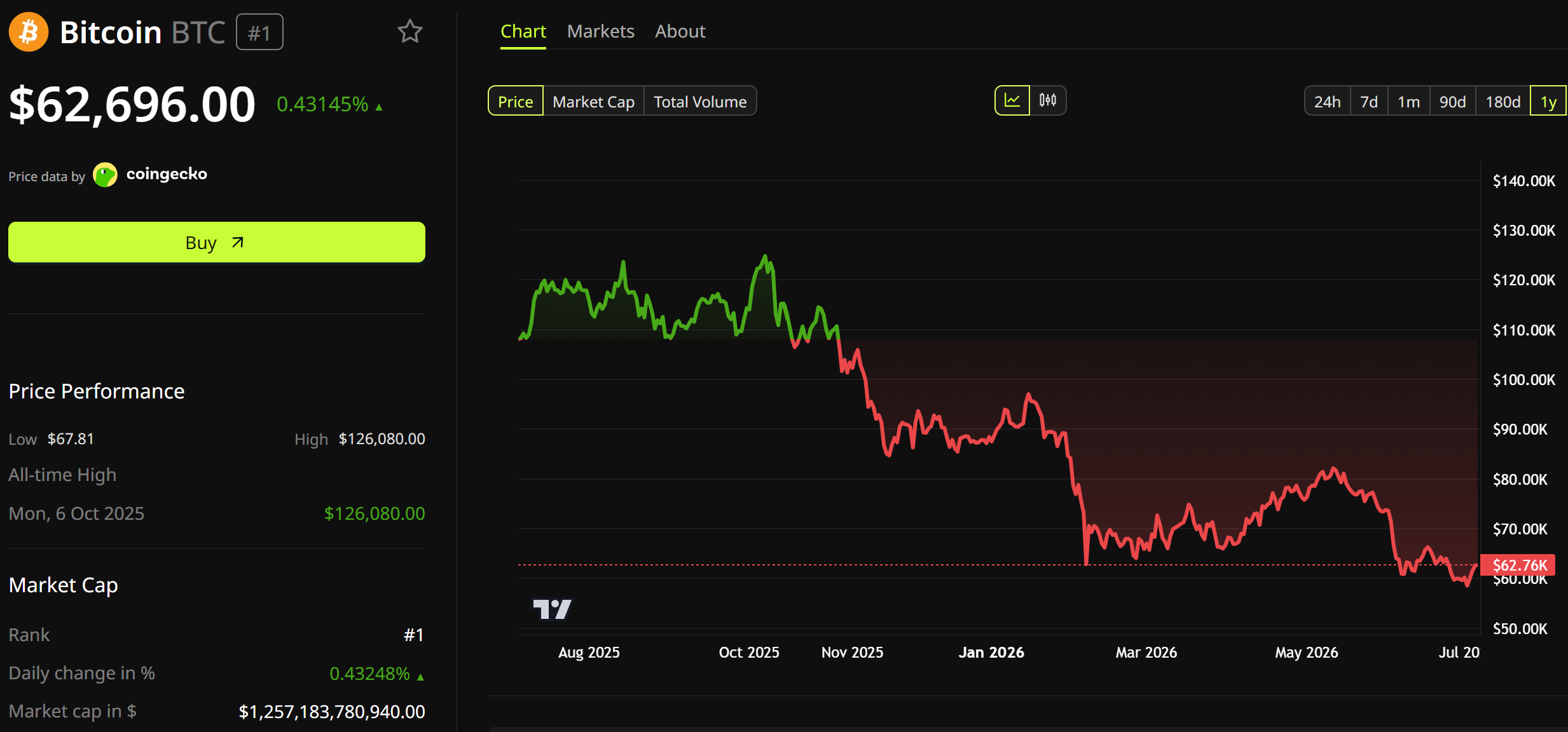
Contrary to its early “peer-to-peer electronic cash” vision, Bitcoin functions best as scarce global capital rather than everyday payment money. With 20 million of its 21 million coins already mined, no authority can inflate its supply. While its price fluctuates—currently around $62,700—Saylor maintains its long-term role is in final settlement and institutional storage, not retail purchases. Treasuries, collateral, and large settlements belong on the base layer, while smaller transactions can use faster, layered networks.
**4. Capital Flows, Not Halvings, Drive the Cycle**
The halving—once seen as Bitcoin’s main price driver—no longer dictates the market. Since US spot ETFs launched in early 2024, institutional demand has taken over, moving with corporate balance sheets rather than retail excitement. BlackRock’s iShares Bitcoin Trust, for example, grew from $51.5 billion to $67.4 billion in net assets during 2025. According to Saylor, capital flows now set the trajectory once reserved for halvings.
**5. Digital Credit Turns Capital into Money**
Saylor sees a chain reaction unfolding: digital capital enables digital credit, which in turn creates new forms of digital money. He compares Bitcoin’s current phase to gold and real estate a century ago—once financial plumbing like banks and lending markets were built around them, their utility exploded. Bitcoin is now entering that phase of financialization, only faster, thanks to open-network plumbing instead of paper and vaults.
**6. The Interfaces Become the Battleground**
As Bitcoin becomes more popular, the ways people access it will matter most. Self-custody, ETFs, banks, and credit products all compete to act as the middleman between users and their coins. Saylor warns that the real fight is ensuring these interfaces hold actual Bitcoin, not IOUs. The 2022 FTX collapse and the 2014 Mt. Gox breach highlight the dangers of “paper Bitcoin” stacked on top of limited supply.
**7. Five Real Risks Ahead**
Saylor doesn’t shy away from threats. He names five key risks: protocol corruption, paper Bitcoin, custodial centralization, regulatory capture, and a shaky fee market. The last is especially critical—as block subsidies shrink with each halving, transaction fees must eventually fund network security. Leverage risk from large corporate holders is already a real concern, not just theoretical.
**8. Mining Becomes Energy Infrastructure**
Mining transforms raw electricity into monetary security, and Saylor expects it to grow into a serious energy business. After China’s 2021 ban, the industry scattered to the US and other markets, becoming more industrial and capital-intensive. The strongest miners will win through power contracts, grid relationships, and balance sheets—not just faster machines. Miners increasingly act as flexible buyers of surplus or stranded energy, turning waste into revenue.
**9. Bitcoin Anchors Global Finance by 2036**
By 2036, Saylor predicts Bitcoin will sit on the balance sheets of individuals, companies, and governments alike. The shift has already begun. In March 2025, a US executive order created a Strategic Bitcoin Reserve from seized coins, with a policy of never selling them. If more states follow, Bitcoin could become a neutral reserve asset anchoring global credit and settlement.
Saylor’s vision is bold—and he has a vested interest. Strategy holds more than 847,300 BTC, worth over $53 billion. As he likes to say, “Bitcoin’s job is not to become everything. Bitcoin’s job is to be the thing that does not change.” Whether the world chooses to build on a foundation that refuses to change may decide Bitcoin’s next decade.
***
**Source:**
The original article, *”9 Things Michael Saylor Believes About The Next Decade for Bitcoin,”* was published on BeInCrypto. You can read it [here](https://www.beincrypto.com).
