



Today, we’re unveiling AWS Transform – continuous modernization (preview), a fresh feature within AWS Transform designed for ongoing, autonomous technical debt analysis and resolution across large-scale environments. AWS Transform already supports enterprises in moving away from data centers, modernizing mainframe and Windows workloads, and handling the routine grind of software upkeep: bumping Java versions, replacing outdated frameworks, and refreshing AWS Lambda runtimes before they hit end of life. This new experience extends those foundations. Customers gain comprehensive visibility into their codebase health spanning thousands of repositories, ranked findings, and ready-to-merge pull requests that implement the corrections.
Engineering teams often spend as much as 30% of their IT budgets on maintenance. Customers typically cobble together disparate tools: one to surface dependency problems, another to highlight vulnerabilities, and yet another for code quality checks. But no single existing solution detects, ranks, and resolves technical debt in a continuous, scalable fashion. The outcome is a tedious, app-by-app process that saps engineering bandwidth. Leaders end up relying on self-reported team updates that trail behind actual conditions and mask regressions. AI-powered development compounds the issue: as coding assistants speed up the rate of change, technical debt piles up faster than engineers can address it. What customers need is a solution that spots, ranks, and fixes technical debt around the clock, without manual intervention, and at enterprise scale.
Continuous analysis
To tackle the visibility gap, this new capability inside AWS Transform automatically scans your code repositories against configurable baselines and delivers findings in hours rather than weeks. Right out of the box, AWS Transform – continuous modernization ships with policies for spotting end-of-life dependencies, deprecated frameworks, and other frequent culprits behind technical debt. You can further tailor these with your own remediation patterns unique to your organization, such as sanctioned libraries, internal coding conventions, or technical debt policies your platform team already mandates. For instance, if your team has phased out an internal library or favors a specific logging approach, you can encode that as a policy and enforce it across every repository on an ongoing basis.
Unlike sporadic manual audits, continuous analysis delivers ground truth straight from your source code. When a repository drifts from your baseline, you’re alerted right away, with details on which components are lagging and by how much, irrespective of how the team opts to respond. This removes the need for status meetings and manual compliance tracking, equipping platform teams with a perpetually up-to-date picture of their technical debt landscape.
Autonomous remediation at scale
Once you’ve pinpointed and ranked your findings, you can set up autonomous remediations that automatically generate pull requests for every affected repository. This new AWS Transform feature offers ready-made remediation transformations for prevalent scenarios including Java version upgrades, SDK migrations, and library refreshes. You can also craft custom transformations tailored to organization-specific patterns.
When you kick off a remediation, the continuous modernization capability produces a pull request for each impacted repository, alerting the responsible team with a note such as: “This repository has fallen behind your organization’s baseline for this dependency. Here’s a PR that addresses it.” Teams can then review and merge the pull request, or opt to resolve the issue using their own method. Either way, continuous analysis recognizes when the fix has been applied, supplying ground truth without needing manual sign-off.
AWS Transform – continuous modernization works in tandem with AWS Security Agent to identify and address security vulnerabilities at the source-code level, so security findings feed into the same ranked list and pull-request workflow as other forms of technical debt.
Let’s try it out
To begin, I opened the AWS Transform web application. From the dashboard, I could see a summary of my organization’s repositories and how they currently measure up against my configured baselines.
First, I linked my source control system and kicked off an analysis against my chosen policies. Within hours, the analysis surfaced findings across my repositories, indicating which ones were out of step with the baseline and by what margin. I was able to review the severity level, the count of affected files, and the exact technical debt patterns identified.
From there, I chose a batch of high-priority findings and initiated a remediation campaign. AWS Transform – continuous modernization generated pull requests for each affected repository. I could track the campaign’s progress in real time, observing which PRs had been created, which had been merged, and which repositories were back in compliance.
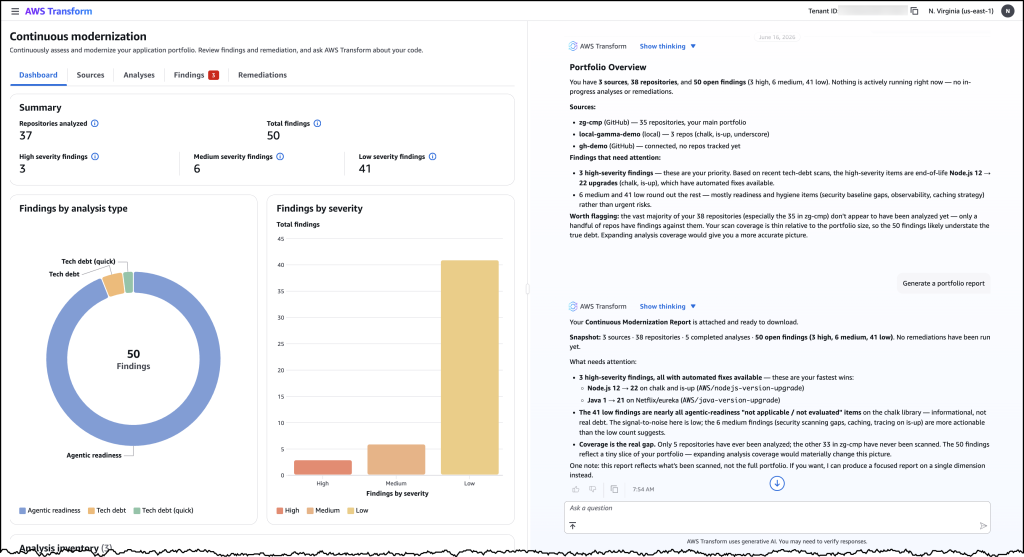
Image 1: AWS Transform – continuous modernization dashboard displaying a portfolio-level overview of your technical debt findings across all connected repositories.
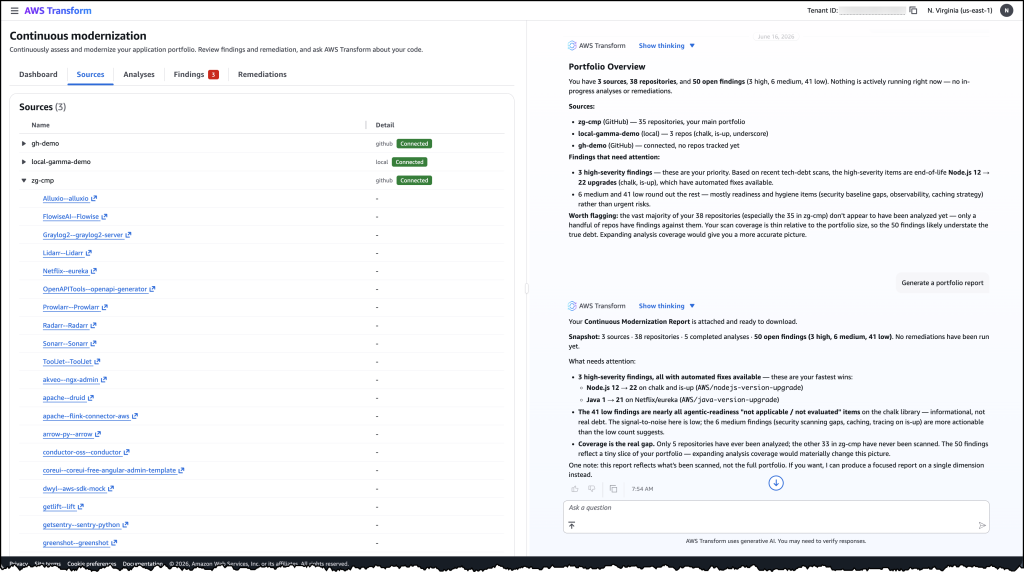
Image 2: The detailed findings view enumerating individual technical debt items by severity, category, and repository along with their available remediation options.
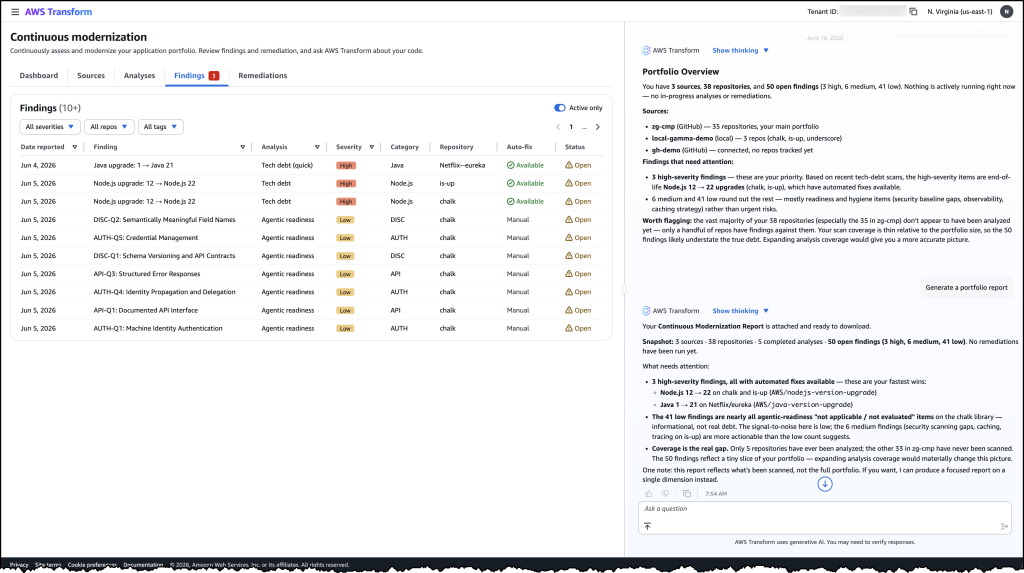
Image 3: The sources view displaying connected repositories from GitHub and local environments that continuous modernization is monitoring for analysis.
Faster ways to modernize
These capabilities enable two distinct approaches to code modernization. In continuous mode, you can leverage continuous modernization to keep your codebases aligned as baselines evolve over time. Think of this as the everyday maintenance work: refreshing libraries, applying security patches, and upholding coding standards throughout your organization.
For larger-scale modernization initiatives, such as transitioning from one framework to another or bumping a major runtime version across hundreds of applications, you can use campaign mode for focused, project-based modernization. AWS Transform custom continues to serve as the flexible building block for these bigger efforts. AWS Transform – continuous modernization is purpose-built for the recurring, high-volume workloads that platform teams juggle daily.
Now available
AWS Transform – continuous modernization (preview) is available starting today. You can get going through the AWS Transform web application, via the AWS Transform Kiro Power, or through MCP and skills for plugging into your existing coding agents. To find out more, check out the AWS Transform documentation.
