



You have full access to this article via your institution.
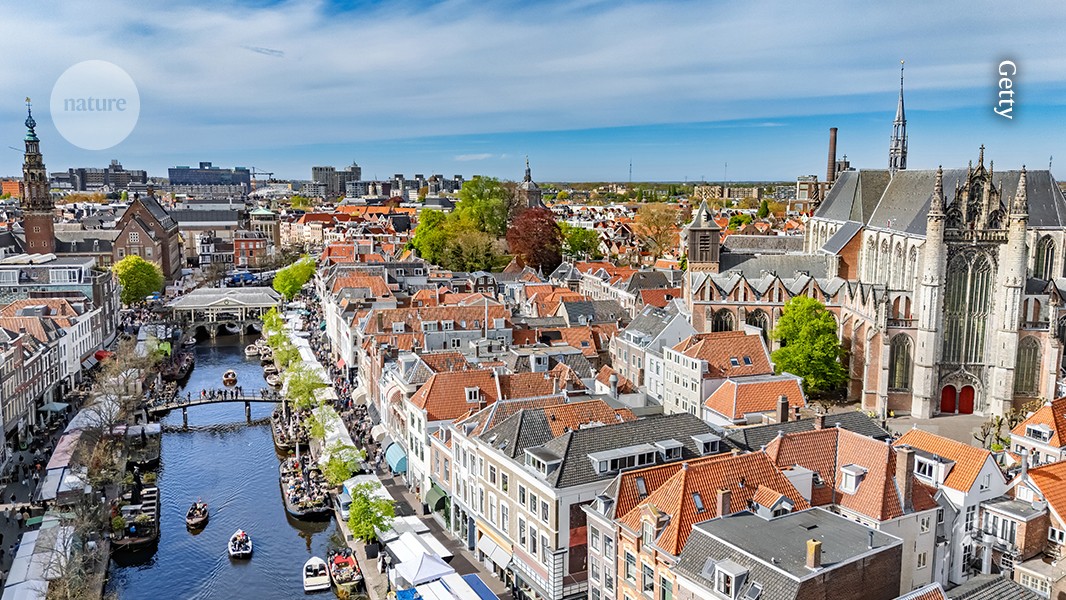
The city of Leiden in the Netherlands is gaining a reputation for hosting meetings on integrity in science.Credit: Getty
Just over ten years ago, following a 2014 conference at Leiden University in the Netherlands, scholars released the Leiden Manifesto in Nature. The manifesto advocated for careful handling of research metrics and laid out ten guiding principles to promote thoroughness and equity in how research is assessed1. Together with the San Francisco Declaration on Research Assessment (DORA), these Leiden guidelines have seen worldwide adoption.

How AI is reshaping discovery in maths and physics
Those principles emerged in reaction to a wave of new metric data and cutting-edge computational tools entering academia, which demanded clear guidelines governing their application. Last September, Leiden — both the city and its university — once again set the stage as a gathering place for thinkers worried about emerging technologies and the integrity of science. This time, the focus turned to artificial intelligence’s place in mathematics.
The outcome was the Leiden Declaration on Artificial Intelligence and Mathematics, published earlier this month2, which echoes many of the same concerns as its predecessor. It acknowledges the strength and promise of a groundbreaking technology while pressing researchers and institutions to safeguard human judgement, openness and equity — values that sit at the heart of scientific practice and must continue to do so. The declaration has been collecting support from academics across the field, ranging from those deeply wary of AI to those far more enthusiastic about it. Nature firmly supports both the declaration process and its conclusions.
The declaration and an accompanying workshop united researchers spanning mathematics, computer science, philosophy and history. AI is reshaping how people study and investigate the field, as a group of London-based mathematicians noted in a recent Nature Comment3. Its uses extend from streamlining the checking and validation of mathematical proofs to contributing to the resolution — or even independently resolving — unsolved problems within specific mathematical domains. As recently as last month, an 80-year-old geometry puzzle, known as the unit-distance problem, was cracked by researchers at the US technology company OpenAI using nothing more than a single prompt to a chatbot.
Why we have nothing to fear from the decolonization of mathematics
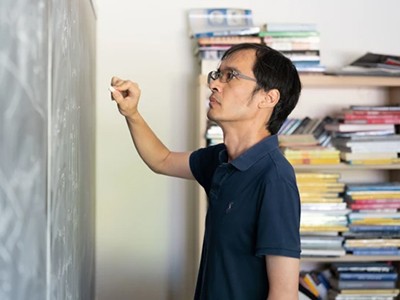
As Fields medallist Terence Tao of the University of California, Los Angeles, has observed, AI is swiftly rewriting what mathematicians are expected to do. But the impact runs even deeper. With AI and commercial AI tools becoming woven into mathematical research, they stand to “alter the types of questions that are explored and the kinds of proofs that hold value,” according to a report from the workshop4. The Leiden declaration cautions that this trend threatens the discipline’s independence. In fact, early signs are appearing that, across the sciences, reliance on AI corresponds to a more limited range of research topics5. As the declaration notes, this will place at a disadvantage both those without access to the technology and those who prefer not to rely on closed-source AI tools.
The declaration asserts that mathematical findings should continue appearing in peer-reviewed outlets aligned with open-science standards, and that “no proprietary knowledge or equipment should be needed to follow them.” Additionally, any data used for training purposes must carry proper attribution and must not have been used without permission.

AI cracks 80-year-old mathematics challenge — researchers are astonished
Those recommendations address genuine worries fuelled by the dizzying speed of progress, as underscored during the workshop. Consider the unit-distance problem: OpenAI researchers published the proof on the company’s publicly viewable website (see go.nature.com/4epjtkd), and the results were confirmed by a team of mathematicians with no ties to the firm. Yet OpenAI has not yet revealed the name or specifics of the software employed to solve the conjecture, originally posed by Hungarian mathematician Paul Erdős (1913–1996). Moreover, despite repeated requests, OpenAI — like other major tech companies — has not fully disclosed what datasets underpin its models.
The mathematical knowledge powering AI models has been drawn from every corner of the globe, with individuals and institutions from diverse regions contributing throughout history. As mathematician and historian Dirk Jan Struik — a Leiden graduate — wrote in his A Concise History of Mathematics6, first published in 1948: “Mathematics is a vast adventure in ideas; its history reflects some of the noblest thoughts of countless generations.”
‘The job description is changing’: mathematician Terence Tao on the rise of AI
The same holds true for AI. The accuracy of machine-learning tools depends on centuries of accumulated knowledge that has been recorded, systematised, checked and credited. The AI research community needs this diversity and trustworthiness in mathematics to be preserved and reinforced. That makes openness an absolute necessity.
The team behind the Leiden declaration and the broader mathematics community have started a vital dialogue about AI’s place in the discipline. Now it is time for this conversation to broaden and extend into other fields.
