



The passage of your HTML content has been successfully parsed and processed. Here is the rephrased version:
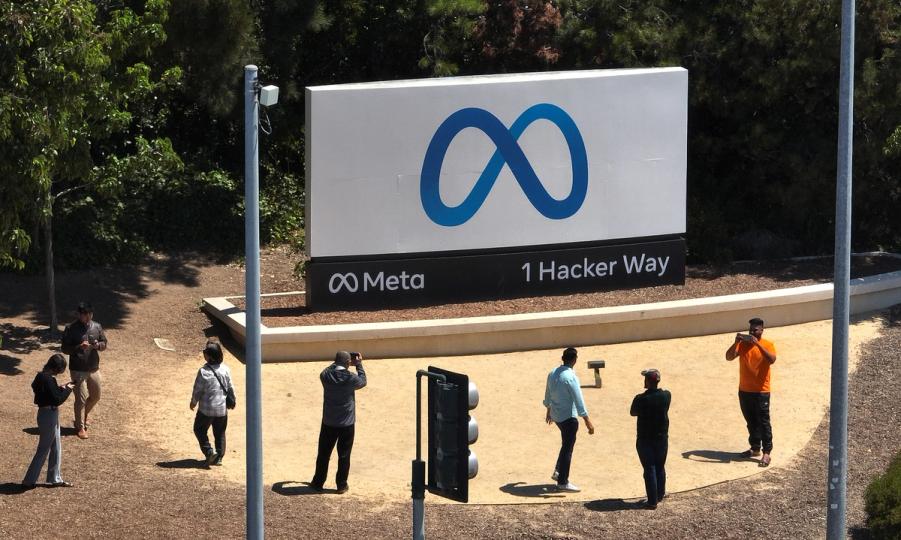
When Meta revealed in March that it would start compensating creators using USDC in Colombia and the Philippines—with plans to extend this to over 160 nations by year’s end—many saw it as a sign that stablecoins were gaining traction in mainstream finance. For a firm that moves nearly $3 billion yearly to creators, the decision to use blockchain-based settlement instead of conventional bank transfers is clearly notable. Yet, what Meta provided was primarily an efficient method to transfer funds between accounts, rather than a full-service payment solution.
For a significant number of users, especially in developing economies, the real challenge starts the moment they receive payment. Stablecoins excel at cross-border transactions, but their connection to local financial systems is inconsistent. This gap presents the next major battleground for payment providers.
The True Complexity: Converting Digital Assets to Cash
In Meta’s setup, creators must link their own wallets and choose a compatible network like Solana or Polygon. Furthermore, they are entirely responsible for managing the safety of their assets. Meta explicitly states that if funds are sent to an incorrect address or an incompatible network, they cannot be recovered; once the transaction occurs, the platform has no further involvement.
While the mechanics on the blockchain are swift and affordable—making international transfers seem effortless compared to bank wires—the reality for a creator in Manila or Bogotá is different. To actually pay for local goods or services, they still need to turn their USDC into domestic currency. This involves transferring to a liquidity provider, undergoing identity verification, finally selling the assets for fiat, and then cashing out via local banks. Every stage adds costs and delays that are completely independent of Meta’s platform. For someone whose specialty is making content, dealing with this financial complexity is a prerequisite just to spend their earnings.
This highlights a fundamental gap in stablecoin technology: while moving money is easy, using it day-to-day depends heavily on location.
This issue is particularly sharp in the Philippines and Colombia, both of which have vibrant creator communities yet suffer from expensive international transfer systems where fees often eat into smaller payments. The Philippines, in its turn, has a massive base of mobile wallet users familiar with services like GCash and Maya. These should be perfect testing grounds for blockchain payments. In practice, however, the process of cashing out remains messy, with inconsistent liquidity and varying fee structures across different providers.
A Different Strategy: Card Networks Leading the Charge
Major card networks have opted for a contrary approach. Rather than starting with blockchain technology and forcing the user to figure out the conversion, they have woven stablecoins into financial structures people already use.
Mastercard’s massive $1.8 billion purchase of BVNK brings dollar-digital-coin settlement to more than 130 countries. Similarly, Visa’s alliance with Bridge allows for cards that let consumers spend their digital funds anywhere Visa is accepted, handling all conversions seamlessly in the background.
This illustrates a fundamental difference in design philosophy. Meta’s method requires a complex journey through wallets and exchanges before the money becomes usable—shifting the burden to the user. While this might be a strategic move to avoid regulatory headaches across different territories, it still means the user must navigate the technical aspects of crypto. Conversely, in the card network model, stablecoins are hidden away; the user simply sees and spends regular currency while the blockchain works silently underneath.
While both use identical technology for settlement, their handling of user-side complexity is vastly different.
Paving the Way for Mass Adoption
With stablecoin volumes hitting a staggering $33 trillion in 2025—a 72% jump from the prior year—it is clear that institutional usage is ramping up. For the payment industry, the debate is no longer about if stablecoins will be part of the future, but rather, whether the process of cashing out can maintain its speed and efficiency.
Scaled success will belong to those who make blockchain technology invisible to the consumer. Even though the coins are central to the system, the experience will feel entirely traditional: seeing balances on a debit card, paying at a checkout, or viewing local currency in a wallet.
Presently, companies like Meta highlight the remaining friction. By exposing creators to wallets, networks, and conversion mechanics, they show just how difficult “instant global payments” are to manage. The back-end is powerful, but the front-end integration is still finding its footing.
Ultimately, the next phase won’t focus on speed or capacity. It will focus on making these systems work perfectly within people’s existing financial lives—card networks, banking apps, and point-of-sale systems. The technology will be there, working silently. Though Meta has helped move the conversation, payout platforms must do more to match the level of seamless integration that card networks are already building.
