



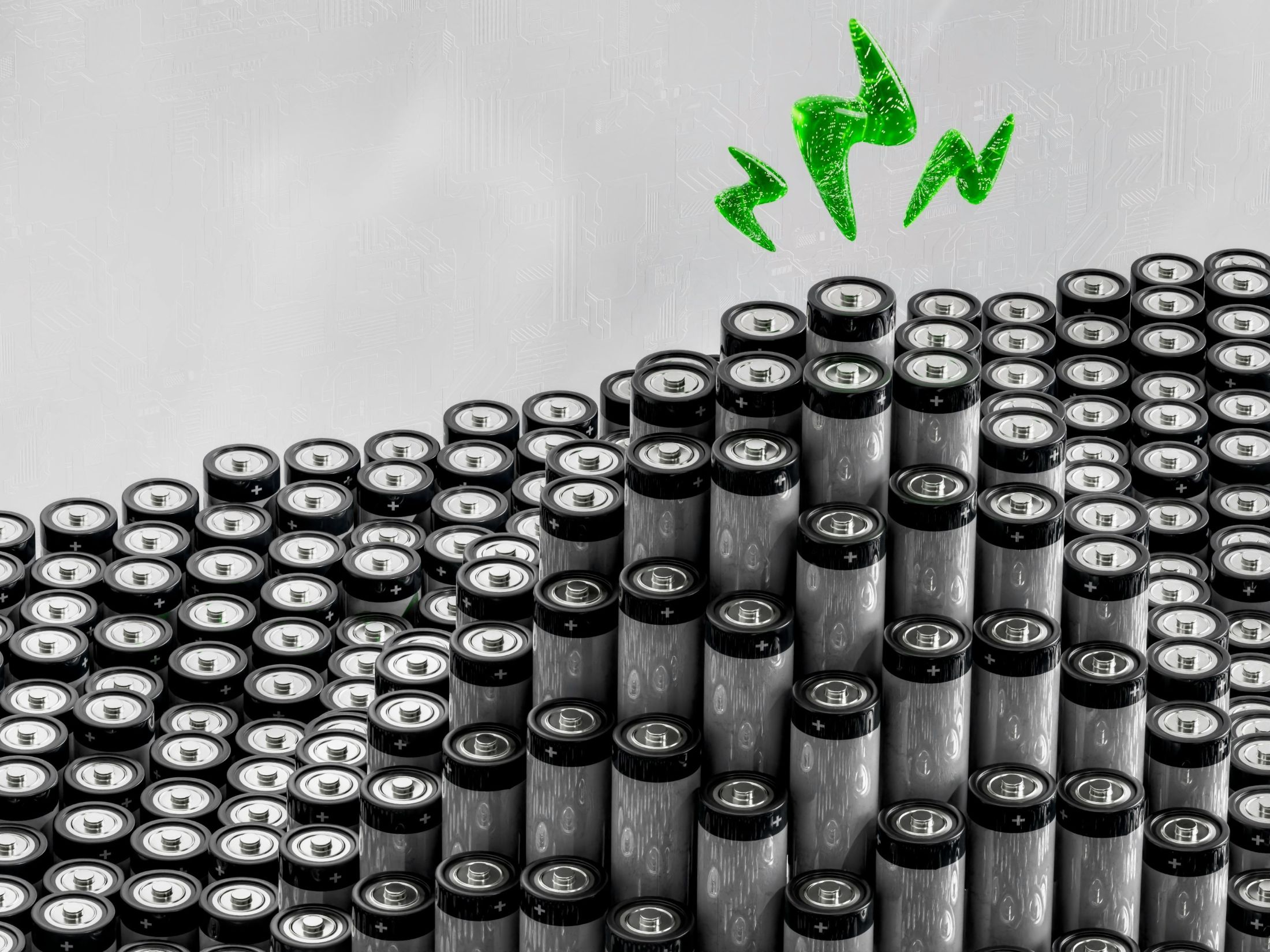
Elisa Estonia has rolled out an AI-powered optimization system across its mobile network to turn backup batteries into active participants in the energy grid.
Mobile operators operate extensive networks of backup batteries at cell towers. Traditionally, these batteries exist solely to keep networks running during power cuts. This represents a major investment that remains unused for more than 99% of its lifespan.
Elisa is changing this approach by deploying Elisa Industriq’s Gridle platform. The software converts these scattered batteries from a passive safety net into a profit-generating resource that also reinforces the national power grid.
The deployment centers on leveraging existing battery capacity to take part in Estonia’s frequency regulation market (FCR), overseen by the national grid operator, Elering.
Gridle’s AI constantly processes various data inputs, such as live grid frequency, electricity market prices, and weather predictions. It then independently decides when to charge or discharge batteries at individual cell sites. This helps stabilize the grid by matching supply with demand in real time.
Ensuring uninterrupted network service remains the top priority, always taking precedence over grid-balancing tasks. The AI makes sure every battery retains enough charge to cover any possible power failure, pausing market activities whenever network reliability could be affected.
Delivering two-fold advantages
The Gridle platform offers Elisa two key advantages. First, it creates a new income source by offering grid-balancing services to Elering, allowing the company to earn revenue from an otherwise idle asset. Second, it improves the operator’s own energy resilience and cost efficiency.
The system can be set to charge batteries during low-demand periods when electricity is cheapest and even feed power back to the site during high-demand periods, a technique called “peak shaving.” This cuts operating costs by optimizing energy use across hundreds of distributed locations.
Lasse Nordlund, Vice President of Elisa Industriq, said: “We’ve been fine-tuning energy consumption in our own mobile networks for years, and Gridle marks a significant next phase in this effort.
“It’s a mutually beneficial arrangement where we can boost the reliability of our mobile networks while also helping to speed up the shift toward greener energy by supporting grid stability.”
The technical rollout involved connecting the Gridle software with the battery management systems already installed at Elisa’s cell sites. This connection enables precise control over each battery unit. Core operational features enabled by the platform include:
- Automated grid balancing: Instant response to frequency fluctuations in the national grid, delivering Frequency Containment Reserve for Disturbances (FCR-D).
- Predictive charging: Uses electricity price forecasts to schedule battery charging at the most economical times.
- Smart State of Charge (SoC) management: The AI calculates the minimum charge needed to ensure network uptime based on site importance and past outage records, making sure the backup role is never jeopardized.
- Centralized monitoring and control: Offers a single dashboard for Elisa’s network operations team to manage the entire distributed battery network.
A wider blueprint for distributed industrial assets
Elisa Estonia’s project stands as a practical example for other industries with large-scale distributed power infrastructure. Fields like logistics, data center operations, and major retail could follow a similar path.
Any business that runs a fleet of backup batteries or uninterruptible power supplies (UPS) is essentially sitting on the potential for a virtual power plant (VPP). The merging of industrial operations with energy markets is emerging as a practical way to reduce costs and strengthen sustainability efforts.
Andrus Kaarelson, CEO of Elisa Estonia, commented: “Service reliability is our top concern, and we are always seeking fresh and creative methods to maintain it. Gridle allows us to manage our battery backup systems even more intelligently so that we are always ready for potential power outages.
“The solution also lets us support the power system, as the batteries at our base stations help maintain grid stability. This is our contribution to society and to the green transition.”
The effectiveness of such a system relies heavily on the intelligence of the controlling AI and the dependability of communication links to both the energy market and the physical assets. The focus shifts from simply maintaining equipment to actively managing it.
See also: Scaling 3D physical AI for infrastructure inspections

Want to learn more about the IoT from industry leaders? Check out IoT Tech Expo taking place in Amsterdam, California, and London. The comprehensive event is part of TechEx and is co-located with other leading technology events including AI & Big Data Expo and the Cyber Security Expo. Click here for more information.
IoT News is powered by TechForge Media. Explore other upcoming enterprise technology events and webinars here.
