



The provided text is already in HTML format. I will rewrite the text content to be easier to read and understand, while keeping the HTML structure and language (English) intact.
In brief
- Anthropic and OpenAI have both stated that any stock transfer without board approval is invalid.
- Anthropic has released a list of unauthorized platforms, including Forge Global and Hiive, which are two of the largest regulated private-share marketplaces.
- The $6.6 billion OpenAI employee cash-out was a board-authorized tender offer, which both companies confirm is legitimate.
On Tuesday, Anthropic and OpenAI both revised their stock transfer policies, sending a clear message: If you purchased shares through an unauthorized channel, you might not actually own anything more than a costly piece of paper.
Anthropic’s updated page states that any sale or transfer of its stock without the board of directors’ approval is “void”—not voidable, not disputed, void. The buyer would not be recognized as a shareholder and would have no rights.
OpenAI’s statement from today uses almost identical language: Any transfer without written consent is void, and “the sale will not be recognized and carry no economic value to you.”
Both companies identified the same list of targets: direct sales, special purpose vehicles (SPVs), tokenized interests, and forward contracts.
What’s an SPV and why does it matter?
An SPV is a shell company created for a single purpose. In this context, it’s used to hold shares in a private company and pool external investments around them. Since direct transfers require company approval, SPVs became the standard workaround: The shell company buys the shares, and you invest in the shell company.
The issue lies in the complexity. PitchBook analyst Emily Zheng described it as “multiple layers of SPVs that create multiple layers of management fees,” with nested structures where each layer charges its own fees and makes it harder to verify whether the underlying shares were ever legitimately acquired.
According to Tuesday’s statements, if the original transfer into any SPV lacked board approval, the entire chain is void.
Anthropic went further than OpenAI and published a specific blocklist: Open Door Partners, Unicorns Exchange, Pachamama, Lionheart Ventures, Sydecar, Upmarket—and new offerings on Forge Global and Hiive, two of the most established private-share marketplaces in the secondary market.
It seems like you’ve only provided an HTML `` tag, not an article. However, I can rewrite the alt text description for better clarity.
Here’s the rewritten version:
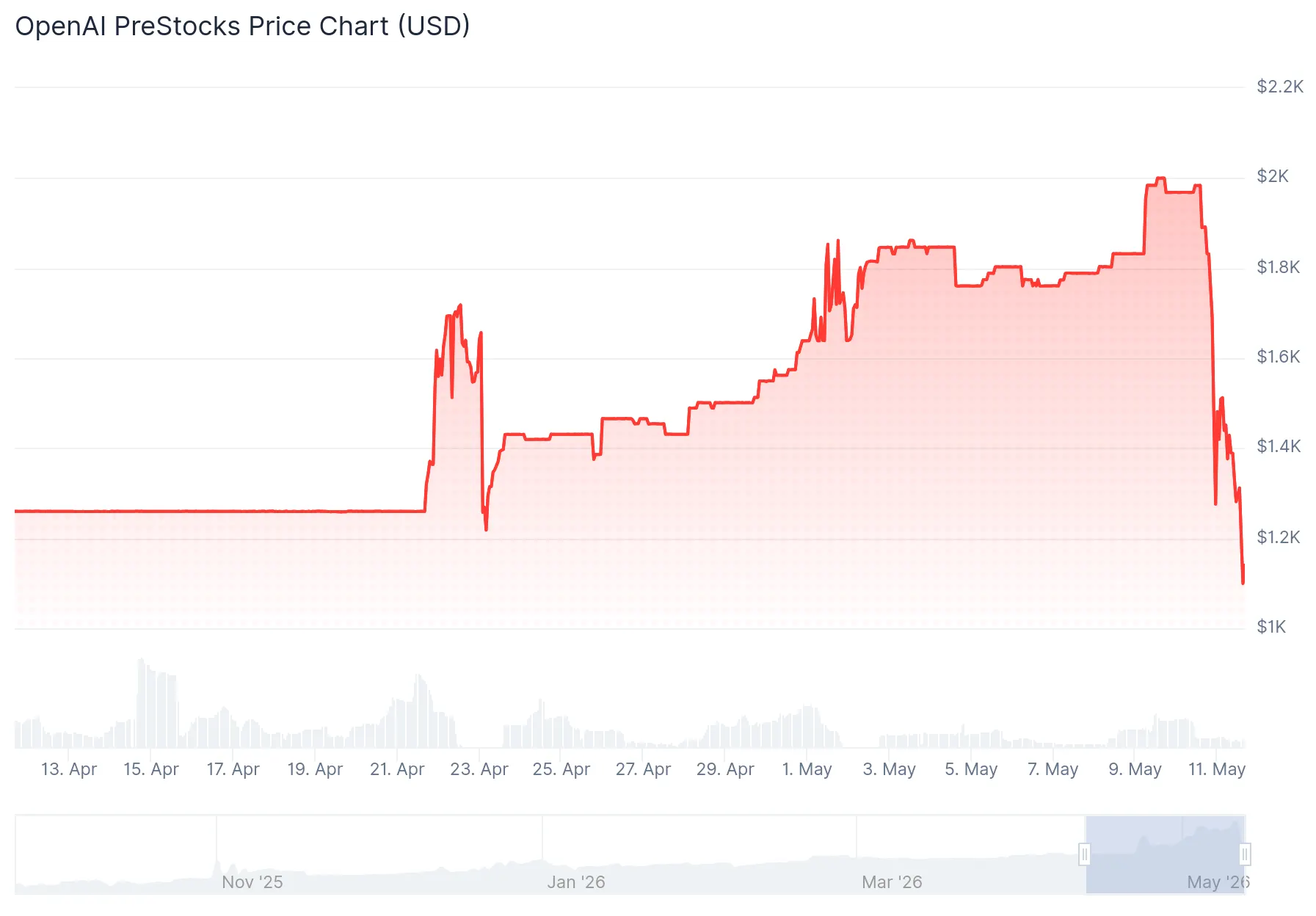
So how did 600 OpenAI staff members manage to sell $6.6 billion worth of shares?
If you’re not deeply familiar with the intricate world of finance, this might seem like an obvious question—and answering it is really the whole purpose of this discussion.
Back in October 2025, OpenAI carried out a board-approved tender offer, allowing both current and former employees to sell their vested shares to major institutional investors such as Thrive Capital, SoftBank, Dragoneer, and T. Rowe Price. Over 600 individuals took part, with each person limited to selling up to $30 million in shares.
OpenAI set up the process, publicly disclosed it, and gave approval for every share transfer.
That’s the key point both companies are standing behind—not going after legitimate sales. A secondary sale where the company itself controls who buys in and formally approves the transfer is perfectly legal. The enforcement push targets everything that bypasses that process—layered special purpose vehicles, tokenized share wrappers, and platform listings made without the company’s consent.
Where does Robinhood’s fund come into the picture?
Just three weeks ago, Robinhood Ventures Fund I announced it had acquired $75 million in OpenAI common stock, offering everyday investors access to the stake through a closed-end fund listed on the NYSE.
This approach involves a more tightly regulated vehicle than an unsolicited SPV pitch—but Robinhood’s own product details reveal that RVI “gains exposure either through a direct stake in a company or via one or more special purpose vehicles.” To date, OpenAI has not issued any public confirmation that it approved the April 17 share transfer.
Robinhood and OpenAI were involved in a public conflict last year over OpenAI shares that Robinhood had unauthorized tokenized and airdropped to European users. Whether this latest $75 million purchase received OpenAI’s formal written consent—the sole requirement for a transfer to be valid under Tuesday’s newly announced policies—has not been confirmed by either party.
So the real question isn’t “is this a regulated platform?” but rather “did the company provide written approval for this specific transfer?”
That’s a far more difficult question to answer, and both Anthropic and OpenAI made clear on Tuesday that they plan to hold people to it.
The frenzy driving all of this becomes easy to grasp once you trace the money. Anthropic’s annualized revenue surged from $9 billion at the close of 2025 to $30 billion by April 2026—a 233% jump in just one quarter—fueled largely by demand for Claude Code, with Amazon pledging up to $25 billion in additional investment. With growth rates like these, investors unable to get shares through official channels will continue trying to find backdoor entry points.
Tuesday’s announcement was both companies slamming those backdoors shut—and in Anthropic’s case, publicly identifying which ones had been left open.
Daily Debrief Newsletter
Kick off each morning with the biggest stories of the day, plus exclusive features, a podcast, videos and more.
