



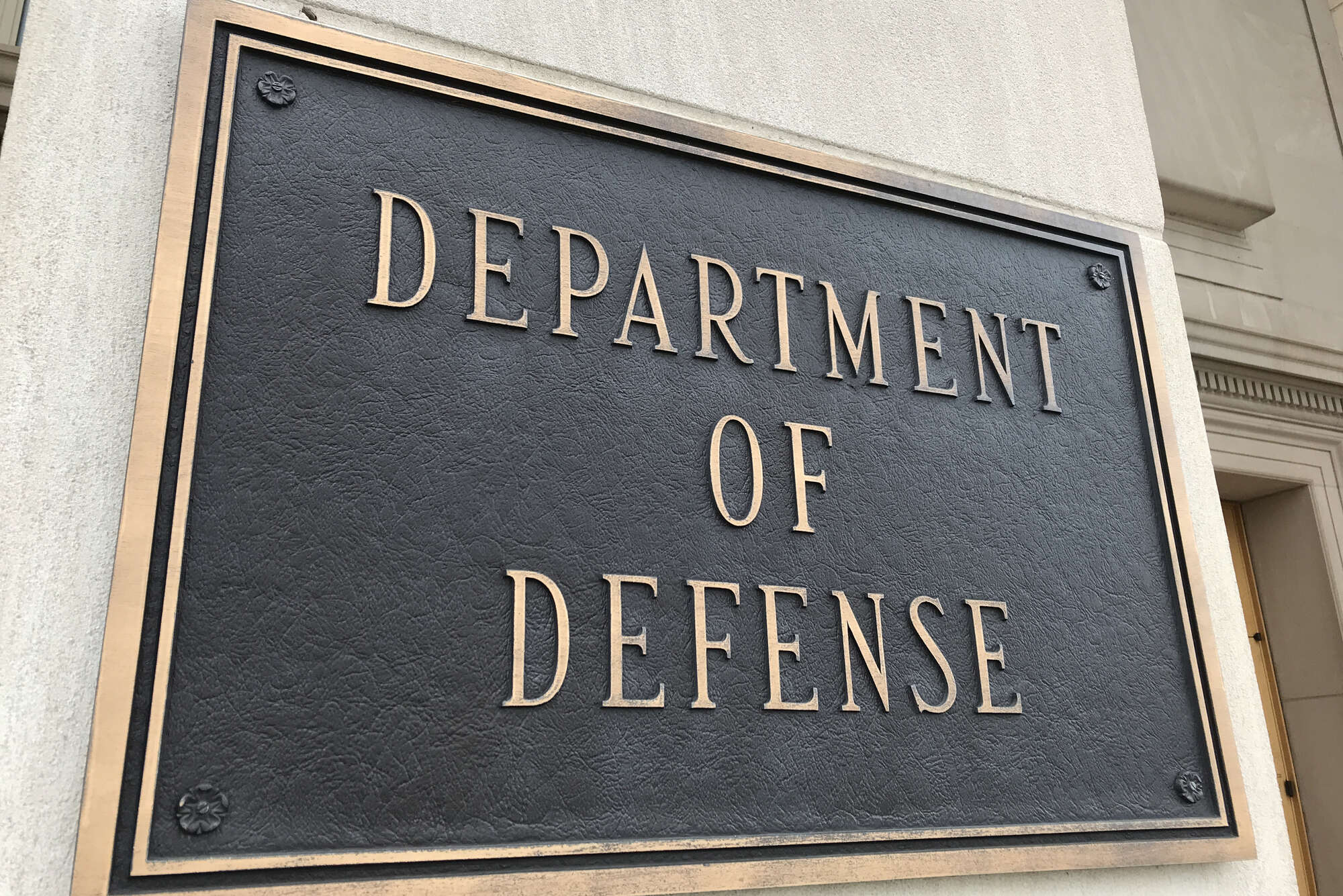
The Department of Defense has put forward a major new regulation that would dramatically broaden how the government monitors foreign ownership and influence within the defense industry. Under this proposal, tens of thousands of contractors without security clearances would face the same security obligations that were previously reserved only for firms dealing with classified data.
The draft Defense Federal Acquisition Regulation Supplement rule, published last week, would mandate that any contractor or subcontractor pursuing DoD business must share their beneficial ownership details with the Defense Counterintelligence and Security Agency and disclose whether they fall under foreign ownership, control, or influence—commonly referred to as FOCI.
Contractors would also need to keep their FOCI and ownership disclosures current with DCSA for the entire duration of their contracts. Additionally, they would be required to address any FOCI-related risks within 90 days. This regulation would cover all contracts exceeding $5 million.
This proposed rule has been in development for years—the 2020 defense policy legislation mandated that unclassified contractors must follow FOCI disclosure rules, not just those requiring access to classified material.
Congress originally established a July 2021 deadline for issuing the rule, but it took the Defense Department several years to release this proposal.
“Although Congress included this requirement in the fiscal 2020 National Defense Authorization Act, translating it into practice is far more complex, and it’s a significant undertaking for the Department of Defense to build such a framework,” said Scott Freling, co-chair of Covington’s Government Contracts practice, in an interview with Federal News Network.
“DCSA has traditionally concentrated on companies working on classified contracts, and with this new directive, it will encompass a vast number of firms that support national defense without requiring access to classified information. These companies will now face disclosure requirements and undergo review and assessment processes. I believe one reason for the extended timeline is that the department has been working to determine the most effective way to implement and operationalize this in a manner that serves both their interests and our community,” he explained.
This proposal represents part of a larger initiative to strengthen defense supply chains, both to block foreign adversaries from accessing sensitive but unclassified information and to safeguard against concealed vulnerabilities embedded in products used by DoD.
The Pentagon projects that nearly 40,000 companies could ultimately fall under this rule, and “there will be responsibilities on both sides,” Freling noted. While non-cleared companies would need to submit extensive disclosure forms covering beneficial ownership and any foreign connections for evaluation during the contracting process, DCSA would be tasked with reviewing thousands of these submissions.
The agency, however, has spent years preparing—Heather Finstuen, a partner at Covington & Burling LLP, stated that DCSA has been growing its workforce and improving its procedures in preparation for what it terms the “FOCI expansion mission.”
“DCSA is experienced in handling this within the classified sector, but the scope will now be enormously expanded, and new timing factors will come into play since this occurs within a procurement context,” Finstuen said. “It will be functioning at a scale it has never encountered before.”
However, contractors will need to supply information to the department in a format that supports efficient review.
“The primary challenge for contractors will be completing the standard form, the SF-328, and providing the necessary supporting documentation outlined in the proposed rule. Based on our experience working with companies of various sizes, this isn’t a form that can be casually filled out without guidance or training on how to approach it. Companies will need to consult with advisors to receive counsel tailored to their specific ownership arrangements,” Freling said.
“It truly depends on the specifics of each company’s ownership structure and how best to present it to the department in a manner that is current, accurate, and complete—a standard emphasized in the proposed rule—while also facilitating the review process, since this review will occur within a competitive procurement environment where there isn’t much opportunity for back-and-forth clarification on previous submissions. All parties must get it right from the start,” he added.
According to Freling, the rule could pose particular difficulties for companies with intricate ownership arrangements.
“For publicly traded companies, there may be thousands or even hundreds of thousands of shareholders. Often, these companies don’t maintain a perfect record of all their shareholders, and the proposed rule, as currently written, appears to require disclosure of foreign beneficial owners regardless of how small their stake is—a significant departure from how the SF-328 is presently structured,” Freling said.
The proposed rule would also permit DoD to extend these requirements to certain contracts for commercial products and services if a designated senior DoD official determines that the contract “involves a risk or potential risk to national security or potential compromise because of sensitive data, systems, or processes.”
“That’s a fairly broad standard,” Finstuen said. “Senior DoD officials will have considerable discretion in deciding whether the commercial exemption applies.”
Freling noted that it remains unclear how broadly the exemption will ultimately be interpreted.
“Our concern is that it could be applied very broadly, pulling in a wide range of companies that serve the department, and that’s definitely an open question from our standpoint. The commercial exemption originates from the National Defense Authorization Act, so we anticipate it will remain in the final rule. However, it would be helpful if, between the release of the proposed rule and the final version, the department could offer clearer guidance to industry regarding when and how they should expect these requirements to appear in contracts for commercial products and services,” Freling said.
If you wish to reach this reporter regarding recent developments in the federal government, please email anastasia.obis@federalnewsnetwork.com or contact her on Signal at (301) 830-2747.
Copyright
© 2026 Federal News Network. All rights reserved. This website is not intended for users located within the European Economic Area.
