



Follow ZDNET: Add us as a preferred source on Google.
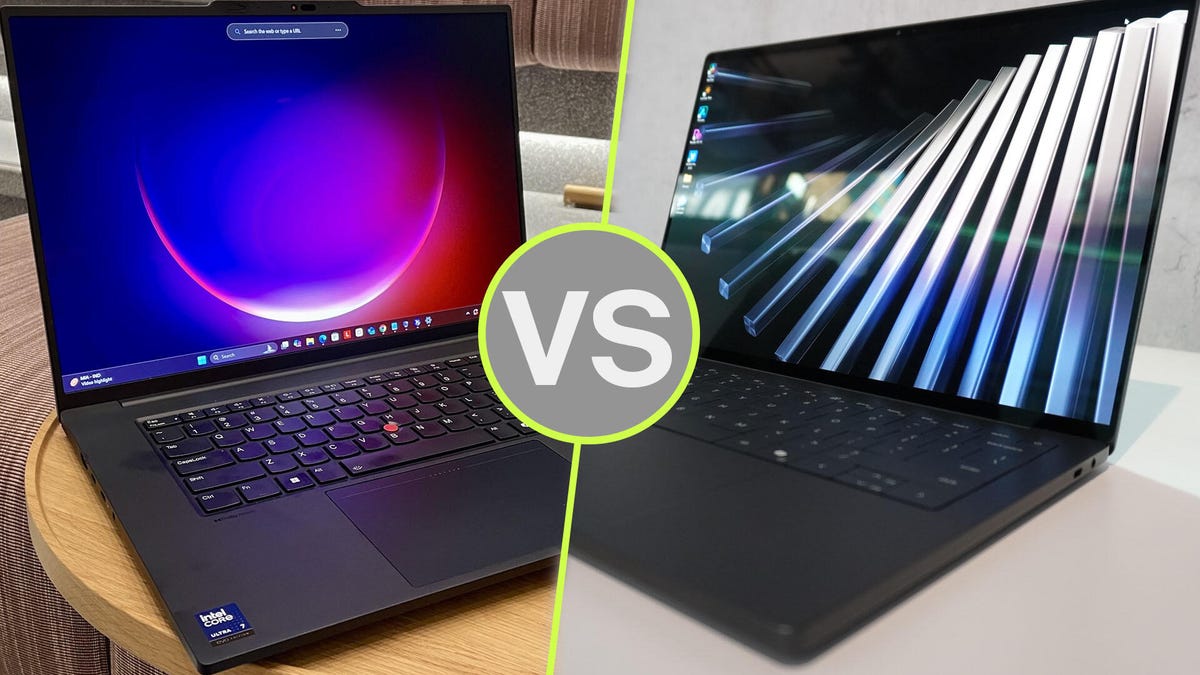
When shopping for a new laptop or desktop, you’ve likely come across options from Dell and Lenovo. These two brands lead the PC industry, offering everything from affordable models to high-end notebooks and workstations. That said, each company follows a distinct design philosophy.
Also: Lenovo ThinkPad vs. Apple MacBook: Which is the better laptop for you?
After extensive hands-on experience with both brands, I’ve noticed two very different approaches. Dell tends to focus on sleek aesthetics, targeting creative professionals and everyday users who appreciate refined looks. Lenovo, meanwhile, prioritizes functionality, offering more flexible hardware choices and generally better bang for your buck.
Let me walk you through the key strengths of each brand and help you decide which one suits you best.
You should buy a Lenovo laptop if…
1. You want a better typing experience
Lenovo consistently delivers outstanding keyboards across its entire lineup. In my testing, ThinkPads, IdeaPads, and Yoga devices all feature excellent keyboards with generous key travel, responsive feedback, and thoughtfully shaped keycaps. These elements combine to create a truly comfortable typing experience.
Even on devices that didn’t impress me overall, such as the Yoga 7a 2-in-1, the keyboard remained a standout feature.
I highlight this because the keyboard is the component you’ll use more than anything else. Whether you’re drafting documents, writing code, or reviewing files, you’ll be pressing those keys for hours on end. Comfort should be a top priority.
ThinkPads also feature the iconic TrackPoint — a small red nub positioned in the center of the keyboard. It allows cursor control without lifting your hands off the keys. While the trackpad offers more space, the TrackPoint provides an ergonomic option for keeping both hands in typing position.
2. You want a more affordable laptop
Lenovo maintains a vast product portfolio with multiple series, each containing numerous models spanning both premium and entry-level price points. This breadth makes Lenovo the more budget-conscious choice, with many ThinkPad and IdeaPad configurations priced lower than equivalent Dell systems. Here’s a clear example.
The Lenovo IdeaPad Slim 3 is currently available for $279 at B&H Photo/Video. It includes an AMD Ryzen 5 7520U processor, integrated AMD Radeon 610M graphics, 8GB of LPDDR5 memory, and a 256GB solid-state drive. By comparison, a similarly specced 15.6-inch Dell laptop from Best Buy — which swaps AMD for Intel components — carries a $500 price tag. The price difference seems largely driven by Dell’s inclusion of a 2K touchscreen.
Also: A month with Lenovo’s premium ThinkPad made me rethink what a work laptop should be
This pattern holds true across Lenovo’s entire range. The company’s official store features plenty of competitively priced laptops, making it easier to stay within budget. The selection grows even wider when you shop through third-party retailers.
Dell, in contrast, skews toward the premium end. Even its most affordable models include distinctive features that push the price higher, such as the 2K touchscreen noted above.
3. You want more configuration options
Lenovo provides significantly more customization options, letting buyers tailor their laptop’s internals to their preferences. You’ll find a broader selection of processors, memory, storage, and additional features. Take the sixth-generation ThinkPad T14 as an example. Customers can configure it with an Intel Core Ultra 7 255U processor, choose between the Spanish edition of Windows 11 or Linux Ubuntu, install up to 32GB of RAM, and add a smart card reader, among other upgrades.
Also: I found the apps slowing down my PC – how to kill the biggest memory hogs
This degree of personalization isn’t really available with Dell. You can pick from four processor options for the Dell 14 Plus, but swapping the operating system or adding extra hardware isn’t possible. For shoppers, this matters because it simplifies finding a machine that matches both your requirements and your budget. Lenovo’s modular approach lets you fine-tune specific specs up or down in smaller steps.
You should buy a Dell laptop if…
1. You want the best gaming laptops
Deciding which brand makes superior gaming laptops was a tough call. Both companies produce excellent gaming rigs, but if forced to choose, I’d lean toward Dell and its Alienware lineup.
As with other gaming laptops, Alienware systems pack top-tier hardware built to handle the most demanding games at maximum settings effortlessly. They also boast impressive screens. What truly distinguishes Alienware laptops is their superior engineering. In my experience, Dell’s machines feature more efficient cooling solutions. They keep internal temperatures in check during extended gaming sessions, minimizing thermal throttling at critical moments.
Also: Should you replace your desktop with a laptop setup? I tried with this Dell, and didn’t mind it
Additionally, newer Alienware models have shifted away from chunky designs toward slimmer, more streamlined profiles. These updated aesthetics help the series blend more naturally into professional environments. Many models also let you tone down the RGB lighting to a simple white glow. Lenovo’s Legion line, by comparison, retains a more conventional gaming appearance with bulkier chassis and more vibrant RGB accents.
2. You want a laptop with the best displays
In my experience, Dell laptops generally offer superior screens for creative
Dell laptops are built to handle demanding workflows. Beyond their powerful internal hardware, they also boast impressive screens. Many models come with vibrant, high-resolution panels that reproduce colors with precision—features that are essential for creative professionals, photographers, and video editors. A standout example is the latest Dell XPS 16, which features a stunning 16-inch 3.2K OLED touchscreen.
Also: After a week with Dell’s new XPS 16, it’s the top Windows laptop of 2026
These advantages shine in everyday use too. Whether you’re watching a show on Netflix or casually browsing the web, Dell’s displays deliver an immersive, visually captivating experience. The company often complements these screens with robust speaker systems, resulting in a well-rounded multimedia setup.
3. You care about design
I’ll admit my bias here, but I believe Dell laptops generally have more eye-catching designs. Recent models emphasize premium materials and refined finishes, giving them a sleek, high-end appearance. This design approach isn’t limited to just flagship devices—many budget-friendly options also look remarkably polished.
That meticulous attention extends to finer details too, such as thinner screen bezels and durable hinges, all contributing to a more balanced and cohesive look. Lenovo tends to prioritize functionality over aesthetics, which isn’t inherently a drawback. However, when it comes to making a strong first impression and visual appeal, Dell laptops usually have the edge.
Writer’s choice
Both brands are outstanding—you really can’t go wrong with either. But if I had to choose one, I’d pick Lenovo. As a consumer, I value practicality above all. I want a laptop that’s affordable and handles my daily tasks efficiently, and Lenovo fits that need better. I also appreciate the wide variety of configurations available across their product lineup.
Also: I tried Framework’s new ‘MacBook Pro for Linux’ and it’s exactly what hardware enthusiasts have been waiting for
That’s not to diminish Dell’s strengths. They make undeniably excellent laptops, particularly in display quality. But for me, those perks feel more like bonuses than necessities. I don’t require a top-tier screen or premium audio. What matters most to me is comfort, value, and seamless everyday performance—and that’s where Lenovo truly excels.
