



Most small business owners want to stay on top of tax and labor rules, yet many lack a dedicated HR manager or payroll specialist to handle the details. By the time an issue comes to light, it may have been quietly building for months.
Julie Loe didn’t see the signs until tax notices started piling up. She runs Pediatrics Physical Therapy Services in Morro Bay, California – a small clinic focused on caring for children. Her payroll provider was supposed to take care of all the filings, so the flood of official letters made no sense.
By the time she connected the dots, the original errors had already carried over into a later quarter, turning what should have been a routine tax cycle into a round of red flags. Julie had chosen an online payroll service specifically to avoid this kind of trouble, and yet the system she relied on had quietly slipped up.
Her experience is far from unique. A KPMG study found that payroll mistakes can drain as much as 5% of a company’s total payroll spend. For a small team of 15 people averaging $50,000 each in annual salary, that translates to nearly $40,000 a year vanishing through simple, and largely preventable, errors.
That’s the gap OnPay was created to fill: a payroll and HR platform designed for small businesses and the accountants who guide them, built with automation and human support so problems are caught before they grow.
Before launching The Wizard of Paws Pet Salon in Sammamish, Washington, Sheila Cole rarely worried about payroll. After 18 years as a pet groomer in other people’s shops, she often imagined how she’d run things her own way. But the day she became an employer, the back-office reality landed fast. Suddenly she was handling W-2s, tax withholdings, and worker classification for a team of nine – a steep learning curve for most new owners.
“I am terrified of the IRS,” Sheila told OnPay, “and I wanted to make sure that when I launched the business, I did everything by the book.”
Being cautious helps. Misclassifying a worker – calling someone an independent contractor when they should be a W-2 employee – is one of the most common and expensive payroll mistakes a small business can make. The IRS, the Department of Labor, and state agencies all take it seriously, and penalties can include back taxes, interest, and hefty fines.
Rather than trying to become a compliance expert overnight, Sheila needed tools that handled it all automatically. Whether paying W-2 employees or 1099 contractors, OnPay lets her manage everyone from a single dashboard. With built-in e-signatures and digital onboarding that walks new hires through required forms – such as W-4s, I-9s, and more – it removed one more worry from her plate.
“It’s really a one-stop shop for me,” Sheila said, “and I know even if I get audited, I’m covered.”
Alex Wright understands the stress of running payroll by hand and hoping nothing goes wrong. He co-founded Level, a nonprofit in Austin, Texas, that offers online learning and job training to people who are incarcerated. The work is meaningful and demanding, and for a long time, payroll was the part that kept him up at night.
“Thinking about payroll makes me so tense,” Alex told OnPay. “The last thing I want is to pay our team late and let them down.”
Alex started with a well-known payroll provider but ran into constant issues. Running payroll isn’t just checking a box – it means setting up direct deposits, managing tax payments, filing new-hire reports with state agencies, and much more. For a two-person leadership crew, there’s almost no room for error.
After moving to OnPay, payroll went from a source of anxiety to a 15-minute routine. It also solved another must-have for Level: OnPay handles tax calculations, filings, and payments in all 50 states, which was especially important with an employee working remotely from Michigan.
“When you start on a solid foundation, it sets you up for long-term growth,” Alex explained. “Without that base, you can never really scale or focus on your mission. That’s what OnPay gave us.”
State rules differ, shift often, and can feel like a full-time job just to track. At a minimum, most employers need to understand:
- Workers’ compensation coverage requirements
- State retirement mandates
- Meal and rest break rules
- Final paycheck requirements
- Pay transparency laws
Keeping good records prepares you for audits or disputes, but the bigger challenge is knowing exactly what your state demands. That’s where OnPay stands out from most payroll software.
While trusted by thousands of small business owners, it’s also built with accountants in mind. More than 10,000 accounting professionals partner with OnPay to oversee their clients’ payroll because it’s designed for transparency – producing clean data, proper documentation, and compliance workflows they can actually review and rely on.
Many payroll tools can cut a paycheck. The real test is how they handle everything behind the scenes – taxes, filings, and ongoing compliance. At Julie’s clinic, her old provider processed payments but couldn’t manage tax filings properly. Switching to OnPay didn’t just fix the errors; it consolidated everything into one place.
As Julie told OnPay: “OnPay is simple and accurate – having the taxes handled is worth every penny.”
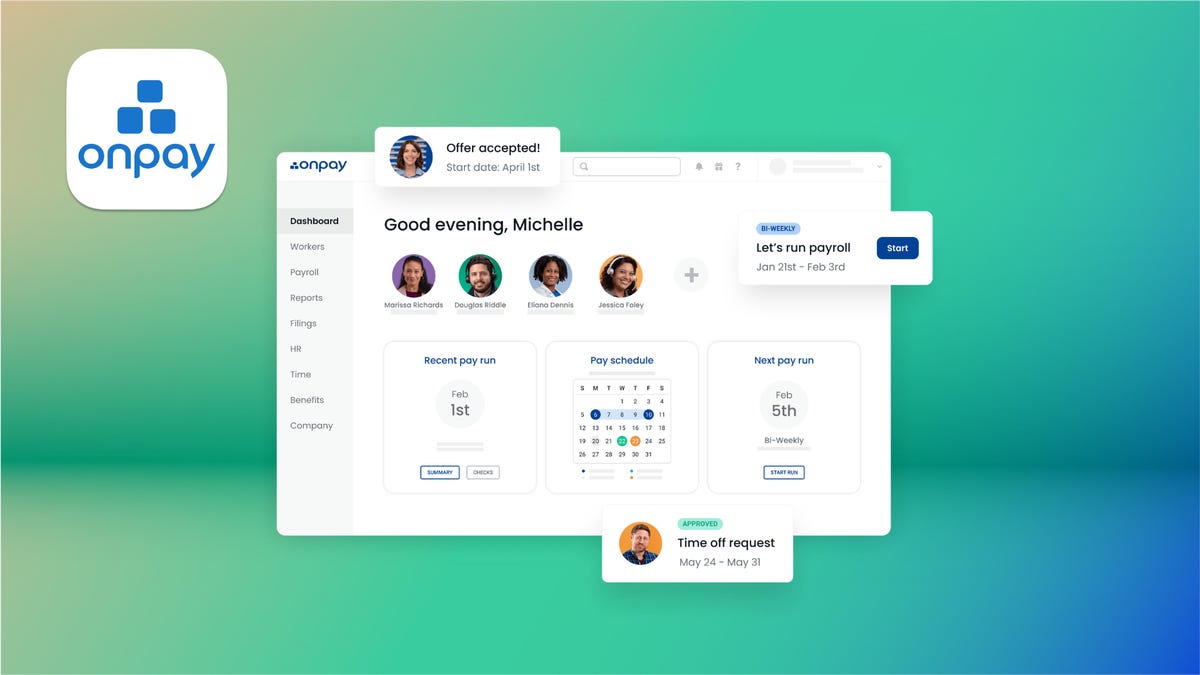
OnPay unites payroll, onboarding, time and attendance tracking, HR policy management, benefits administration, and tax compliance into a single platform. When a new hire signs their offer letter, the same system that captures that signature also sets up payroll, enrolls them in benefits, and starts tracking PTO – all without duplicate data entry.
And when your questions go beyond the basics, OnPay gives you access to certified HR professionals and tax specialists – real people, not chatbots or help-center articles – who can advise you based on your unique situation.
Staying compliant starts with building a strong system from the start: classifying workers correctly during onboarding, running accurate payroll each cycle, and keeping solid records at every step. OnPay provides that structure so you spend less time worrying about what you might have missed – and more time growing your business.
