



Every security professional has heard this familiar scenario. The quarter wraps up with hundreds of vulnerabilities patched. Dashboards glow with green indicators. Then someone in an executive meeting asks: “So, are we actually more secure now?”
Silence.
The room falls quiet because a truthful answer demands context – something that patch counts and CVSS scores were never built to deliver. Exposure management was designed to fill this gap – to connect the dots between remediation work and genuine risk reduction. The market has answered with a wave of platforms promising to deliver it. But the question security leaders are really asking is: which exposure management platform actually lives up to that promise?
In this article, I’ll walk through the four leading approaches to exposure management, clarify what each one can and cannot accomplish, and outline five evaluation criteria that help you distinguish platforms built to reduce risk in your specific business and environment from platforms built to report on threats in the wild.
4 Approaches, 4 Architectures
Most exposure management platforms fit into one of four categories, each shaped by how the vendor assembled (or stitched together) the platform and how it handles data.
- Assembled portfolio platforms are the result of acquisitions. A vendor purchases point solutions – cloud security, vulnerability scanning, identity analytics, and so on – and bundles them under a single brand. In these platforms, each product maintains its own data model and identifies its own subset of exposures. The vendor may then consolidate the exposures in a shared dashboard, and that may look like integration. But in reality, each module still runs on its own data and generates its own findings, with minimal correlation or cross-linking between them.
- Data aggregation platforms pull in findings from your existing scanners and third-party tools. They then standardize the data and display it in a unified interface. These platforms are limited to whatever data they receive. This means if the ingested findings are siloed, there’s no way to correlate how one exposure might lead to another.
- Single-domain specialist platforms focus deeply on one area: cloud misconfigurations, network vulnerabilities, identity exposures, or external attack surface. They deliver strong results, but only within their specific area of expertise. They struggle when exposures in one domain chain into exposures in another domain, and the platform has no way to model that relationship.
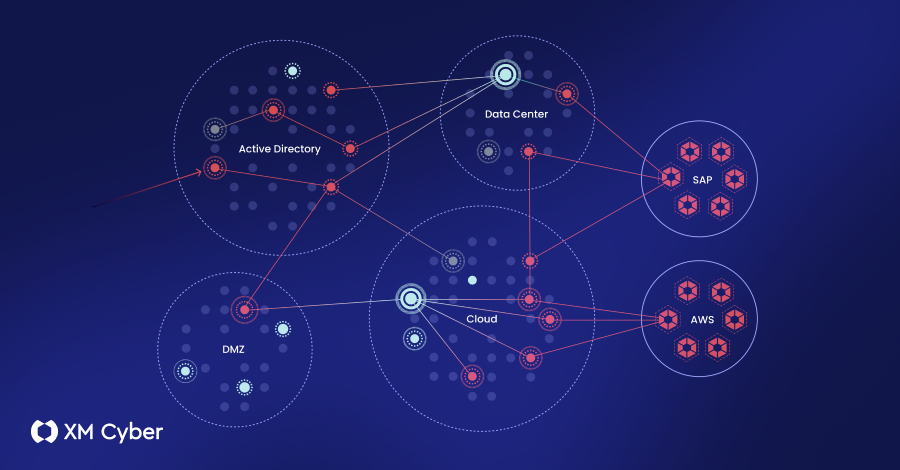
- Integrated platforms are purpose-built from the ground up to discover and correlate multiple exposure types – credentials, misconfigurations, CVEs, identity issues, cloud configurations – within the same engine. The platform constructs a digital twin of the environment and maps how attackers can pivot laterally from one exposure to the next – spanning on-prem, cloud, and hybrid boundaries.
5 Questions That Reveal What a Platform Can Actually Do
The architecture behind each of the four approaches has tangible consequences for what your team can see, verify, and act on. How do you tell the difference when evaluating? Start by asking these five questions:
1. How many exposure types can it discover – and how thoroughly does it analyze each one?
CVEs represent roughly 25% of the exposures that attackers take advantage of. Misconfigurations, cached credentials, excessive permissions, and identity weaknesses make up the rest. Assembled portfolios are constrained to what each acquired product was designed to detect. Aggregators can only standardize what their feeds deliver. Single-domain platforms cover just one slice of the picture. An integrated platform should cover every current and (especially) emerging exposure type – like AI workloads and machine identities – natively.
And breadth of coverage alone doesn’t tell the full story. What the platform truly understands about each exposure matters just as much. A platform that ingests findings from third-party tools is restricted to the metadata those tools collect – their exploitability conditions, their remediation guidance, their context. A platform that discovers exposures natively controls every layer of data for each finding, from exploitability to fix. If your platform can’t see certain exposure types, you have blind spots. If it sees them but lacks depth, you’re dealing with noise.

2. Can it map attack paths across environments?
Some assembled products display attack paths. Those paths are derived from network topology and based purely on connectivity. The platform never models how an attacker would actually pivot laterally from one exposure to the next. Aggregators produce no paths at all, just standardized lists of disconnected findings.
The real test is whether the platform can trace paths across environment boundaries. An attacker who captures cloud credentials on-prem can bypass every cloud-native defense – because the path originated outside the cloud platform’s visibility. An external-facing vulnerability may appear low-priority in isolation, but if it connects to an internal entity with a path to a critical asset, it’s an emergency. Most platforms can’t draw those connections. They scan each environment independently and leave the gaps between them unmapped.
3. Does it validate exploitability?
Most platforms check one or two conditions per exposure, constrained by the metadata they store for each finding and the information they gather from each entity in your environment. But genuine validation means testing multiple conditions: Is the vulnerable library loaded by a running process? Is the port open and reachable? The platform should deliver definitive answers – exploitable or not, reachable or not, path to critical assets or not – all grounded in your actual environment, not broad assumptions.
4. Does it account for security controls?
A CVSS 9.8 vulnerability blocked by a firewall cannot be leveraged for lateral movement…because it’s blocked. A 5.5 identity exposure with a direct path to a domain controller is an emergency. Platforms that overlook firewalls, MFA, EDR, and segmentation can leave your team chasing findings that carry no real risk – and overlooking the ones that actually do.
They directly jeopardize your most vital systems. When security protections aren’t included in your attack-path reviews, your priorities lead you astray — and the danger remains.
5. How does it prioritize?
Good prioritization addresses one thing: Does this vulnerability endanger a mission-critical asset? Relying on vulnerability scores overlooks the specifics of your own infrastructure. Prioritizing by asset tags fails to account for the surrounding systems that could be impacted by a breach. And assuming a path exists without confirming whether it can actually be exploited gives you misleading results. All three approaches flood IT teams with noise — because none of them tie findings back to what truly matters to your business.
Smart prioritization works in reverse, beginning with your critical assets and tracing the routes that could reach them. The platform must demonstrate that the vulnerability is genuinely exploitable, that a threat actor can navigate to it, and that it ultimately connects to something the business cannot withstand losing. When the platform maps all of these connections within a unified graph, choke points become visible — specific spots where a single remediation blocks several attack paths at once. In sprawling enterprise networks, this focuses the priority queue down to roughly 2% of all identified exposures.
What This Means for Your Team
The architecture of the platform you choose defines your security posture — and how your team invests its time. Siloed or bolted-together platforms force your team to piece together findings from multiple tools, debate with IT over fixes that may not meaningfully lower risk, and chase exposures that turn out to be dead ends. Point solutions offer deep visibility in one narrow area but leave dangerous gaps everywhere else.
An integrated platform cuts through that friction. It connects isolated exposures into confirmed attack paths, accounts for the defenses you already have deployed, and flags the actions that reduce the most risk with the least effort. When a remediation eliminates a choke point, a continuous exposure management platform recalculates the graph immediately. That means formerly critical vulnerabilities can be deprioritized as they no longer lead anywhere dangerous, and your to-do list always mirrors your actual threat landscape.
When your exposure management platform can verify exploitability, simulate your security controls, and chart every workable path to your critical assets — you can respond to the question posed at the start (Are we truly more secure?) with a confident yes.
Note: This article was thoughtfully written and contributed for our audience by Maya Malevich, Head of Product Marketing at XM Cyber.
