




The standard idea of a “secure perimeter” has successfully evaporated. Because the workforce has transitioned from centralized workplaces to a hybrid mannequin spanning kitchen tables, espresso outlets, and co-working areas, the outdated means of defending the community has change into out of date. Organizations can not depend on the idea that something inside the company community is “safe” and the whole lot exterior is “hostile.”
The transfer to Zero Belief isn’t only a passing development, it’s a mandatory evolution in safety structure. Nonetheless, many organizations are discovering that their present implementations are lacking a crucial part: the connection between figuring out a consumer and authorizing their session.
Understanding Zero Belief
At its core, Zero Belief is a safety framework constructed on the mantra: “Never trust, always verify.” It assumes {that a} breach is both imminent or has already occurred. Subsequently, no consumer, system, or software is granted implicit belief primarily based on its bodily or community location.
In contrast to legacy fashions that functioned like a fortress moat, the place when you crossed the drawbridge, you had free reign of the grounds, Zero Belief operates like a high-security facility the place each single door requires a recent badge swipe and a biometric scan. This granular degree of verification is the one option to defend towards trendy, refined cyber threats focusing on lateral motion.
The place conventional authentication fashions fall-short
Whereas most organizations have strengthened id safety by adopting multi-factor authentication (MFA) and conditional entry insurance policies, these measures alone are not sufficient.
Regardless of finest efforts, breaches involving legitimate credentials proceed to rise. The issue lies in a basic misunderstanding of what MFA does. Whereas authentication verifies who a consumer is, it doesn’t decide whether or not their entry ought to be trusted at that particular second.
Verizon’s Knowledge Breach Investigation Report discovered stolen credentials are concerned in 44.7% of breaches.
Effortlessly safe Energetic Listing with compliant password insurance policies, blocking 4+ billion compromised passwords, boosting safety, and slashing help hassles!
Attempt it without spending a dime
The identity-device hole
The “where” and “how” of entry at present are simply as necessary because the “who.” Think about these frequent eventualities:
- A distant worker logging in from a private, unpatched laptop computer.
- A 3rd-party contractor utilizing an endpoint that lacks up-to-date antivirus software program.
- A consumer connecting through an unmanaged, public Wi-Fi community with out utilizing a VPN.
In these instances, the consumer may cross an MFA immediate completely. They’re who they are saying they’re. Nonetheless, if that system is contaminated with malware, the “authenticated” session is now a direct pipeline for an attacker to enter your atmosphere.
Token theft and session hijacking are invisible threats
Attackers know the place MFA falls brief, they usually’ve tailored. They use infostealers, token theft, and session hijacking to steal the session cookie or token created after a profitable MFA login. By loading that token into their very own browser, they will bypass id checks.
They don’t want to interrupt in as a result of the system already sees them as a reputable, already authenticated consumer. In case your safety coverage checks id solely at login and doesn’t confirm system well being, attackers can extra simply develop their entry and attain delicate knowledge.
The Position of Gadget Belief
Gadget belief is now essential to securing the whole entry journey. When entry choices rely upon each id and system well being, authentication turns into contextual relatively than static. A profitable MFA immediate is not handled as the top of the safety dialog. It’s one sign amongst a number of.
Options akin to Specops Gadget Belief embeds posture checks instantly into the authentication workflow, permitting entry to mirror the present state of the system, not simply the consumer’s credentials. If the system drifts out of compliance, entry might be restricted or re-evaluated with out counting on a separate safety software to detect the difficulty later.
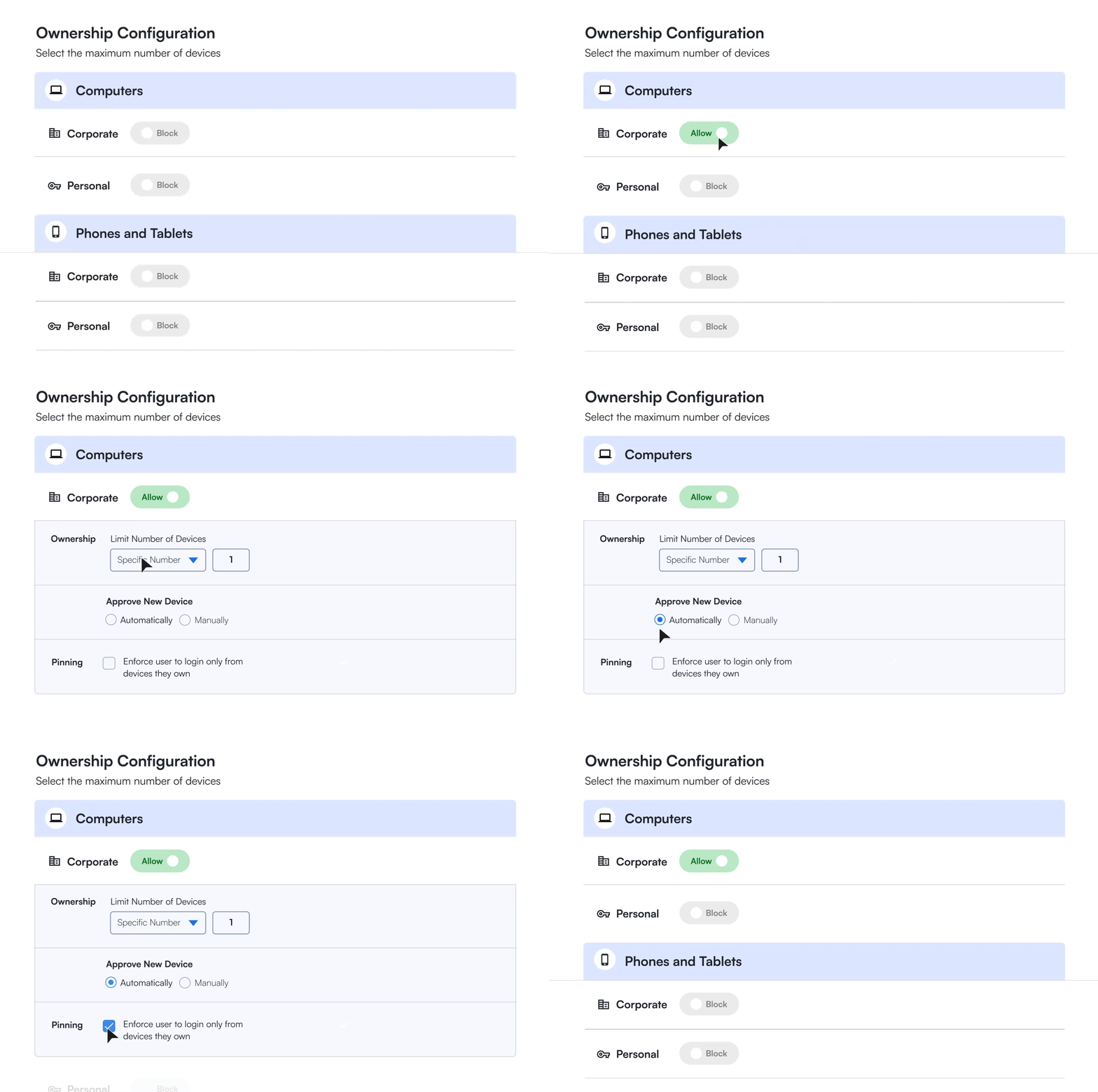
For organizations deploying Zero Belief, this adjustment corrects a structural hole. Identification confirms who’s connecting, and system belief helps decide whether or not that connection ought to proceed. With out each components working collectively, Zero Belief stays solely partially applied.
Steady monitoring is vital
Zero Belief is an ongoing effort. Actual-time monitoring and analytics assist safety groups spot uncommon exercise and reply shortly to threats. With instruments that present system well being and compliance, organizations can preserve robust protections in place, whilst units and circumstances change.
For example, if a consumer’s laptop computer turns into compromised mid-session or if a safety characteristic is disabled to bypass a neighborhood restriction, the system should be able to recognizing that change immediately.
Automating the validation of system posture means safety groups can make sure that the “verify” a part of “never trust, always verify” is occurring in real-time. This degree of oversight is important for matching the pace and agility of present assault methods.
Attaining True Zero Belief
Securing a hybrid workforce requires binding id to a trusted system and constantly validating that belief all through each session.
Specops’ Zero Belief entry resolution Specops Gadget Belief is constructed round that precept. It makes use of id binding to make sure that entry is tied not simply to a consumer account, however to a particular, verified system. It evaluates system posture in actual time and might implement coverage dynamically if danger modifications throughout a session.
When points are detected, built-in one-click remediation permits customers to resolve compliance gaps with out overwhelming IT groups. Grace durations and automatic posture checks scale back friction whereas sustaining enforcement, so safety doesn’t come at the price of productiveness.
By combining phishing-resistant authentication with steady system validation, organizations could make entry choices primarily based on each who’s connecting and the present state of the system they’re utilizing.
Zero Belief is just not achieved by way of extra authentication prompts. It’s achieved when id and system belief work collectively to make sure that entry is granted solely when each stay safe.
Fascinated about seeing how constantly evaluated authentication may work in your group?
Contact Specops at present and find out how our Zero Belief entry resolution Specops Gadget Belief can assist your group safe your authentication lifecycle.
Sponsored and written by Specops Software program.
