



Terry Gerton I do know you’ve been monitoring how the brand new limits on government pay and dividends and different monetary levers are touchdown throughout the protection sector. Now that we’re a bit bit faraway from that announcement, what, if something, are you seeing in protection inventory efficiency?
Paul Murphy Properly, Terry, let’s again up a second and simply refresh folks’s reminiscence. We’re speaking about this government order that hit again in January, proper earlier than earnings season, because it seems. Prioritizing the warfighter in protection contracting. And it permits Secretary Hegseth to limit inventory buybacks, dividends, sure varieties of government compensation by way of future protection contracts. It doesn’t impose express common compensation caps, but it surely’s requiring these phrases to be embedded in contracts. So it’s not going to be something that’s that’s prison or regulatory in nature. It’s going to be contract-based, so it’s it’s future-oriented. So actually, because it hit in January, it hit earlier than incomes seasons and quite a lot of the businesses had already been reporting about dividend funds again within the October-December time-frame. We actually haven’t seen an enormous hit within the protection trade simply but and the shares are pretty secure. In reality, the large primes towards the top of the 12 months, a number of of them have been reporting document revenues for final 12 months. As you’ve seen, rather a lot big-ticket alternatives, contracts are hitting proper now. And so the protection market is wanting fairly sturdy.
Terry Gerton One of many open questions on that compensation cap is likely to be on an organization’s capacity to recruit and preserve senior tech expertise. Are you seeing any form of response to that by way of motion and retention or morale or hiring at these corporations?
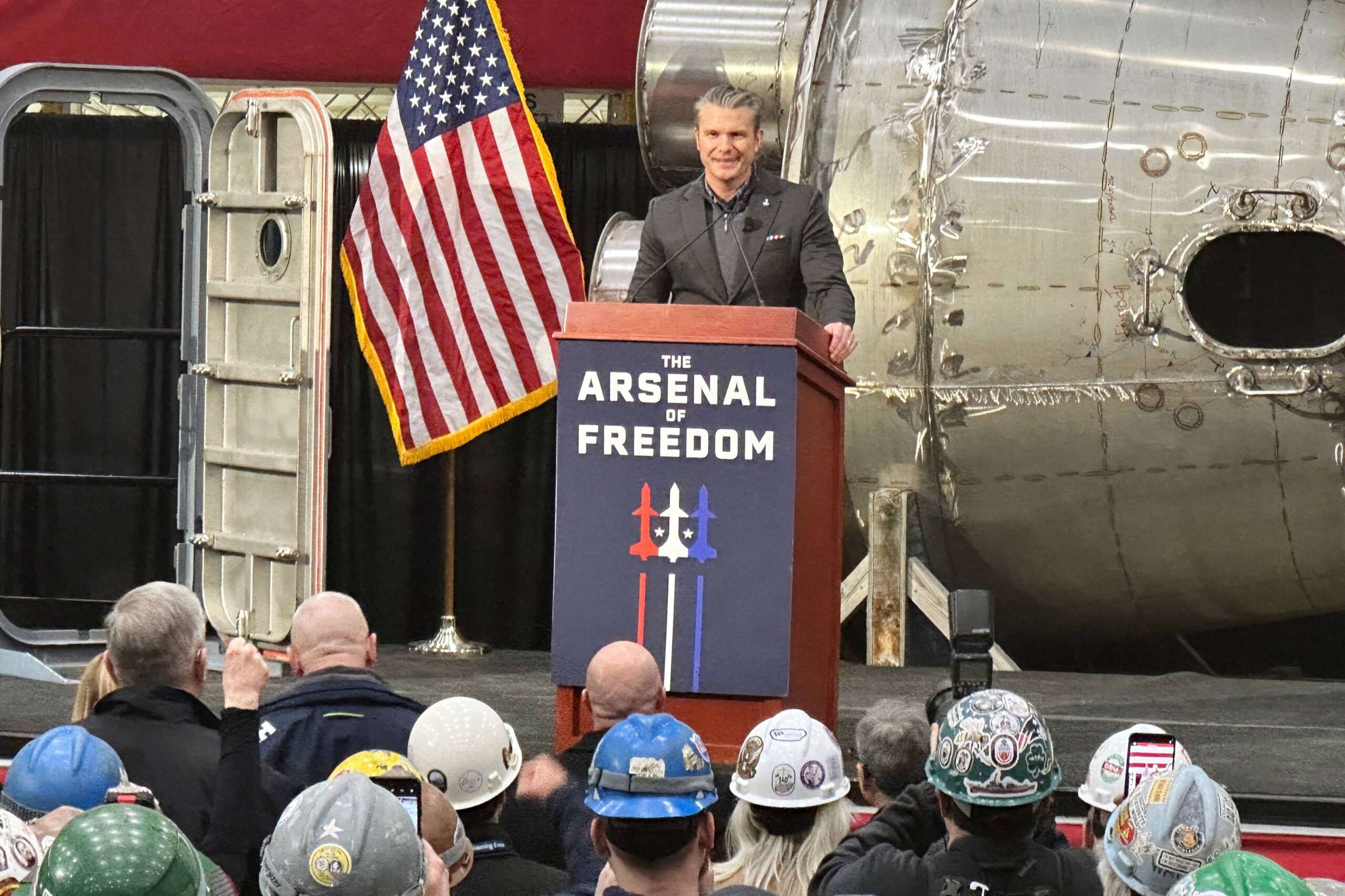
Paul Murphy Once more, it’s nonetheless a bit early. You understand, on the Davos assembly in Switzerland, the large worldwide monetary assembly, Treasury Secretary Bessent lambasted protection executives, saying their corporations have let the American folks down, they’re years behind on their contracts when CEOs are making $30 million to $50 million a 12 months. There’s doubtless, , some discomfort on the government stage. However we aren’t seeing folks heading for the exits simply but. The EO targets the C-suite — the CFOs, CEOs — but it surely’s largely avoiding the mid-tier, the higher-paid engineers at these corporations. So it could have a long-term cultural impact by way of the sorts of incentives they’ll supply the salaried staff and the higher-level tech expertise. And if that’s the case, we may even see engineers being extra drawn to civilian alternatives within the coming months. However thus far, no person, not one of the corporations have been cited for underperformance. I perceive early reviews are that they’re in negotiations with some corporations which were reported to be underperforming. I imply, Lockheed had an enormous challenge with the Lot 15 F-35s, and President Trump explicitly known as out RTX first-load supply of the Patriots, however apparently they’re in negotiations about a few of these issues. And also you see Secretary Hegseth was proper there in St. Louis this week, touting Boeing’s transfer to St. Louis out of Arlington, and so I believe they’re making an attempt to assist these protection contractors succeed. They’re not doing, proper now, quite a lot of the underperformance bulletins that the manager order known as for.
Terry Gerton So that you assume the businesses are taking form of a wait-and-see method to maybe restructuring senior compensation fashions or different kinds of getting forward of this?
Paul Murphy As a result of it’s contract-focused, as we simply mentioned, it provides the Protection Division quite a lot of leverage over how these negotiations play out. It’s not a common, across-the-board cap on wage or cap on earnings or you possibly can’t challenge dividends. I believe corporations clearly are nonetheless issuing dividends, and I haven’t seen main bulletins of inventory buybacks within the final two or three months, however thus far there doesn’t appear to have been a serious change in company conduct or in worker conduct.
Terry Gerton I’m talking with Paul Murphy. He’s a senior information analyst at Bloomberg Authorities. Properly, Paul, let’s shift our angle just a bit bit and speak about one other section of presidency shopping for across the worth added resellers. This was one other massive subject in direction of the top of final 12 months. The administration’s been very intentional and a bit provocative with the VARS. What are you listening to there by way of how their conduct is beginning to change?
Paul Murphy Properly, I’ve my nostril in quite a lot of the info. I’m not those essentially chasing the politicians down the hallway, however we do examine the info rather a lot. And what we’re seeing within the information is that bigger and fewer contracts are going to bigger and fewer corporations. That’s a seamless pattern. And the OEM choice to barter straight with OEMs, authentic tools producers, for the availability of software program and is, I believe, an enormous a part of this. And we simply noticed this massive award again in January that the Military took Salesforce’s Computable Insights subsidiary from a $99 million contract to a $5.6 billion contract. And within the course of, they’ve bypassed the scores of resellers and VARs within the Salesforce community. That is going to have a big impression on IT VARs that bought issues like Slack, as an example, considered one of Salesforce’s premier merchandise. And it’s going to pay attention the gross sales throughout the producers. It’s a boon to corporations like Salesforce. However one of many massive losers on this was Carahsoft, which is an enormous reseller of Salesforce. And they also’re going to must search for different alternatives. They’re going must proceed making the case for reselling to the federal government. Business critics are saying that the focus of the gross sales energy throughout the OEMs might have deleterious results down the street due to potential monopoly pricing and a discount of competitors…as soon as the federal government buys right into a single platform with a single firm, it provides that firm quite a lot of leverage. So it could seem aggressive and essential for streamlining and effectivity within the brief run, however down the street, the focus of monetary energy inside fewer corporations usually has the impact of decreasing competitors and impacting pricing, which in flip can result in much less worth for taxpayers. It might result in different results — the shortcoming to purchase crucial tools with the sources that they must spend for higher-priced items and companies.
Terry Gerton A part of the dialogue round how the federal government is altering the best way it buys is to construct resiliency into the availability chain. This sounds prefer it’s really making the availability chain extra fragile.
Paul Murphy While you focus provide in fewer fingers, it makes it extra fragile. It reduces the quantity of competitors within the system. It could possibly have that impact, sure.
Terry Gerton So that you talked about this specific purchase out of the Protection Division. How is that a part of the broader OneGov technique at GSA?
Paul Murphy Properly, one after the other, GSA is approaching quite a lot of these main IT suppliers — Google, Microsoft and lots of others — to bypass the VARs, with the concept in thoughts that merchandise and product-related companies will be procured straight from the businesses. And there’s about, I counted 20 OneGov contracts profiled on GSA’s webpage. And that won’t even be all of them, as a result of there’s one other what they name classifying as a OneGov contract with with Salesforce that didn’t really seem on the location the final time I checked. It’s a method that would backfire; VARs historically maintain the pricing threat. They negotiate quantity reductions. Eradicating them from the availability chain provides the OEM the pricing energy, notably for software program. So despite the fact that the Pentagon’s acquisition reforms encourage direct provider offers, the mannequin seems prefer it’s going to broaden and will result in increased costs down the street.
Terry Gerton So that you watch this sort of information on a regular basis. What items of information do you may have your eye on to form of let you know the place these traits are going to be transferring within the brief run?
Paul Murphy Properly, we’re watching daily the chance notices, and we’re watching notably for single-source agreements with corporations. We’re watching bulletins about OEMs and OneGov bulletins with OEMS. We’re monitoring the contracts information very carefully. We’re seeing traits away from, as an example, small enterprise contracting and socioeconomic set-asides. There’s been quite a lot of strain on the 8(a) program, which by way of 8(a) STARS and different contracts, has been a big contributor to competitors within the IT {and professional} companies area. However that’s the place we occur to be seeing probably the most decline within the variety of contractors taking part within the federal area. So I believe the general decline in numbers of market individuals over time can have a deleterious impact on competitors and pricing.
Copyright
© 2026 Federal Information Community. All rights reserved. This web site will not be supposed for customers positioned throughout the European Financial Space.
