




ABB Robotics is integrating NVIDIA Omniverse libraries into RobotStudio to reinforce robotic simulation and streamline real-world deployments. The aptitude will probably be launched because the subscription-based RobotStudio HyperReality within the second half of 2026.
ABB mentioned RobotStudio is utilized by greater than 60,000 robotics engineers worldwide to design robotic cells, program robots offline, and simulate manufacturing processes. The businesses mentioned improved simulation and AI coaching workflows may make automation extra sensible for small and mid-sized producers.
With the brand new integration, robotic cells, together with robots, sensors, components, and lighting, could be exported to Omniverse environments for physics-based simulation and rendering. ABB mentioned the improved simulation, mixed with its Absolute Accuracy calibration know-how, can cut back robotic positioning errors to round 0.5 mm in calibrated programs. It added that this helps keep consistency between simulation and deployed functions.
“RobotStudio HyperReality makes industrial-grade bodily AI prepared for real-world deployment at scale,” mentioned Marc Segura, president of ABB Robotics. “It can significantly accelerate product development, cutting setup times by up to 80%, reducing costs by 40%, and enabling concurrent engineering without physical prototypes—ultimately speeding time-to-market by around 50% for complex products.”
ABB’s digital controller runs the identical firmware as its bodily robotic controllers, permitting builders to check movement applications and automation workflows in simulation earlier than deploying them to manufacturing programs. ABB claims it’s the solely robotic producer with a digital controller operating the identical firmware because the {hardware}. Segura mentioned this makes the partnership with NVIDIA distinctive in comparison with NVIDIA’s offers with different robotic arms makers akin to Fanuc, Common Robots, Yaskawa and others.
ABB plans to supply RobotStudio HyperReality as a subscription alongside the prevailing RobotStudio tiers. The platform at the moment features a free model and a paid RobotStudio Premium providing utilized by industrial prospects.
ABB is promoting its robotics group to Softbank for $5.375 billion. The deal was introduced in October 2025 and is anticipated to shut in mid-to-late 2026. SoftBank is shopping for ABB’s robotics enterprise to broaden its robotics and AI capabilities. Segura mentioned right now’s take care of NVIDIA had nothing to do with the pending sale to Softbank.
“[The partnership with NVIDIA] aligns very effectively with our future technique, however this improvement really stems from an extended‑standing collaboration with NVIDIA,” he mentioned. “NVIDIA is powering our autonomous mobile robots for visual SLAM and autonomous navigation, and we’ve been discussing this integration for some time. Two technologies are finally maturing: simulation technology and generative AI. When you bring those together, it makes perfect sense to accelerate.”
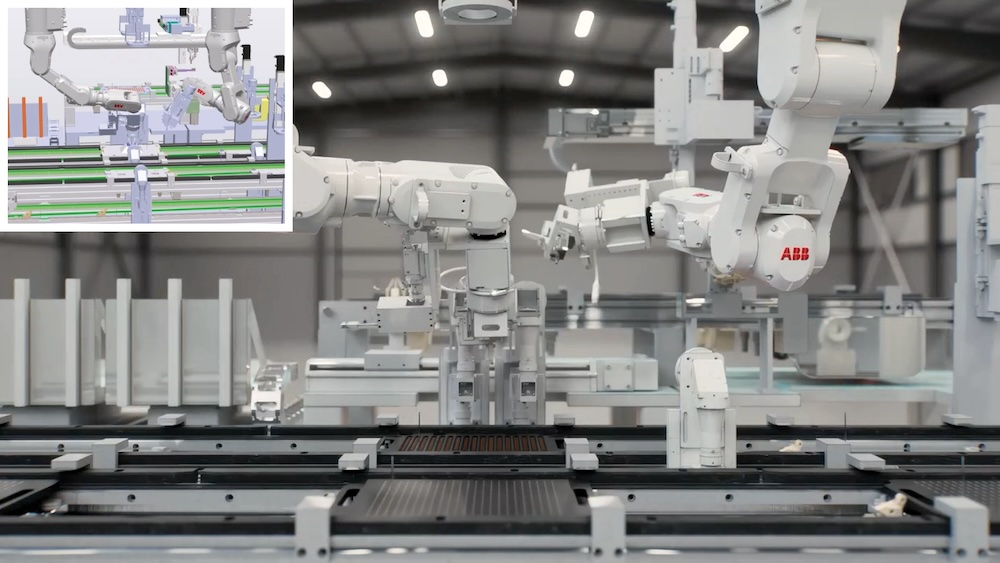
Industrial robots have historically been deployed in high-volume manufacturing environments, the place the price of programming and commissioning programs could be unfold throughout massive manufacturing runs. In high-mix manufacturing environments, the engineering effort required to program robots typically limits adoption. The businesses mentioned RobotStudio HyperReality may cut back setup time and engineering effort for brand spanking new functions.
NVIDIA mentioned ABB can be exploring the mixing of the NVIDIA Jetson edge AI platform into its Omnicore controller to allow actual‑time inference.
Segura mentioned Foxconn is piloting the know-how for shopper electronics meeting, the place robots should deal with small elements and frequent product modifications. One other early person is Workr, Segura mentioned, which develops automation programs for small and mid-sized producers.
“Precision is everything in consumer electronics manufacturing and until now, this level of accuracy and fidelity just wasn’t possible in simulation and digital twins,” mentioned Dr. Zhe Shi, chief digital officer of Foxconn. “We’re incredibly excited by the potential of ABB Robotics and NVIDIA’s collaboration, which enables parallel engineering for better designs, faster production ramp‑up and greater product evolution through advanced AI inference and understanding.”
ABB mentioned additionally it is exploring using language and vision-language fashions inside RobotStudio to simplify robotic improvement. The corporate mentioned these instruments may enable customers to instruct robots by way of prompts somewhat than conventional programming, with duties validated in simulation earlier than deployment.
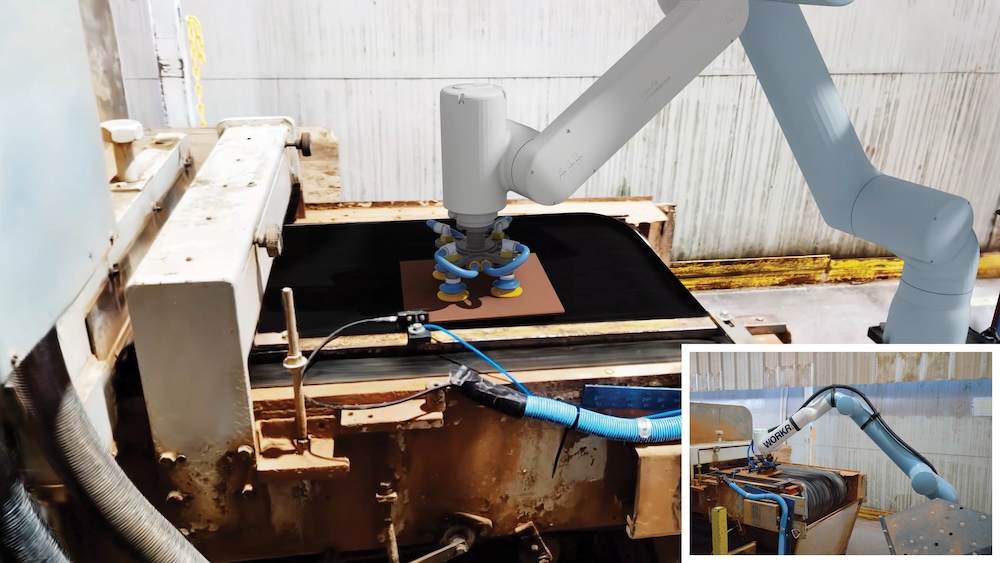
“The goal is to move beyond traditional programming. A proof of that is that within RobotStudio, we’re already using language models so you can prompt robots instead of manually programming them. Our aim is to demonstrate the benefits of AI not only in what robots can do, but also in how people use them,” Segura mentioned. “Over time, the RobotStudio interface will leverage language models so users can move from programming robots to simply instructing them. You simulate the robots, and once training is complete, you push the results to the physical robot. With the new RobotStudio HyperReality product, we’re taking a significant step toward making robots more accessible and easier to deploy.”
And, in fact, no robotics press convention is full with out no less than one reporter asking the unavoidable query: “When are you building a humanoid?”
“We already have more than 150 different shapes and size of robots. And it’s not just because we like complexity. It’s because industrial customers require optimization. If you want to deploy at scale, everything will have to be optimized. So you can expect from us, of course, mobile manipulation embodiments. Will that be in the shape of a humanoid or a dog? Customers will tell us. It’s going to be a response to their request for optimal solutions.”
The put up ABB boosts RobotStudio with NVIDIA Omniverse libraries appeared first on The Robotic Report.
