



Briefly
- U.S. President Donald Trump has nominated Kevin Warsh as Chair of the Federal Reserve.
- Trump’s decide comes amid heightened political strain on the Fed and renewed volatility in crypto markets.
- Warsh has beforehand known as many crypto initiatives fraudulent and nugatory, however he has voiced assist for Bitcoin.
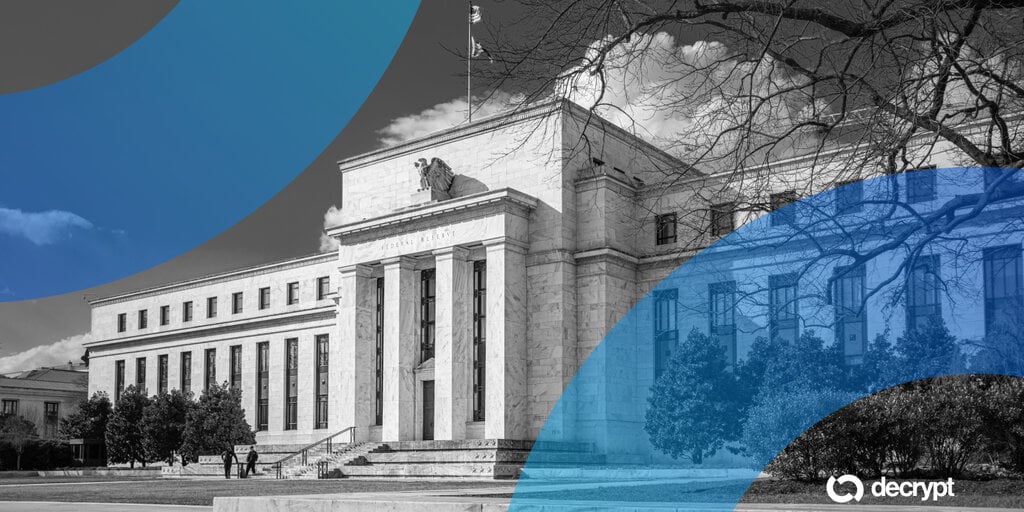
U.S. President Donald Trump nominated financier and former Federal Reserve governor Kevin Warsh to succeed Jerome Powell as Chair of the nation’s central financial institution on Friday, a selection that lands as cryptocurrency markets slide and buyers reassess the outlook for rates of interest.
Saying the decide on Fact Social, Trump praised Warsh’s credentials and document, calling him a future “GREAT Fed Chairman” and signaling an finish to months of public battle with Powell. The president has repeatedly criticized the Fed chair over interest-rate coverage and the price of the central financial institution’s headquarters renovation, even after the Fed delivered a sequence of charge cuts late final yr.
The nomination comes throughout a turbulent stretch for digital belongings. Bitcoin fell sharply this week, sliding from a current excessive close to $90,400 to about $82,800, based on CoinGecko knowledge, declining 7% over the previous week. The broader crypto market has weakened alongside it, with buyers pulling again from riskier belongings as expectations across the tempo of future Fed easing shift.
The Fed’s selections matter for crypto markets as a result of digital belongings are inclined to behave like so-called risk-on investments. When rates of interest are excessive, safer yields akin to U.S. Treasurys develop into extra engaging, drawing capital away from unstable belongings like cryptocurrencies. Decrease charges, against this, enhance liquidity within the monetary system and sometimes push buyers towards higher-risk bets. A stronger greenback, usually related to tighter Fed coverage, has additionally traditionally weighed on Bitcoin costs.
However the influence of Fed selections on Bitcoin’s value are usually not at all times logical. “Bitcoin constantly dropped after Fed bulletins, whatever the precise coverage resolution—a phenomenon often called ‘promoting the information,’” defined a report from CoinGecko.
“Bitcoin solely rallied after 1 out of 8 [Federal Open Market Committee] conferences in 2025, even throughout a reducing cycle that ought to theoretically profit threat belongings,” it added, referring to the committee on the Federal Reserve that makes selections about rates of interest.
Trump’s selection of Warsh follows years of stress between the White Home and Powell. Since Powell’s affirmation in 2018, Trump has pressed the Fed to chop charges extra aggressively and has accused the central financial institution of undermining financial development. That strain intensified final yr, when the Justice Division subpoenaed Powell over the Fed’s development undertaking, a transfer Powell described as a pretext to affect financial coverage. Warsh himself added to the talk in a CNBC interview final summer time, calling for “regime change” on the Fed.
Warsh is seen as extra hawkish than Powell, particularly given his previous criticism of quantitative easing and the Fed’s stability sheet enlargement, based on Shady El Damaty, CEO and co-founder at Holonym. “That’s elevating concern about how aggressive he may be with charge coverage if inflation ticks up once more. For crypto, the true problem is uncertainty proper now, no one is aware of if he’d comply with by on these views, particularly in an election yr the place strain to take care of liquidity will probably be intense,” he advised Decrypt.
“If markets keep skittish, it may gradual risk-on flows into crypto within the brief time period,” El Damaty added, noting that in the long run, extra hawkish Fed management “may very well strengthen the crypto narrative, particularly for Bitcoin, as a hedge towards tightening and centralized financial management.”
Kevin Warsh and crypto
Warsh, 55, is a former funding banker who served on the Fed’s Board of Governors from 2006 to 2011, changing into the youngest governor within the establishment’s historical past. He later suggested the Financial institution of England on monetary-policy reforms and is now affiliated with the Hoover Establishment and Stanford Graduate Faculty of Enterprise, whereas additionally working at Duquesne Household Workplace alongside investor Stanley Druckenmiller.
His views on cryptocurrency have been blended. In a 2022 opinion essay, Warsh argued that many non-public crypto initiatives had been “fraudulent” and “nugatory,” writing that cryptocurrency was a misnomer as a result of it was “software program, not cash.”
He additionally expressed assist for the creation of a central financial institution digital foreign money (CBDC) as a response to China’s e-yuan, a transfer at odds with Trump and Republicans’ attitudes. He warned that China’s digital yuan posed a strategic risk to the U.S.-led monetary system and backed the event of a wholesale digital greenback to be used amongst monetary establishments and governments.
“Kevin Warsh made an impassioned argument for a CBDC in one of many greatest newspapers on the planet,” Nick Anthony, coverage analyst on the Cato Institute’s Heart for Financial and Monetary Alternate options, advised Decrypt.
“Backtracking will both imply an admission that he was incorrect about the issue or incorrect in regards to the resolution. Both case isn’t good for his potential standing because the chair of the Federal Reserve.”
He additionally backed CBDCs over stablecoins, and criticized the Biden administration for selling them. The Trump household has since launched its personal stablecoin, USD1, by World Liberty Monetary.
“I’m skeptical {that a} host of personal cryptocurrencies are sufficiently robust and dependable proxies for the U.S. greenback,” Warsh wrote.
“I additionally doubt that bank-like regulation of personal stablecoins would guarantee their stability in disturbing occasions, absent authorities bailouts.”
Extra just lately, Warsh has struck a extra conciliatory tone towards Bitcoin. In an interview final Could on the Hoover Institute, he stated Bitcoin “doesn’t make me nervous” and described it as an essential asset that may function a test on policymakers.
Every day Debrief E-newsletter
Begin day-after-day with the highest information tales proper now, plus authentic options, a podcast, movies and extra.
