



SpaceX is scheduled to make its Nasdaq debut under the ticker symbol SPCX as soon as June 12, 2026, following its S-1 filing with the SEC on May 20. Elon Musk has committed to a 366-day lockup period for all of his shares.
This arrangement has significantly altered how cryptocurrency platforms are valuing the company prior to its official listing. Exchanges such as Hyperliquid, Binance, OKX, Bitget, and BingX are all offering synthetic SPCX perpetual contracts. Meanwhile, accredited investors can purchase actual shares through platforms like Forge Global and EquityZen, which reflect a $1.75 trillion valuation.
Six Investor Questions on the SpaceX IPO Mechanics
Below are essential questions and answers every investor should consider, especially given Elon Musk’s decision to lock up all of his SpaceX shares for a full year.
Follow us on X to get the latest news as it happens
1. Can retail investors actually buy SpaceX shares before the IPO, or only synthetic exposure?
Direct ownership is currently unavailable to anyone who is not already part of the company’s capital structure.
The synthetic perpetuals available on Hyperliquid, Binance, Bitget, OKX, and BingX merely reflect an estimated valuation through derivative contracts and do not provide any actual shareholder privileges.
Secondary marketplaces like Forge Global and EquityZen mandate accredited or qualified institutional status, effectively shutting out everyday retail investors.
Consequently, crypto perpetual contracts represent the only available avenue for non-accredited traders seeking exposure to SpaceX’s pre-IPO valuation ahead of June 12.
2. How do crypto perpetual markets like SPCX-USDC price SpaceX without a public listing?
Since there is no public market for SPCX yet, pricing is driven by a custom-built oracle rather than real-time exchange data.
This oracle aggregates data from recent private tender offers, publicly traded company proxies weighted by mentions, and likely midpoint values from prediction markets like Polymarket and Kalshi.
Funding rates are then used to pull the contract price back toward this benchmark if trading activity pushes it too far in either direction.
As a result, SPCX-USDC is inherently more susceptible to oracle disagreements and forced liquidations compared to standard publicly traded assets.
3. What happens to pre-IPO derivatives and tokenized products after the Nasdaq debut?
Once SPCX officially begins trading on Nasdaq, contract deployers will either shut down the pre-IPO instruments or transition them into perpetuals anchored to the live market price.
Hyperliquid’s HIP-3 upgrade grants Trade.xyz the ability to either convert or completely close down the market. Meanwhile, Bitget, OKX, and BingX have not disclosed their plans for their pre-IPO offerings.
Tokenized versions of SpaceX shares from Ondo, Backed Finance, and Dinari are slated to launch within hours of the opening bell, offering a continuous 24/7 trading alternative.
4. Is SpaceX’s reported Bitcoin treasury figure fully verified or partly based on tagged wallets?
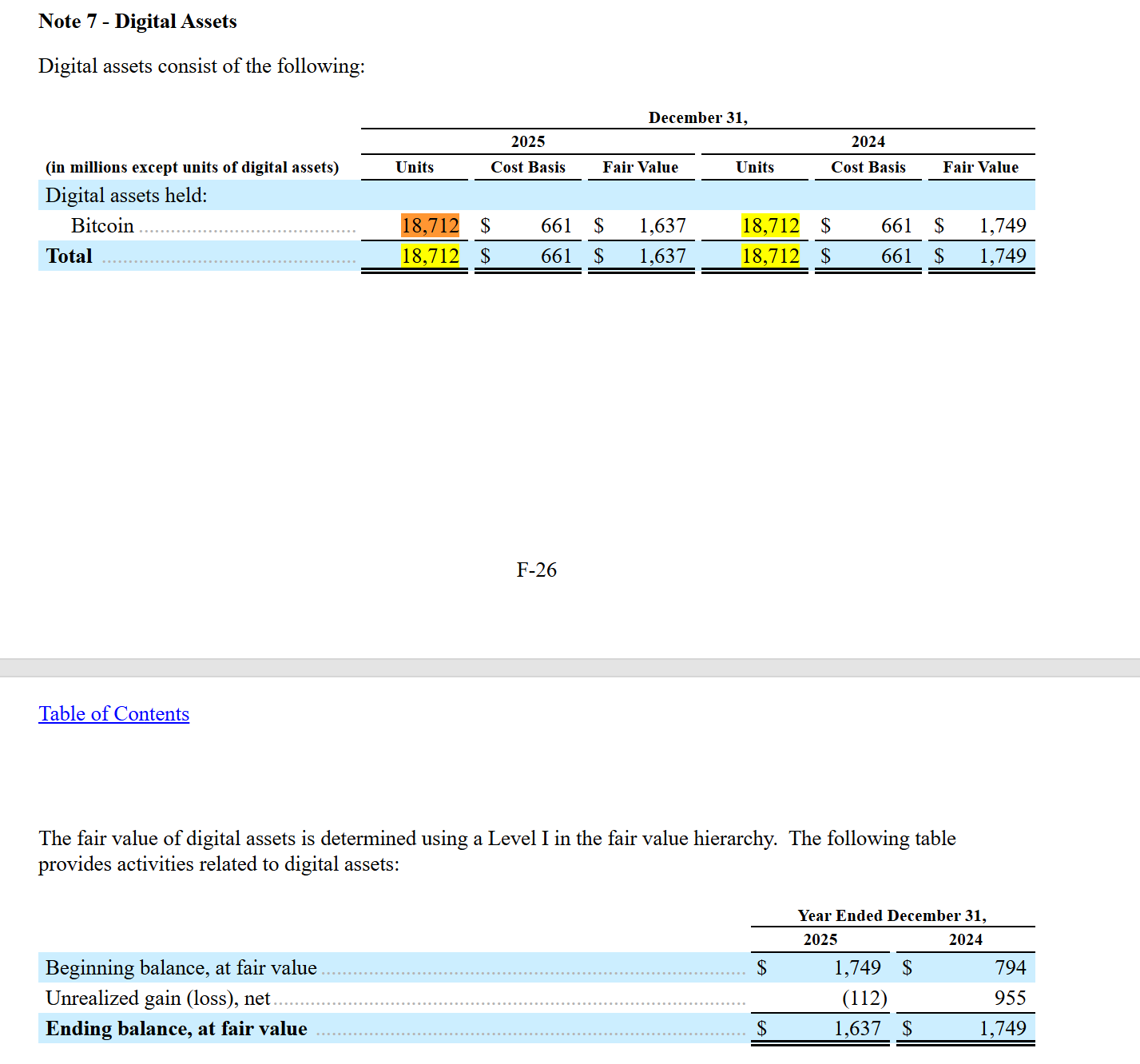
The definitive source is the S-1 filed with the SEC on May 20, 2026, which formally documents 18,712 Bitcoin (BTC) on SpaceX’s balance sheet.
However, Arkham Intelligence has only been able to publicly trace 8,285 BTC to identified SpaceX wallets as of April 2026, leaving a significant gap in labeled funds.
Experts believe this difference stems from corporate wallets that blockchain analytics have yet to map.
“Elon’s SpaceX holding 18,712 BTC isn’t the real story. The real deal is that on-chain trackers only saw the tip of the iceberg. Arkham Intelligence had it pegged SpaceX Bitcoin holdings at ~8,000–8,285 BTC. So… how much Bitcoin are public companies actually hiding?” a popular user on X posed.
According to the filing, SpaceX estimates the worth of this holding at $1.293 billion, compared to an original purchase price of $661 million, representing an unrealized profit of almost $632 million.
5. Why did Hyperliquid gain a first-mover advantage over centralized exchanges in SPCX trading?
The HIP-3 framework enables independent creators to launch perpetual markets without needing approval from a centralized exchange, drastically reducing the time it takes to go live.
In contrast, centralized competitors are forced to navigate internal compliance and risk assessments, a procedure that usually spans several weeks.
Hyperliquid leveraged this time advantage to dominate early trading volume, processing $33 million on its first day (May 18) as the contract temporarily spiked to $216 before stabilizing around $203.
Trade.xyz, the team that deployed the market, operates under Hyperunit, which is Hyperliquid’s tokenization division.
6. How should investors separate real IPO mechanics from speculative trading narratives?
The most reliable approach is to verify every piece of information against the official SEC filing and classify everything else as speculative interpretation.
The S-1 document provides the legally enforceable details, such as Musk’s 366-day lockup, the staggered 180-day lockups for other investors, the 5% allocation for friends and family, and the 18,712 BTC treasury.
Conversely, synthetic perpetual pricing, oracle configurations, and plans for tokenized wrappers belong to the speculative category and are primarily driven by market sentiment.
By prioritizing the facts outlined in the SEC filing and separately accounting for the specific risks of each trading platform, investors can prevent speculative hype from distorting their core valuation analysis.
The Bottom Line on the SpaceX IPO
Musk’s 366-day lockup alleviates the threat of immediate insider selling. Other shareholders are subject to staggered 180-day lockup periods, though these can be shortened based on earnings releases and stock performance exceeding the IPO price.
The S-1 allocates approximately 5% of the shares to a friends-and-family pool and employees, who face no lockup restrictions.
For institutional investors evaluating pre-IPO opportunities, the difference between holding synthetic contracts and owning actual equity remains substantial until the official trading begins.
Through a dual-class share structure, Musk maintains around 85.1% of the voting power, ensuring his tight control over the company even after it goes public.
The ultimate test for crypto-based price discovery on a $1.75 trillion company will be whether the valuations set by these constructed oracles align with the actual trading price when SPCX opens on Nasdaq after June 12.
Read also:
- SpaceX Wins $2.29 Billion US Space Contract, and 10 Assets Can Benefit
- 5 Ways Crypto Markets Are Pricing SpaceX Before Wall Street Can
- 10 Surprising Facts About Elon Musk’s $1 Trillion SpaceX IPO
- 3 Space Stocks To Watch Amid Elon Musk’s SpaceX IPO Hype
- Space-Themed ETFs are Flooding Wall Street Before Elon Musk’s SpaceX IPO
The post 6 Questions Investors Must Ask as Elon Musk Locks 100% SpaceX Shares Before IPO appeared first on BeInCrypto.
