



Stay updated with ZDNET: Mark us as a preferred source on Google.
Key highlights from ZDNET
- Zorin OS stands out as an excellent and widely-used Linux distribution.
- With minor adjustments, you can tailor it to better suit your workflow.
- These optimizations are accessible to everyone and come at no cost.
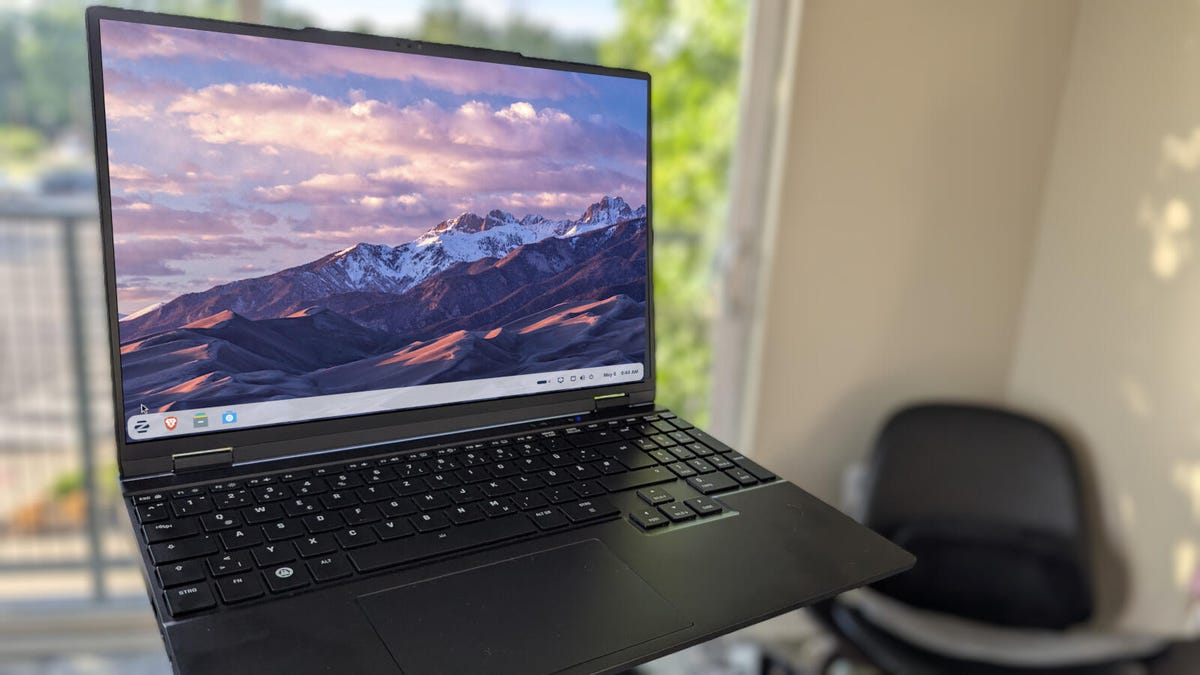
Should I ever move away from Pop!_OS, Zorin OS would be my top pick. It’s sleek, user-friendly, stable, and packed with personalization features that let me shape it exactly how I like. I can enhance its appearance, boost its speed, and streamline its performance. And with the launch of Zorin OS 18.1, the team has delivered what I consider the finest operating system available today.
Also: Linux Mint vs. Zorin OS: I tested both Windows alternatives—and here’s my verdict
If you’re already using Zorin OS, you might appreciate some of the performance tweaks I regularly apply. If that sounds useful, keep reading.
1. Boost system speed
Everyone loves a snappier machine! One effective way to accelerate Zorin OS is by activating Zram—a Linux kernel feature that creates a compressed block device in RAM for quicker data access and smarter memory management. Think of Zram as a high-speed alternative to traditional swap space, and the difference is immediately noticeable.
To turn on Zram, first install the required package:
sudo apt-get install zram-config
Once installed, activate Zram with:
sudo systemctl enable –now zram-config
Next, disable the existing swap file. Begin by editing your fstab file:
sudo nano /etc/fstab
Note: There are no spaces between “etc”, “/”, and “fstab” in the command above.
Inside the file, comment out the /swap line like so:
#/swap
Save and exit the editor.
Also: The top Linux distros for newcomers: Tested and reviewed by experts
Now disable swap:
sudo swapoff /swapfile
Restart your computer.
Zram is now running, and you should notice a performance uplift—particularly when multitasking with several applications open.
2. Manage startup applications
Upon logging in, certain programs launch automatically. While some are essential, others may be unnecessary. To control which apps start at boot:
Open the desktop menu and search for “Startup Applications.”
Review the list and uncheck any apps you don’t need.
This screenshot shows a fresh Zorin OS install, so only a few startup items appear.
Jack Wallen/ZDNET
Reboot your system to apply the changes.
Be cautious not to disable critical services—for example, keep the SSH Key Agent enabled if you rely on Secure Shell for remote access.
3. Set up hot corners
I’m a big fan of hot corners. They let me assign custom actions to each corner of my screen—just move the mouse to a corner, and the assigned task runs instantly. It’s both efficient and intuitive.
Also: As a seasoned Linux user, this distribution changed my perspective on what an OS can do
By default, Zorin OS supports only one hot corner. To unlock multiple hot corners, install a GNOME extension called Custom Hot Corners Extended. You’ll need either Firefox or the Extension Manager (available via GNOME Software) to do this. I recommend using the Extension Manager for simplicity.
Install the CHC-E extension to enable multiple hot corners.
Jack Wallen/ZDNET
After installation, go to the Installed tab, click the gear icon next to CHC-E, and configure your hot corners as desired.
4. Automatically remove temporary files
Your system stores temporary files in /tmp (kept for 10 days) and /var/tmp (retained for 30 days). Since these files can sometimes contain sensitive data, I prefer having them deleted automatically. This not only reduces security risks but also reclaims disk space.
You can also manually clear temporary files from this menu.
Jack Wallen/ZDNET
In Zorin OS, navigate to Settings > Privacy & Security. Toggle on “Automatically Delete Temporary Files,” then choose your preferred cleanup interval—I usually set it to one day.
5. Leverage automatic window tiling
If you haven’t used a tiling window manager before, this feature might seem unfamiliar. But for me, tiling is a game-changer for productivity—and I especially appreciate when windows tile themselves automatically.
With auto tiling, every new window snaps into place in a grid-like layout. For instance, opening your first app fills the right half of the screen; a second app takes the left half. The limitation in Zorin OS is that a third window opens in floating mode (freely movable), rather than continuing the tiled pattern.
If you’ve never tried a tiling window manager, you’re truly missing out.
Jack Wallen/ZDNET
You can manually tile additional windows if needed, though I wish Zorin’s auto-tiling behaved more like Hyprland’s seamless approach.
Also: I spent months struggling with Hyprland—until this Arch-based distro solved it
Regardless, the tiling feature is a must-try for anyone aiming to maximize desktop efficiency and workflow speed.
