



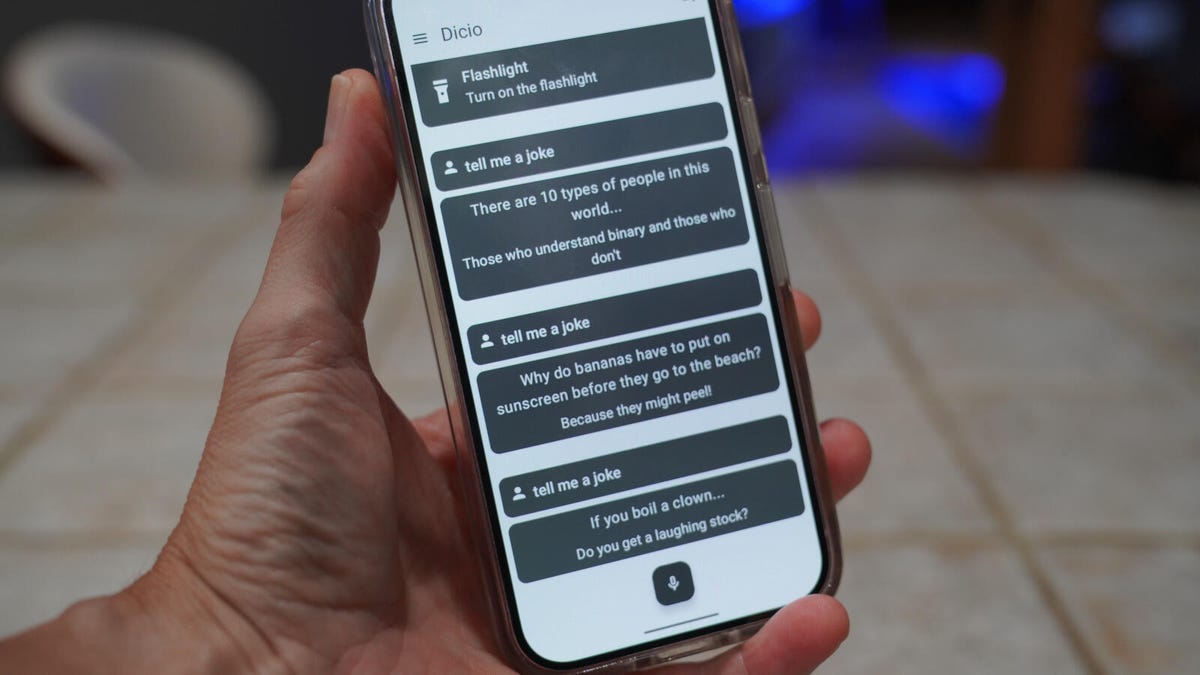
**Dicio: A Solid Open-Source Replacement for Google Assistant**
*By Jack Wallen, ZDNET*
*Follow ZDNET: Add us as a preferred source on Google.*
***
With the impending discontinuation of Google Assistant looming next month, users are left scrambling for a reliable alternative. While Google’s Gemini has been positioned as the successor, it comes with its own set of limitations, particularly regarding hands-free functionality. This instability has prompted many to seek out other options, leading me to discover Dicio—a free and open-source voice assistant that has proven to be a surprisingly capable replacement.
Based on the Dico GitHub page, Dicio is designed to run entirely on-device, prioritizing user privacy by processing inputs and generating outputs locally without relying on third-party cloud servers. This core principle makes it an attractive option for privacy-conscious users who want to avoid sending sensitive data to big tech.
#### **What Can Dicio Do?**
Dicio boasts a wide array of features designed to handle everyday tasks. It effectively manages functions such as:
* Providing weather updates
* Searching the internet
* Finding song lyrics
* Opening compatible apps
* Performing calculations
* Navigating (using Google Maps)
* Calling contacts
* Setting timers
* Controlling media playback
* Telling jokes
* Controlling wake-word detection
* Translating languages
* Reading notifications aloud
* Activating the flashlight
#### **What Are Dicio’s Limitations?**
Despite its robust capabilities, Dicio is not without its drawbacks. The free app has two significant limitations that users should be aware of:
1. **No Android Auto Integration:** Dicio currently does not work with Android Auto. This is the app’s primary drawback and a dealbreaker for users who rely heavily on in-car connectivity.
2. **No Voice Messaging:** The app cannot send text messages or compose emails using voice commands.
Furthermore, Dicio can sometimes struggle with opening certain third-party apps, and it does not support calculations or note-taking at this time.
#### **How to Install and Set Up Dicio**
Getting started with Dicio is straightforward. The app is available for download on the Google Play Store. After installation, the setup process involves granting microphone permissions, downloading a speech-to-text file, and setting up a wake word. Once completed, the app is ready to use.
#### **Using Dico in Practice**
Using Dicio is as simple as saying, “Hey, Dicio…” followed by your command. While the wake word is officially “diss-eee-oh,” users will quickly get the hang of it. In my testing, the app performed well for setting timers, controlling media, navigating, and reading notifications. However, users will likely encounter the same app-opening and messaging limitations mentioned earlier.
#### **Configuration and Settings**
Dicio offers a settings menu where users can customize language, theme, skills, input methods, wake-word settings, and audio output preferences. While the app allows for the import of custom wake words, this feature requires command-line Python Pip installation, which may not be user-friendly for the average Android user.
***
### **Dicio FAQ**
**Q: Is Dicio completely free to use?**
A: Yes, Dico is a free and open-source application. There are no subscription fees associated with its core functionality.
**Q: Why doesn’t Dicio work with Android Auto?**
A: Dicio does not work with Android Auto because Google does not recognize it as a valid voice assistant for the platform. This is a restriction imposed by Google, not a limitation of the Dicio app itself.
**Q: Can Dicio send text messages or emails?**
A: No, Dicio currently lacks the functionality to send text messages or compose emails via voice command.
**Q: Does Dicio work offline?**
A: Yes, Dicio is designed to process commands entirely on-device, meaning it operates offline and does not send your data to the cloud.
**Q: Is Dicio safe for privacy?**
A: Yes, because Dicio handles data locally on your device, it offers a higher level of privacy compared to cloud-based assistants like Google Assistant or Gemini.
***
### **Conclusion**
Dicio emerges as a strong and viable alternative to Google Assistant, particularly for users who value privacy and need a reliable, open-source solution. While it falls short in specific areas like Android Auto integration and voice messaging, its robust feature set and on-device processing make it an excellent choice for managing daily tasks.
As development continues, we can hope to see feature gaps close, potentially adding capabilities like note-taking and messaging. Until then, Dicio stands as the most compelling, privacy-focused replacement for Assistant in the wake of its discontinuation.
