



**The Future of Space Operations: Why Software is Winning the Satellite Game**
In the high-stakes world of space operations, a quiet revolution is underway. As the Space Development Agency (SDA) successfully launched 21 Tranche 1 transport satellites to build a massive satellite communications network—only to pause for nearly nine months to iron out technical issues—industry leaders are rethinking what it means to be a “space company.” The lesson? In modern space operations, software is just as critical as hardware.
During Federal News Network’s **Space & Satellite Exchange 2026**, key voices in the industry highlighted a paradigm shift. While the military can build the most sophisticated satellites in the world, if flight software, ground station integration, and network orchestration aren’t effective, those multi-million-dollar platforms are essentially grounded.
> “Space has become a software business,” the discussion opened, and the consensus was clear.
**The Software-Driven Space Revolution**
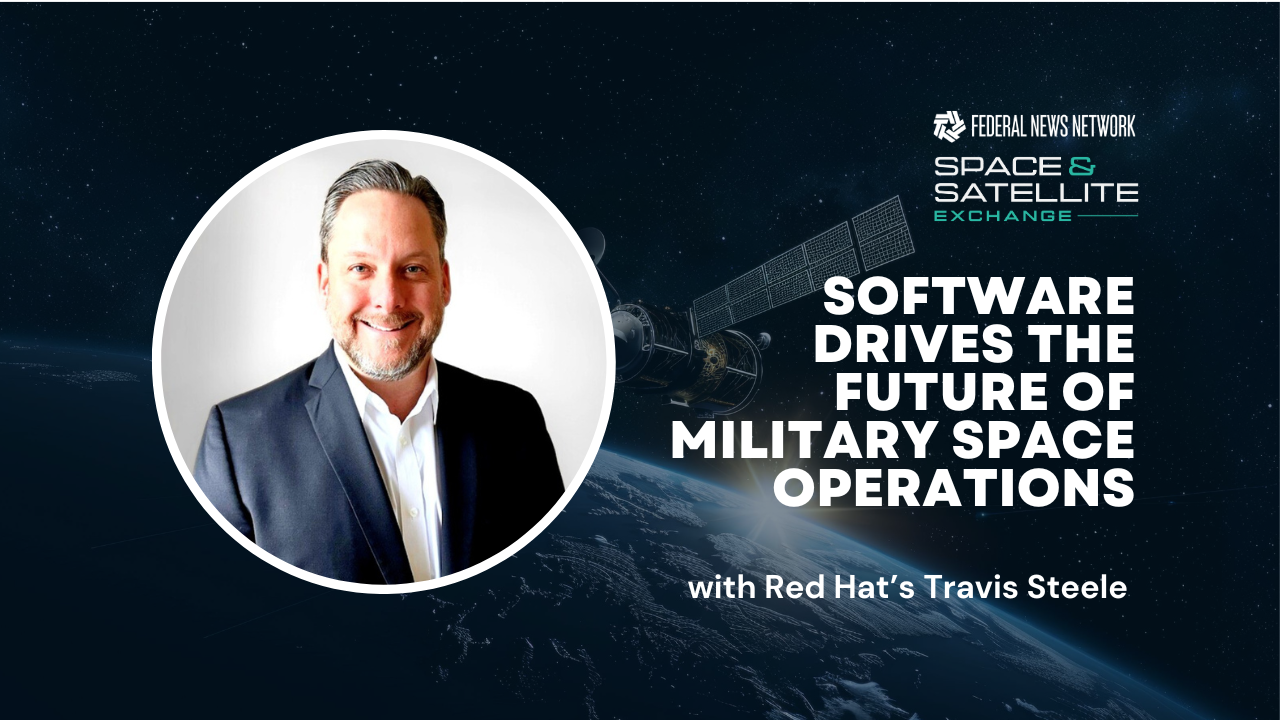
Travis Steele, chief architect for the Air Force and Space Force at Red Hat, emphasized that resilience in the space communications domain comes from speed and iterative development. The days of slow, monolithic, multi-year satellite projects are giving way to a new model built on modularity, automation, and continuous delivery.
Jennifer Elzea, SDA’s director of strategic engagement, put it bluntly: “There are some things we learned that we could do on the ground for software much more quickly than trying to upload software fixes to space in low Earth orbit.”
Why ground-based updates? Because satellites are moving at blistering speeds, making constant ground station connections fleeting. It’s far more efficient to perfect the software on the ground before launch than to attempt complex updates in orbit.
**Building for a Proliferated Fleet**
As the number of satellites in orbit explodes, so does the complexity. The shift is moving from a few “exquisite” platforms to a vast, proliferated Low-Earth Orbit (LEO) network. This brings new challenges:
* **Interoperability:** Ensuring different satellite constellations can communicate seamlessly.
* **Fleet Management:** Tracking, managing, and commanding hundreds, if not thousands, of assets.
* **Data Deluge:** Processing the immense volumes of data generated, especially with new sensing capabilities like hypersonic missile tracking.
To solve this, the industry must move away from proprietary systems. Standardized open architectures and the ability to orchestrate data across multiple vendor platforms are no longer optional—they are essential.
**The Race to Autonomous Operations**
One of the most significant changes is the move toward autonomous fleet management. Human operators cannot manually deploy software updates, enforce policies, or recover from failures across a massive satellite constellation. The future relies on automation, AI, and DevSecOps practices baked into the design.
Furthermore, to handle the data tsunami, AI will need to be embedded directly on the satellite. Instead of sending raw terabytes of data back to Earth, satellites must process information in orbit and transmit only actionable intelligence. This drastically reduces latency and makes the entire system more efficient.
**Adapting to a Faster Pace**
SDA was created to disrupt traditional defense acquisition, using commercial speed to field capabilities rapidly. To keep up, the entire software development lifecycle must change.
The goal is a **modular, open-shell architecture** with continuous software delivery. This allows for:
* **Speed:** Faster updates and feature deployment.
* **Resilience:** A pre-accredited baseline of software and operating environments.
* **Security:** Automated software bills of materials and attestation for trust and transparency.
—
### FAQ
**Q: Why is software becoming more important than hardware in space operations?**
A: While launching hardware is difficult, software is what makes a satellite functional. It controls maneuvering, collision avoidance, and mission execution. With satellites moving at high speeds and having limited contact windows with ground stations, fixing issues via software from the ground is far more efficient than trying to update hardware in orbit.
**Q: What is the Space Development Agency (SDA) trying to do?**
A: The SDA is designed to accelerate space acquisition by using commercial practices. Its goal is to rapidly field new satellite capabilities, moving away from traditional, slow, and expensive satellite programs to a model of proliferated, resilient LEO networks.
**Q: What are the biggest challenges of a proliferated satellite fleet?**
A: The main challenges are interoperability (communication between different systems), fleet management (managing a vast number of assets), and data processing (handling the massive amount of sensor data generated). Solving these requires open standards and automation.
**Q: How will AI be used in future satellite operations?**
A: AI will be critical for two reasons: automating the management of vast satellite fleets (DevSecOps) and processing data directly on-board. Onboard AI will filter raw sensor data, sending only actionable intelligence to Earth, which reduces bandwidth needs and latency.
**Q: What is a “modular open-shell architecture”?**
A: It’s a software design principle that moves away from tightly integrated, proprietary platforms. It uses standardized, open components that can be updated or replaced quickly, enabling continuous delivery and faster innovation, similar to practices in other modern software-driven domains.
—
### Conclusion
The transformation of space from a hardware-centric to a software-defined domain is not just a trend; it’s a necessity. As organizations like the SDA push the boundaries of speed and scale, the industry must follow suit. Success will depend on embracing open standards, leveraging automation, and building systems that are intelligent enough to operate themselves. The satellites of the future won’t just be in space; they’ll be smart, adaptable, and fundamentally driven by software. The space race is no longer just about who can build the best rocket, but who can build the best code.
