



“We’ve all experienced that frustrating moment — you’re looking for something you know exists, but it simply refuses to appear.” Apple’s Stacey Ford, vice president of OS Program Management, was discussing Spotlight at WWDC 2026, but her words could just as easily have been about the company’s broader AI aspirations.
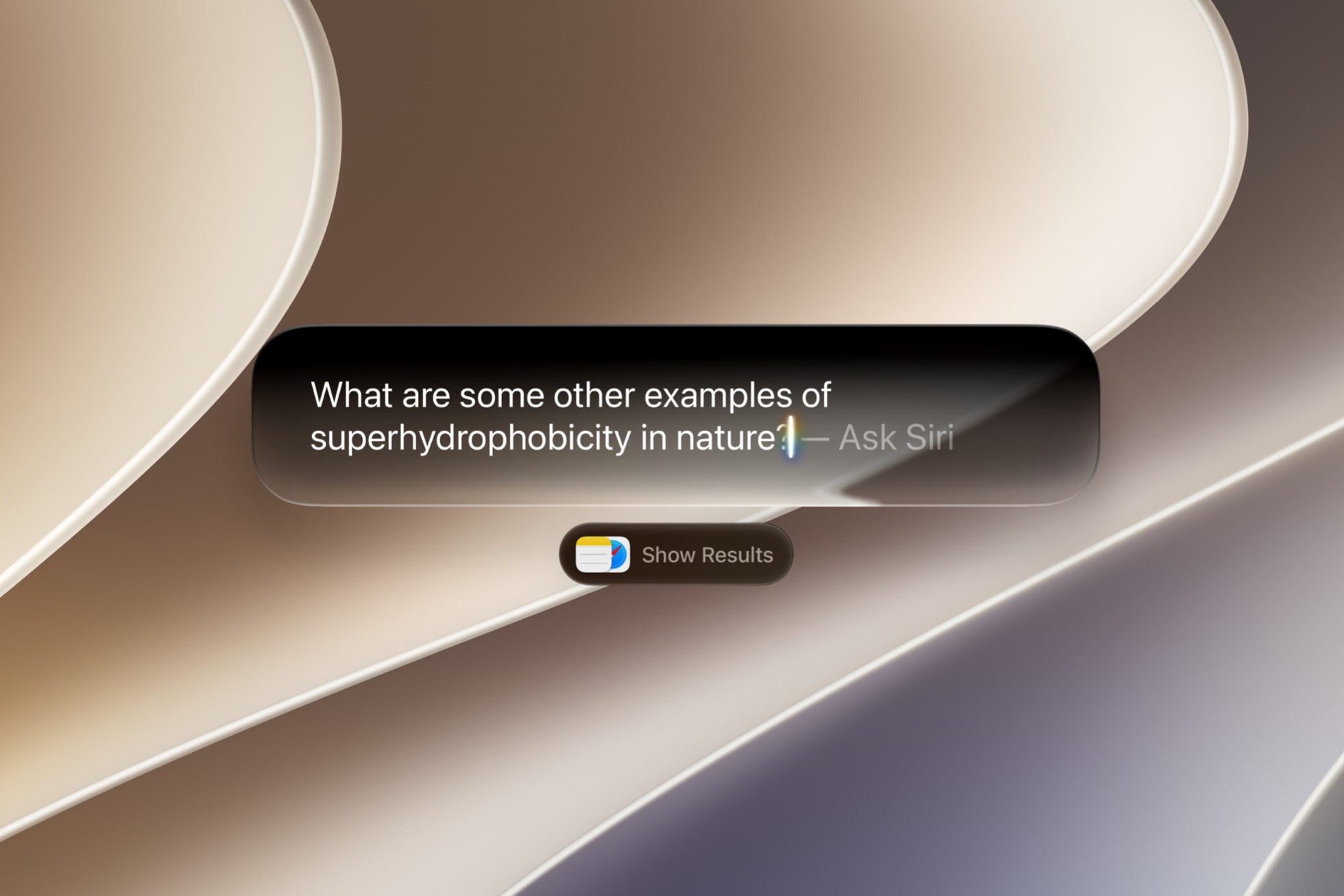
On Monday at Apple Park, the missing piece finally surfaced: Siri AI, the virtual assistant rebuilt from the ground up after years of falling short. The new Siri can hold real back-and-forth conversations, tap into a user’s emails, messages, and photo collections, handle live web searches, and execute tasks spanning multiple apps.
Apple is launching the assistant as a standalone app while weaving it throughout the entire system, with iPhones displaying Siri’s activity in the Dynamic Island while requests are being processed. That’s the version Apple showcased on stage. The more revealing details, however, lie in the fine print: who is actually powering Siri AI, and who will have access to it.
Google under the hood
Apple’s most significant revelation was one delivered with little fanfare. The company disclosed that it worked alongside Google and the Gemini family of models to build the next generation of Apple Foundation Models — the underlying technology driving Apple Intelligence experiences and, by extension, Siri AI. After two years of maintaining that its proprietary models would close the gap, Apple has finally answered the question of how it caught up: it didn’t do it alone.
The company devoted a substantial portion of the keynote to getting ahead of the inevitable criticism. “We believe privacy in AI is non-negotiable,” senior vice president Craig Federighi stated, adding that “data is only used to fulfill your request, and independent auditors can verify this commitment at any time.”
The privacy framework may indeed prove sound. The strategic implications, however, are harder to downplay. Apple now relies on its biggest search competitor to provide the intelligence backbone of its own assistant — while simultaneously, Google is deploying Gemini across Android, Workspace, and its own devices. Regardless of the deal’s specifics, Apple has effectively acknowledged that the frontier AI race was not one it could win on its own schedule, and that concession resonates far beyond Cupertino.
If the world’s most valuable hardware company — armed with its chip design edge and virtually limitless resources — opted to license rather than build from scratch, then the sovereign AI ambitions being drawn up in capitals worldwide deserve a more sober assessment of what “building our own model” truly demands.
The Siri AI rollout map tells its own story
Then there’s the matter of who actually gets access to Siri AI. The initial beta, expected later this year, supports only English. China is completely absent from the map, with Apple pointing to unresolved regulatory hurdles, and European Union users won’t find the assistant on their iPhones or iPads at launch. Apple has indicated that solutions are in progress; in the meantime, its updated press release confirms that EU availability will initially be restricted to macOS 27 and visionOS 27.
Viewed from Asia, the gaps are impossible to ignore. China — Apple’s most fiercely competitive market — is entirely excluded, while domestic Chinese AI assistants ship without any such limitations. An English-only beta means Mandarin, Japanese, Korean, Bahasa, and Hindi speakers — representing the majority of iPhone users in the world’s fastest-expanding smartphone markets — are stuck with the old Siri for an indefinite period.
Apple offered no timeline for additional language support. The company that built its identity on delivering the same product to everyone, everywhere, simultaneously, has shipped its most important software update in years exclusively to English speakers — minus China entirely and minus iPhone users in the EU.
Catching up, by Apple’s own staging
The keynote’s structure spoke volumes. TechCrunch observed that Apple began by fixing what was broken before unveiling anything new, and framed the upgraded Siri as one item on a long list rather than the marquee attraction.
It also marked a symbolic passing of the torch. This was Tim Cook’s final WWDC as CEO before John Ternus, Apple’s senior vice president of hardware engineering, steps into the role on September 1. “I truly believe the best days for Apple are still ahead,” Cook said in his closing remarks.
Perhaps so. Siri AI is finally a real product, and the demos suggest Apple’s knack for deep integration remains strong. But Ternus is inheriting an assistant that runs on Google’s models and a rollout strategy that asks most of the world to be patient. The catch-up effort, it turns out, is only just getting underway.
(Photo by Apple)
See also: Apple plans big Siri update with help from Google AI

Want to learn more about AI and big data from industry leaders? Check out AI & Big Data Expo taking place in Amsterdam, California, and London. The comprehensive event is part of TechEx and is co-located with other leading technology events, click here for more information.
AI News is powered by TechForge Media. Explore other upcoming enterprise technology events and webinars here.
